🏞️ Réunion Giant Tortoise
🌍 What It Was
The Réunion Giant Tortoise was a unique reptile that once roamed the island of Réunion in the Indian Ocean. Known for its large size and slow-moving nature, this tortoise was a fascinating part of the island's ecosystem. As a member of the tortoise family, it was classified under the genus Cylindraspis, which included several other extinct species from nearby islands.
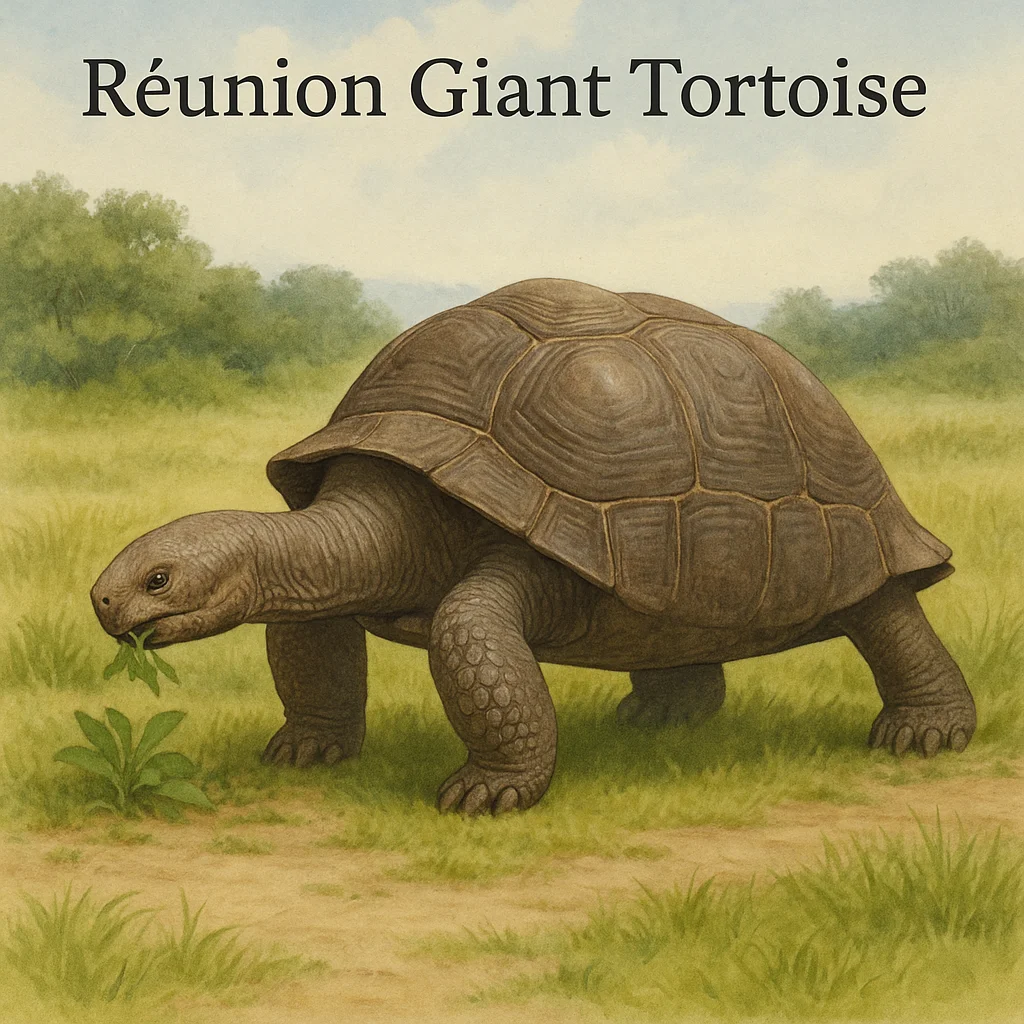
Its closest living relatives today are the Aldabra Giant Tortoise and the Galápagos Tortoises, which share some similarities in terms of size and lifestyle. The Réunion Giant Tortoise played a crucial role in its habitat, impacting vegetation patterns through grazing and seed dispersal.
In this article, we will explore where this giant tortoise lived, its daily life, and the factors that led to its extinction. We aim to provide a comprehensive overview of its existence and the circumstances surrounding its decline.
🧭 Where It Lived
The Réunion Giant Tortoise was endemic to the island of Réunion, a volcanic island situated in the western Indian Ocean. Being endemic means that it was found nowhere else in the world. This geographic limitation significantly increased its vulnerability to extinction due to environmental changes and human activities on the island.
Réunion is characterized by its diverse landscapes, including coastal areas, forests, and rocky highlands. The tortoise primarily inhabited lowland areas where it had access to rich vegetation and water resources. Forests and grasslands provided the necessary shelter and food, making them ideal habitats for this species.
Living on a remote island, the Réunion Giant Tortoise was isolated from many of the threats faced by mainland species. However, this isolation also meant that the population was more susceptible to changes in its limited environment, making it difficult for the species to recover from disturbances.
🌿 Habitat and Daily Life
The climate of Réunion is tropical, with warm temperatures and significant rainfall throughout the year. This climate supported lush vegetation, which was essential for the tortoise's diet of grasses, leaves, and fruits. The regular availability of food sources allowed these tortoises to flourish in their natural habitat.
These tortoises were primarily herbivores, feeding on a variety of plant materials. They played an important ecological role by aiding in seed dispersal, which helped maintain plant diversity. Their foraging behavior involved slow grazing, which allowed vegetation to regenerate and prosper.
Reproduction in the Réunion Giant Tortoise was relatively slow compared to other animals. Breeding seasons were likely influenced by weather patterns, with females laying eggs that incubated in the warmth of the soil. The tortoises had few natural predators on the island, giving them a peaceful existence and allowing their population to grow under ideal conditions.
🧬 What Made It Unique
The Réunion Giant Tortoise was notable for its large size, which protected it from smaller predators and allowed it to access a variety of vegetation. Its hard shell provided defense, while its sturdy limbs were adapted for steady movement across rugged island terrain.
One remarkable adaptation was its ability to survive long periods without water, a trait that helped it endure the island's dry spells. Such resilience was critical in its natural habitat where resources could be seasonally scarce.
For the inhabitants of Réunion, the tortoise held minor cultural significance as a part of the natural landscape. While not extensively utilized by humans, it was occasionally mentioned in early explorers' accounts.
⏳ When It Disappeared
The decline of the Réunion Giant Tortoise began in the late 1600s with the arrival of European settlers on the island. By the early 1700s, the species was already facing severe pressure from human activities. The last confirmed records date back to the mid-1700s, though unverified sightings continued for some years afterward.
Extinction was officially declared when no evidence of the species was found over an extended period. The declaration of extinction involves thorough investigations to confirm the absence of any remaining individuals, which can take years to conclude with certainty.
Due to the lack of comprehensive records and the tortoise's remote habitat, some uncertainties surround the exact timeline of its extinction. Nevertheless, historical accounts have provided enough information to paint a picture of its decline.
⚠️ Why It Went Extinct
The extinction of the Réunion Giant Tortoise was a result of several interconnected factors. One primary driver was habitat loss and fragmentation caused by human settlement and agricultural development. As forests were cleared, the tortoise's natural environment was significantly reduced.
Overexploitation also played a critical role. The tortoises were hunted extensively by sailors and settlers for food. Their slow movement made them easy targets, leading to drastic declines in their population.
Introduced species further exacerbated the situation. Predatory animals like rats and pigs, brought by humans, devastated the tortoise population by preying on eggs and young tortoises.
These factors combined to overwhelm the species' natural reproductive rate, ultimately leading to its extinction. This multi-causal scenario is typical of many island species that face sudden changes due to human influence.
🧩 How We Know (Evidence and Records)
The evidence of the Réunion Giant Tortoise's existence comes from various historical records, including explorers' journals and fossilized remains found on the island. Such physical evidence helps scientists understand the tortoise's anatomy and lifestyle.
Museum specimens have provided tangible evidence of the tortoise's physical traits. These preserved specimens have been crucial for scientific verification of its identity.
Due to the Réunion Giant Tortoise's former abundance, some oral histories also reference these creatures, adding an additional layer of confirmation to their once-wide presence across the island.
🛡️ Could It Have Been Saved
Potential conservation actions could have included establishing protected areas to preserve its habitat and implementing hunting restrictions. However, during the time of the tortoise's decline, awareness and resources for conservation were limited.
Efforts to control invasive species might have helped stabilize the population by reducing predation on eggs and juveniles. Unfortunately, these actions were not taken in time to save the Réunion Giant Tortoise.
Late attempts at conservation, if any, were insufficient to reverse the damage caused by earlier human impacts. This emphasizes the importance of timely conservation measures in similar contexts.
🔁 Are There Any Survivors or Close Relatives Today
The closest living relatives of the Réunion Giant Tortoise are the Aldabra Giant Tortoise and the Galápagos Tortoises. While these species share some biological and ecological similarities, they occupy different regions and face their own conservation challenges.
Although no reintroduction programs exist for the Réunion Giant Tortoise, studying its relatives can offer insights into successful conservation strategies for related species that are still extant.
In some ecosystems, other large herbivores may fulfill similar roles as ecological replacements, helping to maintain diversity and ecological balance where tortoises once thrived.
❓ Common Questions and Misconceptions
Was it hunted to extinction? Yes, hunting significantly contributed to its decline.
Why didn’t it adapt or move? Island species are often highly specialized and cannot easily move or adapt to rapid changes.
Could it still be alive somewhere? It is highly unlikely, as extensive searches have found no evidence of its survival.
What does 'declared extinct' actually mean? It means no confirmed sightings or evidence of its existence remain after thorough investigations.
What is the difference between endangered and extinct? Endangered species are at risk of extinction but still exist, whereas extinct species no longer exist.
Why are island species so vulnerable? They often have small, specialized populations and limited habitats, making them sensitive to changes.
📌 Summary
- The Réunion Giant Tortoise was a large tortoise species found only on Réunion Island.
- It lived in the island's lowland areas with access to rich vegetation.
- The tortoise's habitat included forests and grasslands.
- It was an herbivore, playing a role in seed dispersal and vegetation management.
- Unique adaptations included large size and the ability to survive without water for long periods.
- The last known period of existence was the mid-1700s.
- Main extinction drivers were habitat loss, overexploitation, and invasive species.
- Evidence includes historical records and museum specimens.
- Closest living relatives are the Aldabra and Galápagos tortoises.
- Conservation lessons highlight the need for timely actions to prevent extinctions.
- The story of the Réunion Giant Tortoise reminds us of the fragility of island ecosystems and the far-reaching impacts of human activities.