🏞️ Stegosaurus
🌍 What It Was
The Stegosaurus was a large, herbivorous dinosaur belonging to the group known as stegosaurs. These creatures were characterized by their distinctive double row of kite-shaped plates along their backs and the spikes on their tails, known as thagomizers.
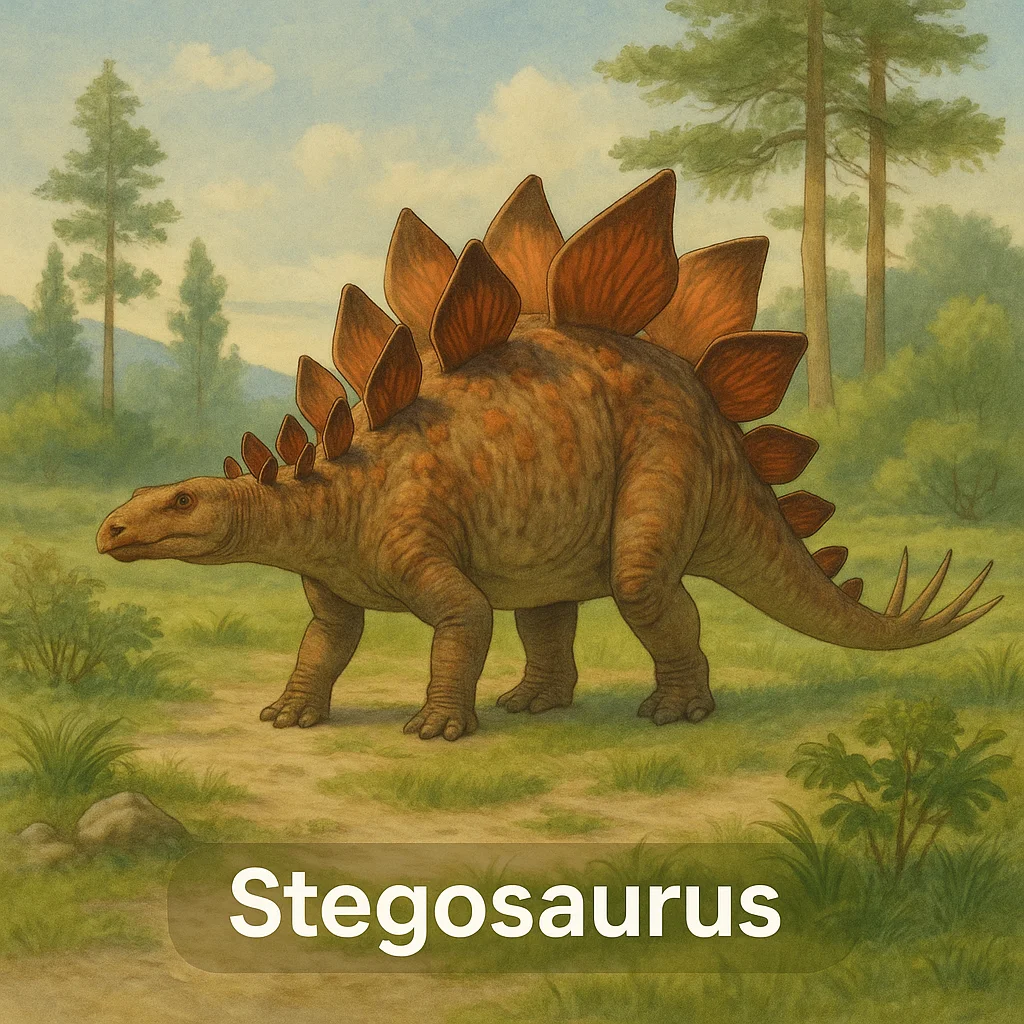
As part of the ornithischian dinosaurs, Stegosaurus shared some distant ancestry with living birds. However, birds are far more closely related to theropod dinosaurs, like the Tyrannosaurus rex. Stegosaurus occupied a unique niche in its ecosystem as a large plant-eater.
In this article, you will learn about where Stegosaurus lived, its lifestyle, physical traits, extinction, and its unique role in the prehistoric world. We will also explore the evidence scientists use to understand these magnificent creatures.
🧭 Where It Lived
Stegosaurus roamed primarily in what is now North America, specifically in regions that today form parts of the western United States. This region supported expansive floodplains and open forests during the Late Jurassic period.
The environment in which Stegosaurus thrived signified a landscape rich in vegetation. The climate was largely warm, supporting dense forests alongside open areas, which were prime habitats for a variety of herbivorous dinosaurs, including the Stegosaurus.
This dinosaur's habitat preference suggests it favored areas with high plant availability, given its herbivorous diet. The interconnectedness of various landscapes provided Stegosaurus with shelter, food, and the conditions suitable for sustaining large populations.
🌿 Habitat and Daily Life
Stegosaurus lived during the Late Jurassic period, a time known for its warm temperatures and relatively stable climate. The landscape was diverse, with areas of dense forest and open plains that varied with the seasons.
Stegosaurus was an herbivore, feeding primarily on low-lying plants. Researchers think it used its beak to strip leaves from plants and its grinding teeth to break down tough vegetation. This dinosaur likely spent much of its day grazing.
The life cycle of a Stegosaurus included laying eggs, which were probably incubated in nests. Little is known about parental care, but evidence suggests that young stegosaurs might have lived independently shortly after hatching.
Within its ecosystem, Stegosaurus interacted with other herbivores and was likely prey for large carnivorous dinosaurs. Its plated back and spiked tail possibly served as defense mechanisms against predators.
🧬 What Made It Unique
The most striking features of the Stegosaurus were its large, flat plates and spiked tail. The plates may have helped with thermoregulation, allowing the dinosaur to control its body temperature, or they may have been used for display purposes during social interactions.
An average Stegosaurus measured about 30 feet long but was relatively light for its size, weighing in at approximately 5 to 7 tons. Its small head and long tail added to its distinct appearance, marking it as one of the more recognizable dinosaurs.
Beyond its physical characteristics, Stegosaurus played a critical role in its environment, gradually altering landscapes through its grazing, which influenced plant communities and served as a food source for predators.
⏳ When It Disappeared
The Stegosaurus vanished around the end of the Jurassic period, approximately 150 million years ago. Fossil evidence indicates that this species may have gradually declined in numbers before completely disappearing.
Like many dinosaurs, Stegosaurus' extinction is not precisely dated due to the incomplete nature of the fossil record. As scientific understanding evolves, new discoveries continue to refine the timeline of this dinosaur's last days.
Extinction, in this case, was gradual, likely a result of environmental changes over time rather than a single catastrophic event often associated with later dinosaur extinctions.
⚠️ Why It Went Extinct
One primary factor contributing to the extinction of Stegosaurus was habitat change. As the Jurassic period drew to a close, shifts in climate and terrain reduced suitable habitats for large herbivores.
Competition for resources, whether from other herbivores or changing plant availability, likely played a role. In a dynamic ecosystem, these pressures could decrease reproduction and survival rates.
While no direct evidence suggests overpredation by carnivorous dinosaurs, it remains a potential factor, as predation pressures would hasten the decline of a struggling population.
🧩 How We Know (Evidence and Records)
The study of Stegosaurus relies heavily on the fossil record, including bones and footprints discovered in various locations across North America. These fossils provide insights into its physical structure, diet, and habitat preferences.
Paleontologists use comparative anatomy to identify fossils accurately, relying on distinctive traits such as the famous bony plates. Radiometric dating techniques help determine the age of fossils, refining the timeline of Stegosaurus' existence.
The fossil record, while not exhaustive, offers compelling evidence of Stegosaurus' past life and extinction, piecing together a picture of a vanished world.
🛡️ Could It Have Been Saved
If Stegosaurus were alive today, conservation strategies might focus on habitat protection, ensuring the preservation of critical feeding and breeding grounds necessary for survival.
Safe spaces free from human encroachment and environmental management to maintain food supplies would be essential. Modern approaches might also include captive breeding programs to bolster wild populations.
Unfortunately, without understanding of the specific ecological and environmental challenges faced, it's speculative as to what effective measures could have been implemented to prevent its extinction.
🔁 Are There Any Survivors or Close Relatives Today
The Stegosaurus has no direct descendants today. However, its closest living relatives are the birds, descended from theropod dinosaurs, part of a different branch of the dinosaur family tree.
Ongoing research continues to explore how these ancient species share evolutionary ties, with birds often cited as modern dinosaurs due to shared characteristics.
No species today perfectly replicate the ecological roles of Stegosaurus; however, it played a role similar to that of large herbivores now, shaping vegetation and providing prey for larger predators.
❓ Common Questions and Misconceptions
Was it hunted to extinction? No, there were no human hunters at the time of Stegosaurus.
Why didn’t it adapt or move? Changes in climate and vegetation were likely too rapid or widespread for adaptation or migration.
Could it still be alive somewhere? Given the well-researched fossil record, it is highly unlikely that Stegosaurus survives today.
What does 'declared extinct' actually mean? It indicates that there is no reasonable doubt the last individual has died.
What is the difference between endangered and extinct? Endangered species are at risk of extinction, while extinct species no longer exist anywhere on Earth.
Why are island species so vulnerable? Limited range and specialized habitats make island species more susceptible to changes and threats.
📌 Summary
- Stegosaurus was a large, herbivorous dinosaur with distinctive plates and spikes.
- It lived in what is now North America, favoring open forests and floodplains.
- The Stegosaurus habitat was warm, with varied landscapes of rich vegetation.
- Herbivorous diet involved grazing on low plants using beak and teeth.
- Featured large, thermoregulatory plates and spiked tail for defense.
- Last known period was the end of the Jurassic, around 150 million years ago.
- Main extinction drivers were habitat changes and competitive pressures.
- Primary evidence comes from fossils and radiometric dating techniques.
- Closest living relatives are birds, evolved from different dinosaur lineages.
- Conservation lessons underline the impact of habitat preservation.
- A memorable takeaway is its iconic silhouette and biological adaptations.