🏞️ Mosasaurus (Mosasaur)
🌍 What It Was
The Mosasaurus, often referred to as a mosasaur, was a large marine reptile that roamed the oceans during the Late Cretaceous period. Distinguished by its elongated body, powerful jaws, and paddle-like limbs, it was a top predator of its time, comparable in some ways to modern-day sharks. Its closest living relatives today are monitor lizards and snakes, which indicates a distant, shared evolutionary path.
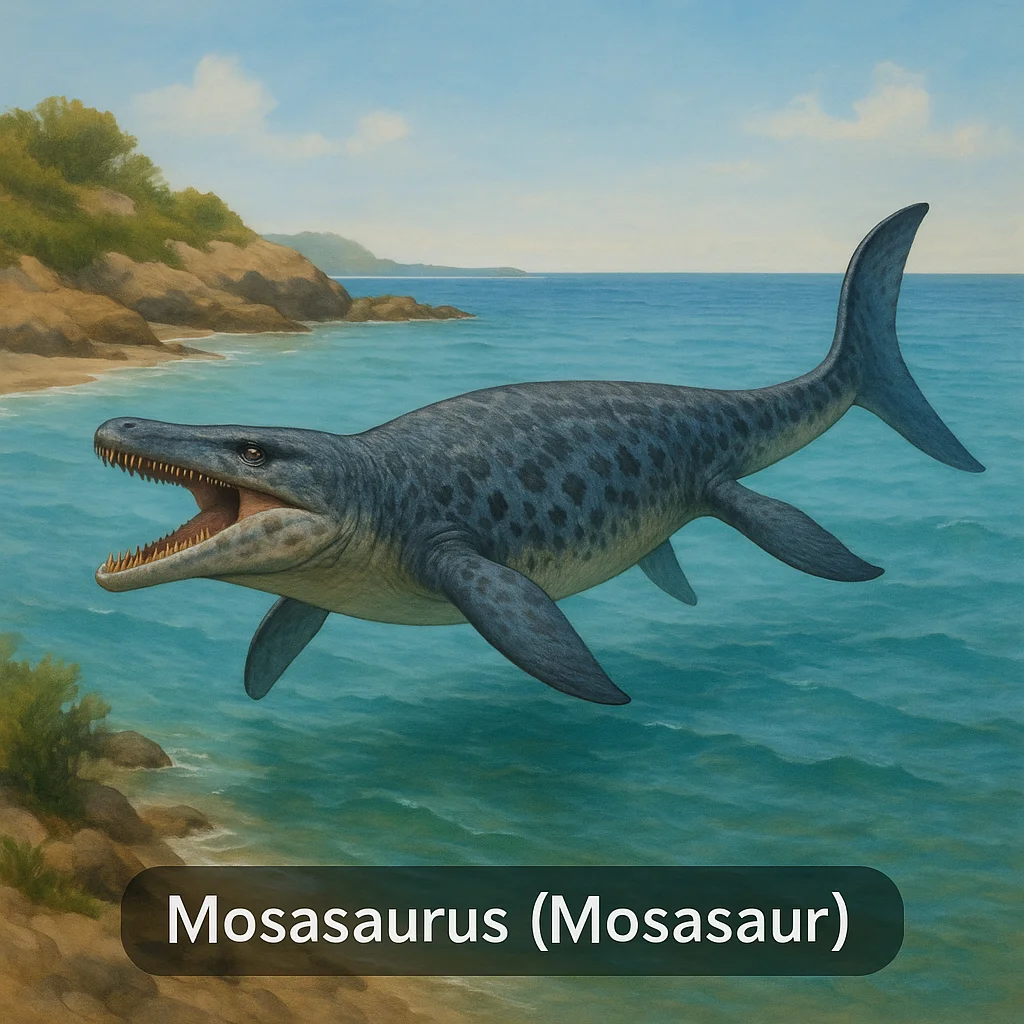
Mosasaurus played a significant role in its marine ecosystem as a dominant predator, likely influencing the population dynamics of various prey species, including fish and smaller marine reptiles. As an apex predator, it sat at the top of the food chain, balancing the oceanic ecosystem during its reign.
In this article, readers will explore where the Mosasaurus lived, its lifestyle, unique characteristics, timeline of extinction, and the causes behind its disappearance. The aim is to provide a comprehensive understanding of this fascinating extinct creature.
🧭 Where It Lived
Mosasaurus thrived in the warm, shallow seas that covered much of the Earth's surface during the Late Cretaceous period. These environments were spread across various regions, including what are now parts of Europe, North America, and possibly other continental coastlines.
These marine reptiles required specific habitats, favoring the abundant resources available in the temperate and tropical seas. They were well-adapted to life in the ocean, with anatomical features that made them agile swimmers capable of traversing vast distances in search of food.
Their dependence on marine environments meant they were particularly vulnerable to changes in sea levels and temperatures. Fluctuations in these factors could have significantly affected their habitats, potentially leading to difficulties in finding suitable conditions for survival.
🌿 Habitat and Daily Life
The climate during the time of the Mosasaurus was generally warmer, with higher sea levels resulting in extensive shallow seas. These environments were rich in biodiversity and consisted of coral reefs, vast stretches of open water, and coastal areas teeming with life.
Mosasaurus was carnivorous, preying on a variety of marine animals. Its diet likely included fish, ammonites, and smaller marine reptiles. It employed a combination of ambush tactics and sheer power to capture its prey, aided by its strong jaws and teeth designed for grasping and tearing.
Reproductive behaviors of Mosasaurus included live birth, a characteristic shared with some modern marine reptiles. This adaptation allowed the species to give birth in water, eliminating the need for land-based nesting sites. Young mosasaurs would have been relatively self-sufficient soon after birth, reducing parental investment.
🧬 What Made It Unique
Mosasaurus boasted an impressive size, with some species measuring up to 17 meters long. Its body was streamlined for efficient movement in water, complemented by a long, muscular tail for propulsion and flippers for steering.
Its powerful sense of smell and keen vision were likely critical for hunting in the sometimes murky waters of its habitat. As a formidable predator, it played an important ecological role, keeping the marine animal populations in balance.
While there are no direct records of cultural significance, the Mosasaurus has captured the imagination in modern times, often featured in museums and popular media as a symbol of the ancient oceans' mysterious and powerful nature.
⏳ When It Disappeared
The Mosasaurus is believed to have vanished at the end of the Cretaceous period, around 66 million years ago. This coincides with the mass extinction event that also led to the demise of the dinosaurs and many other species.
While specific last known sightings of Mosasaurus cannot be documented, fossils found in sedimentary rock layers corresponding to the Cretaceous-Paleogene (K-Pg) boundary provide evidence of their existence up to this extinction event.
The declaration of extinction is based on the absence of Mosasaurus fossils in any geological layers beyond this period. This sharp termination in the fossil record is one of the markers scientists use to determine extinction.
⚠️ Why It Went Extinct
The extinction of Mosasaurus, like many Cretaceous species, is attributed to a multi-causal crisis. One of the primary drivers was likely the impact of a massive asteroid or comet, which created rapid climate changes and environmental upheaval.
Habitat loss from changes in sea levels and temperatures further reduced the areas where Mosasaurus could live. Such shifts can limit an organism's ability to find food or suitable breeding sites, disrupting essential life processes.
Additionally, the dramatic changes in the ecosystem could have led to a collapse of the food web. As apex predators, mosasaurs would have been particularly affected by a decrease in available prey species.
🧩 How We Know (Evidence and Records)
Mosasaurus knowledge primarily comes from fossilized skeletons discovered in sedimentary rocks around the world. These fossils provide crucial insights into their anatomy, lifestyle, and the environments they inhabited.
Field studies and museum specimens play a key role in reconstructing the appearance and behavior of Mosasaurus. Comparative analysis with present-day species helps establish its evolutionary relationships.
Fossils are dated using geological context and, where possible, radiometric dating techniques. This helps scientists accurately place Mosasaurus within the timeline of Earth's history, supporting claims of its extinction at the K-Pg boundary.
🛡️ Could It Have Been Saved
If Mosasaurus faced threats similar to modern endangered species—such as habitat destruction or climate change—conservation measures might have included protecting marine habitats and maintaining the delicate balance of the marine food web.
Realistically, given the extent of the cataclysmic events at the end of the Cretaceous, it's unlikely that any direct conservation actions could have mitigated such rapid, global changes.
Despite this, understanding the Mosasaurus extinction helps inform current conservation efforts, highlighting the importance of stable habitats and diversified ecosystems in supporting large predators.
🔁 Are There Any Survivors or Close Relatives Today
Today, the closest living relatives of the Mosasaurus are monitor lizards and snakes. These reptiles share some genetic lineage, although significant evolutionary changes have occurred over millions of years.
Ecological roles similar to those filled by mosasaurs are now taken by large marine mammals and predators such as sharks and orcas. These animals help maintain marine ecosystems by controlling prey populations and promoting biodiversity.
While there have been no successful efforts to bring back the Mosasaurus, the study of its living relatives provides insights into adapting to environmental changes over long timescales.
❓ Common Questions and Misconceptions
Was it hunted to extinction? No, the Mosasaurus was a dominant predator during its time. Its extinction is linked to natural events at the end of the Cretaceous.
Why didn’t it adapt or move? The rapid environmental changes likely outpaced the Mosasaurus' ability to adapt or find new habitats.
Could it still be alive somewhere? The lack of any subsequent fossil records strongly suggests that Mosasaurus is truly extinct.
What does 'declared extinct' actually mean? It means there is no verifiable evidence of a species' existence beyond a certain time, usually based on fossil records.
What is the difference between endangered and extinct? Endangered indicates a high risk of extinction in the wild, while extinct means no living individuals remain.
Why are island species so vulnerable? Their limited range and specialized habitats make them more susceptible to changes and external threats.
📌 Summary
- Mosasaurus was a large marine reptile known for its powerful swimming abilities.
- It lived in the temperate and tropical shallow seas of the Late Cretaceous.
- Its habitat consisted of open water, reefs, and coastal marine environments.
- The diet included fish, ammonites, and smaller marine reptiles.
- Mosasaurus had a streamlined body and strong jaws, suited for predation.
- Last known existence was around 66 million years ago.
- Major extinction drivers included habitat loss and climate shifts.
- Evidence is chiefly derived from fossils and sedimentary rock records.
- Closest living relatives are monitor lizards and snakes.
- The study of its extinction helps inform modern conservation practices.
- Its extinction event highlights the fragility of ecological balance.