🏞️ Ichthyosaurus (Ichthyosaur)
🌍 What It Was
The Ichthyosaurus was a remarkable marine reptile that lived during the Mesozoic Era, around the same time as the dinosaurs. Unlike dinosaurs, Ichthyosaurs were not land dwellers but adapted to life in the sea. This adaptation is what makes them distinct and fascinating to paleontologists and nature enthusiasts alike.
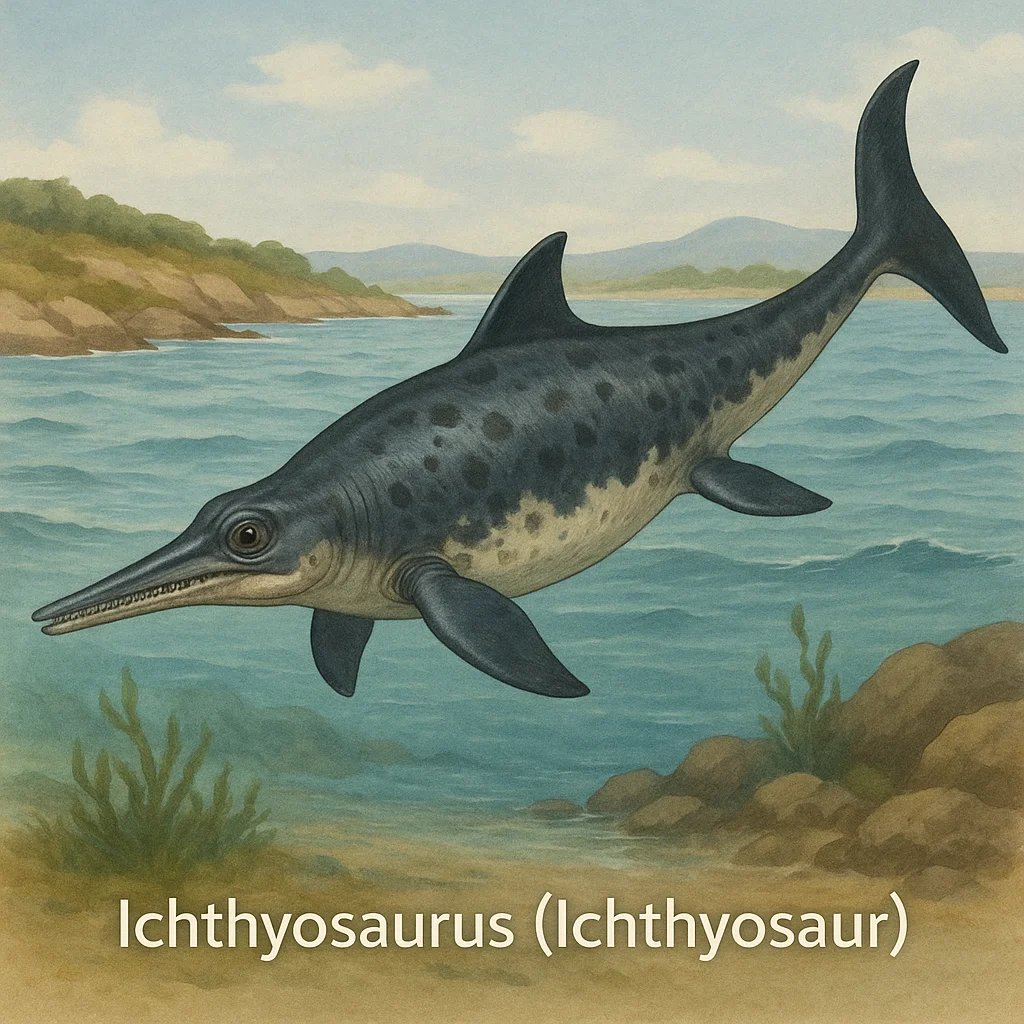
Ichthyosaurs resembled modern dolphins or fish, but they were neither. Their closest living relatives are perhaps the lizards and snakes, as these groups share a common ancestor with the Ichthyosaurs. Understanding Ichthyosaurs gives us a window into the past ecosystems of our planet and how diverse life forms have been over millions of years.
In this article, you will learn about the Ichthyosaurus’s habitat, behavior, and what might have led to its extinction. We will explore how it lived, where it roamed, and the evidence scientists use to piece together its mysterious disappearance.
🧭 Where It Lived
Ichthyosaurs were found in what is now Europe and North America, but they likely had a much broader range that spanned the ancient oceans of the world. Fossil evidence suggests that they thrived in the vast, shallow seas that once covered large parts of these continents.
These reptiles were highly adapted to marine life, favoring the open ocean where they could hunt their prey. It is believed that they were capable of deep dives and fast swimming, much like modern cetaceans, allowing them to occupy a range of ecological niches in the marine environment.
Their dependency on marine habitats meant they were particularly vulnerable to changes in sea level and temperature, factors that can disrupt food chains and threaten species survival. Changes in their oceanic habitats might have played a role in their eventual decline and extinction.
🌿 Habitat and Daily Life
The climatic conditions during the time of the Ichthyosaurus were generally warmer than today's averages, with no polar ice caps and widespread shallow seas. This warmer climate supported a diverse marine ecosystem, which was ideal for Ichthyosaurs.
They were carnivorous, likely feeding on a variety of marine animals such as fish and cephalopods. Their streamlined bodies and fin-like limbs suggest that they were excellent swimmers, capable of quick movements to capture prey.
Ichthyosaurs are thought to have been viviparous, meaning they gave birth to live young rather than laying eggs. This reproductive strategy would have aligned well with their fully aquatic lifestyle, reducing the need to return to land for reproduction. The young likely received parental care until they were capable of independent survival.
These reptiles lived in diverse communities with other marine reptiles, fish, and invertebrates. They had few natural predators outside of other large marine reptiles that might share their environments.
🧬 What Made It Unique
Ichthyosaurs were particularly notable for their fish-like appearance, with features such as a dorsal fin and a tail fin, which helped propel them through the water. Their eyes were exceptionally large, suggesting adaptation to low light conditions, likely for hunting at greater depths.
Their physiological adaptations included a streamlined body for efficient swimming, and they may have had a counter-shading coloration to help with camouflage, a trait seen in many modern marine animals.
While not directly significant in human culture, Ichthyosaurs captivate the imagination as icons of prehistoric marine life. Fossils of Ichthyosaurs are critical to piecing together the story of life in ancient seas.
⏳ When It Disappeared
The decline of the Ichthyosaurs began in the mid-Jurassic period, with the last known species disappearing in the late Cretaceous period, around 90 million years ago. This timeline places their extinction well before the mass extinction event that eradicated the dinosaurs.
The exact timeline is complex due to gaps in the fossil record, which leave uncertainties about their final days. Extinction is declared only when substantial evidence, such as the absence of fossils from a particular geological horizon, supports it.
While most Ichthyosaurs are extinct, research and ongoing fossil discoveries continue to enhance our understanding of their story and disappearance.
⚠️ Why It Went Extinct
The extinction of the Ichthyosaurs is considered to be due to multiple causal factors. One significant reason is habitat loss and fragmentation. As sea levels fluctuated over millions of years, their habitats would have been fragmented, affecting their food supply and breeding grounds.
Climate shifts and extreme events also played roles. Ocean temperatures and chemistry may have changed, leading to conditions unfavorable for their survival.
Over time, Ichthyosaurs faced increased competition from other marine reptiles, such as plesiosaurs and pliosaurs, as well as from rapidly evolving fish. This competition could have been a driving force in their decline.
🧩 How We Know (Evidence and Records)
The primary evidence for understanding Ichthyosaurs comes from fossil records. These fossils have been found worldwide, providing insights into their anatomy, diet, and evolutionary history.
Scientists analyze these fossils through various techniques, including radiometric dating, which helps establish timelines. This evidence is supplemented by other methods like studying growth rings in bones, similar to tree rings, to estimate lifespan and growth patterns.
The in-depth analysis of Ichthyosaur fossils has helped confirm their identity and how they fit within the marine reptile family tree.
🛡️ Could It Have Been Saved
If modern conservation tools were available during the time of the Ichthyosaurs, several strategies might have mitigated their decline. Protecting their ocean habitats and ensuring the stability of their food sources would have been critical.
Other potential measures could have included marine environment regulations to prevent habitat destruction and competition management to reduce pressures from emerging species.
However, the knowledge and technology required for such conservation efforts are products of the recent past, meaning it would have been challenging to predict and prevent their extinction at that time.
🔁 Are There Any Survivors or Close Relatives Today
Today, there are no living Ichthyosaurs. Their closest relatives are modern reptiles like lizards and snakes, although they share only distant ancestry.
Ecological replacements in their marine habits include cetaceans like dolphins and whales, which fulfill similar roles in today's oceans as fast, agile predators.
No known reintroduction or captive programs exist for Ichthyosaurs due to their complete extinction, but studying them provides crucial insights for understanding modern marine ecosystems.
❓ Common Questions and Misconceptions
Was it hunted to extinction? No, there is no evidence to suggest that humans played any role in their extinction.
Why didn't it adapt or move? Adapting to rapidly changing conditions is a challenge for many species, and Ichthyosaurs may not have been able to keep up with changes in their environment and competition.
Could it still be alive somewhere? Highly unlikely. Extensive fossil evidence indicates they are extinct with no known populations remaining.
What does 'declared extinct' actually mean? It means there is sufficient evidence to conclude that a species no longer exists in the wild or in captivity.
What is the difference between endangered and extinct? Endangered species are at risk of extinction but still exist, whereas extinct species no longer exist anywhere.
Why are island species so vulnerable? Island species are often more vulnerable because their limited range and specialized habitats make them susceptible to changes and human impact.
📌 Summary
- Ichthyosaurus was a marine reptile with a dolphin-like appearance.
- It lived in ancient shallow seas that covered Europe and North America.
- Their habitat was the open ocean, hunting fish and cephalopods.
- Unique adaptations included streamlined bodies and large eyes for deep-sea hunting.
- Last known to have lived around 90 million years ago in the late Cretaceous.
- Main extinction drivers included habitat changes and competition.
- Fossils and subfossils provide evidence of their existence and extinction.
- Closest living relatives are within the reptile family, like snakes and lizards.
- Conservation lessons emphasize habitat protection and threat management.
- A memorable takeaway is their adaptation to marine life akin to modern dolphins.