🏞️ Modern Pollution Threats to Wildlife
🌍 What It Was
Modern pollution poses a significant threat to wildlife around the globe. From microplastics to chemical runoff, various pollutants impact animals and their habitats, contributing to a worrying trend in biodiversity loss. Understanding the scale and scope of this issue is crucial in mitigating further harm.
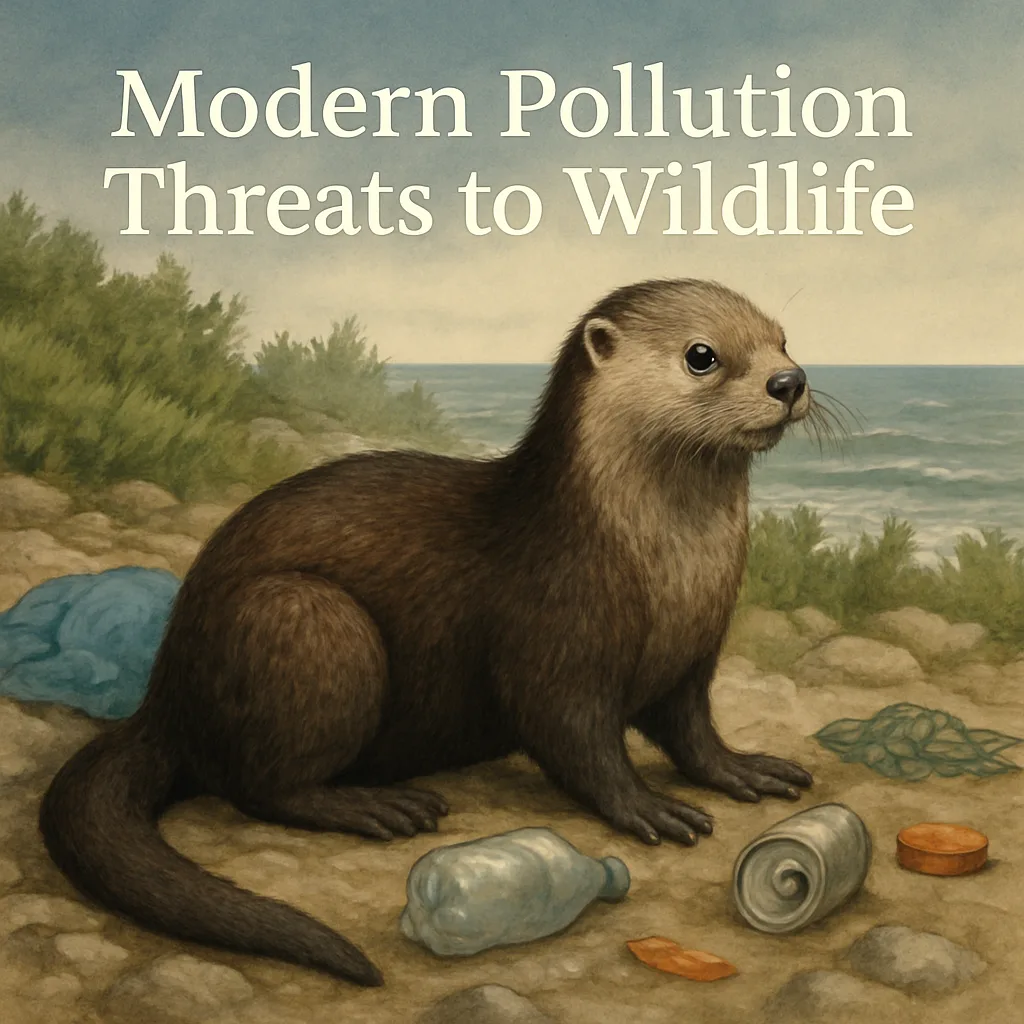
Pollution affects countless species, from the smallest insects to large marine mammals. It disrupts ecosystems by changing the natural balance of environments, often leading to unforeseen consequences. This article will explore how various forms of pollution threaten wildlife and what is being done to address these challenges.
By examining case studies and expert observations, readers will learn about the diverse ways pollution affects animal life, from habitat degradation to direct harm. The discussion will also touch on how pollution-related extinction threats can be mitigated through conservation efforts.
🧭 Where It Lived
Pollution affects wildlife across various habitats, from densely populated urban areas to the most remote wildernesses. In urban locales, animals like birds and small mammals are impacted by air and noise pollution, which can alter their natural behaviors and lead to reduced survival rates.
In aquatic environments, pollutants such as oil spills and plastic waste have dire consequences for marine life across oceans and rivers. Coral reefs are particularly vulnerable as chemicals can disrupt reproduction and cause bleaching, a phenomenon where corals lose their symbiotic algae, vital for their survival.
Even pristine environments such as rainforests and polar regions are not immune to pollution. Airborne pollutants travel vast distances, resulting in contamination far from their source. This has severe implications for species with limited ranges or specialized habitat needs, increasing their extinction risk.
🌿 Habitat and Daily Life
Wildlife inhabiting areas rich in pollutant exposure often experience disrupted climatic and environmental conditions. Changes in rainfall patterns, due to pollution-induced climate shifts, can alter water availability in a region, affecting animals reliant on consistent water sources.
Pollution can contaminate the diet of many species. For instance, marine animals may ingest plastic debris mistaking it for food, which can lead to internal injuries or starvation. Terrestrial animals may consume plants or prey that have absorbed toxins from their surroundings, impacting health and reproductive success.
Animal behaviors, such as migration and social interactions, are also influenced by pollution. Altered pathways or health issues caused by pollution can disrupt breeding seasons and reduce offspring survival rates. These effects, coupled with predator-prey imbalances due to the loss of certain species, cascade through ecosystems.
🧬 What Made It Unique
Pollution creates unique challenges for wildlife that must adapt to survive. Animals often develop physical adaptations to cope with polluted environments. Some fish have evolved gill structures to filter out heavier metals from visibly polluted water, demonstrating nature's resilient but limited capacity for adaptation.
Behavioral adaptations are also noted, where animals might change migratory routes to avoid polluted areas or alter feeding habits as traditional food sources become contaminated. While these adaptations showcase resilience, they often come at a cost, affecting overall fitness and survival.
Culturally, wildlife affected by pollution can impact human societies that depend on them. Many communities rely on clean natural resources for food and livelihood. Pollution-induced decline in wildlife abundance or quality can have profound socioeconomic implications.
⏳ When It Disappeared
The timeline for wildlife extinction due to pollution is often difficult to establish. Many affected species gradually decline before disappearing entirely, with last confirmed records often dating back decades. In heavily polluted environments, extinction can be declared after exhaustive surveys fail to find any surviving individuals.
Uncertainty frequently surrounds these timelines due to missing records or misidentifications in the field. For instance, environmental factors can obscure field evidence, while remote habitats complicate thorough assessments.
Species categorized as "Extinct in the Wild" remain critical examples. Such classifications highlight the importance of pollution control, as these species may survive only in managed environments, far from their natural habitats.
⚠️ Why It Went Extinct
Pollution interacts with several extinction drivers. Habitat loss due to industrial development contaminates ecosystems with toxic waste, making survival difficult for local wildlife.
Air and water pollution contribute to disease spread among animal populations, weakening their immune systems and leading to increased mortality rates. This is often exacerbated by climate shifts, further altering habitats and living conditions.
Overhunting and invasive species also play roles, compounded by pollution factors that reduce food availability and individual fitness. These multi-causal threats illustrate the complex nexus between human activity and wildlife decline, emphasizing the need for multi-pronged conservation actions.
🧩 How We Know (Evidence and Records)
Determining the impact of pollution on wildlife employs various evidence types, including field notes, photographic records, and, increasingly, genetic studies. Fossils and subfossils help scientists understand historical population declines linked to pollution changes over time.
Museum specimens provide concrete evidence for species once common and highlight physical changes that might be due to pollution. Advances in technology allow for tracking pollutants at a molecular level, offering insights into their ecological effects.
Certain species are challenging to study due to their elusive nature or inaccessible habitats, complicating data collection. Yet, researchers employ creative strategies, such as satellite imagery and remote sensing, to monitor these cryptic populations.
🛡️ Could It Have Been Saved
Realistic conservation actions like enforcing stricter pollution controls, establishing protected areas, and regulating chemicals can mitigate pollution impacts. Hunting limits and controlling invasive species also support ecosystem recovery.
Unfortunately, these efforts often occur when damage is already substantial, highlighting the need for proactive measures. Conservation initiatives sometimes lack the necessary resources or political will for implementation at a meaningful scale.
Late conservation attempts, though sometimes ineffective, provide valuable lessons for future strategies. They underscore the importance of early intervention in preserving wildlife populations and habitats from pollution-related threats.
🔁 Are There Any Survivors or Close Relatives Today
Many species have close relatives who share certain traits but might inhabit different ecological niches. These relatives can often inform conservation strategies by revealing how adaptations to pollution occur.
Ecological replacements, species fulfilling similar roles in ecosystems, sometimes emerge in response to pollution-caused extinctions. Recognizing these dynamics enables better restoration efforts by highlighting adaptive pathways.
Reintroduction or captive breeding programs, although challenging, offer hope for some species. They aim to re-establish populations in less-polluted areas but require careful planning to ensure sustainable outcomes.
❓ Common Questions and Misconceptions
Was it hunted to extinction? While hunting exacerbates extinction risks, pollution often plays a larger role, disrupting ecosystems and health.
Why didn’t it adapt or move? Species have limited adaptive capacity. Rapid pollution changes can outpace their ability to adjust or relocate.
Could it still be alive somewhere? For declared extinct species, survival in small, undetected pockets is unlikely though not impossible.
What does 'declared extinct' actually mean? It signals exhaustive searches failed to find any remaining individuals under natural conditions.
What is the difference between endangered and extinct? Endangered species are at significant risk of extinction soon, while extinct species lack any living members.
Why are island species so vulnerable? Their limited range and isolated evolution increase vulnerability to pollution impacts.
How does pollution affect marine life? It leads to habitat degradation, food scarcity, and direct harm through toxins.
Can legislation reduce wildlife pollution? Yes, effective laws can limit pollutants and fund conservation for at-risk species.
📌 Summary
- Pollution poses a major threat to global wildlife.
- Impacts are widespread, from urban areas to remote habitats.
- Habitats affected include urban, aquatic, and pristine environments.
- Pollution disrupts diets and behaviors, affecting survival.
- Species develop adaptations, but often not fast enough.
- Extinctions attributed to pollution can be hard to confirm.
- Drivers include habitat loss, chemical exposure, and climate shifts.
- Evidence comes from fossil records, genetics, and field observations.
- Conservation efforts are crucial, though sometimes delayed.
- Close relatives often inform recovery strategies.
- Pollution challenges necessitate multi-faceted conservation efforts.
- Proactive measures are key to preventing future extinctions.
- Human activity and urban development are major pollution sources.