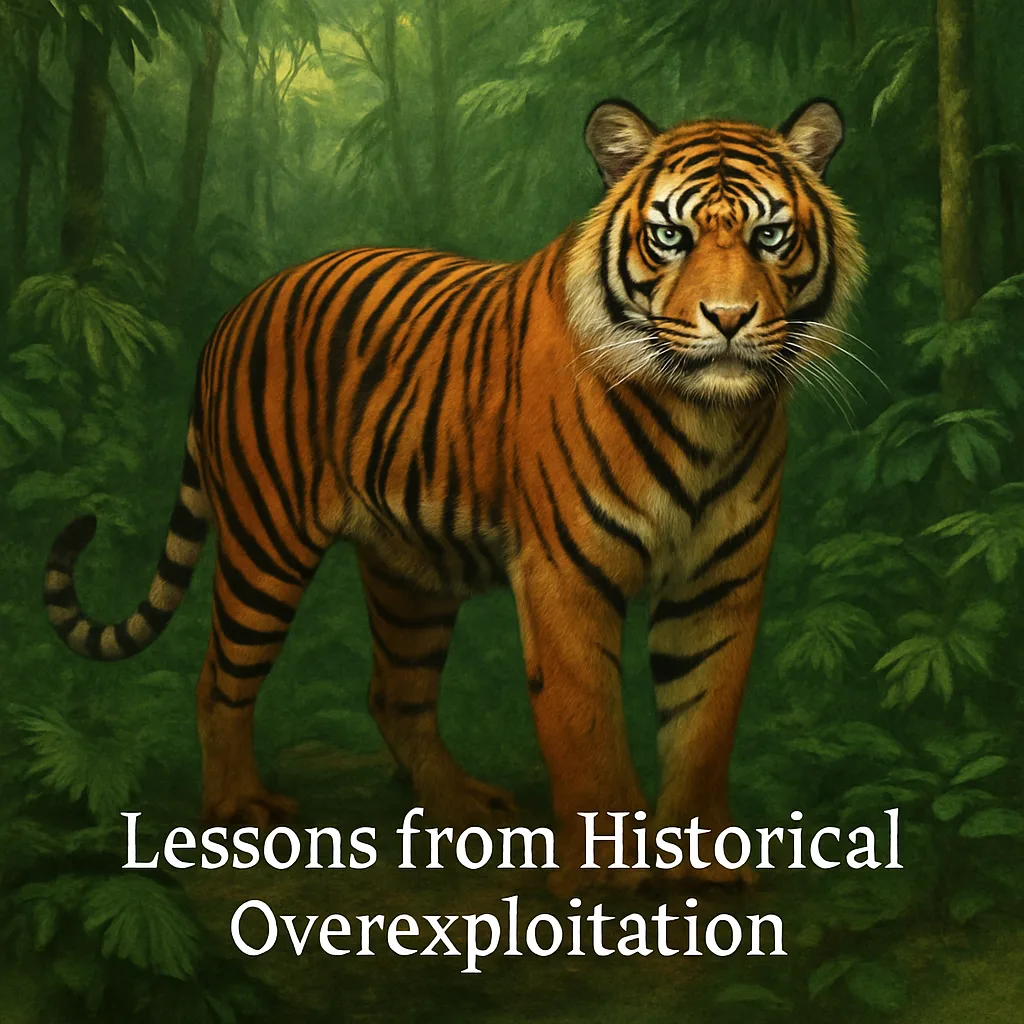
🏞️ Lessons from Historical Overexploitation
🌍 What It Was
Overexploitation has historically led to the extinction of several unique animal species. One such example is the passenger pigeon, once a common bird in North America, known for its vast flocks that could darken the sky.
The passenger pigeon was closely related to other pigeon species we see today, like the common rock pigeon. This bird played a significant role in its ecosystem, aiding in seed dispersal and maintaining forest health.
In this article, we will explore where the passenger pigeon lived, its daily life, why it went extinct, and what lessons it offers for modern conservation efforts.
🧭 Where It Lived
The passenger pigeon inhabited the deciduous forests of eastern North America, ranging from Canada all the way down to the Gulf Coast. Its range extended over a vast area, yet it was primarily concentrated in the Great Lakes region during the breeding season.
These birds were highly dependent on forest ecosystems, relying on abundant tree nuts, such as acorns and beechnuts, for nourishment. The richness of forests provided the necessary resources for sustaining their large populations.
The bird's preference for specific habitats made it vulnerable. Heavy deforestation for agriculture and urban development significantly reduced their living areas, exacerbating their decline.
🌿 Habitat and Daily Life
The passenger pigeon's habitat was characterized by temperate climates, with cold winters and warm summers. Rainfall was moderate, supporting the lush forests they called home.
Their diet consisted mainly of nuts and seeds, which they foraged from the forest floor. During the breeding season, they nested in large colonies, sometimes creating massive rookeries that covered miles.
Passenger pigeons were social birds, traveling in large flocks to find food and breeding sites. Their collective behaviors included synchronized flight and communal nesting, which offered some protection from predators.
🧬 What Made It Unique
The passenger pigeon was notable for its astounding numbers and impressive migratory flocks. They had a sleek, aerodynamic body, adapted for long-distance flying, and their iridescent feathers were strikingly beautiful.
One special ecological role they played was contributing to the cycling of nutrients within their habitats. Their vast group dynamic helped spread seeds over wide areas, promoting forest regeneration.
Culturally, the passenger pigeon was significant in early American history, providing an abundant food source for native peoples and later European settlers.
⏳ When It Disappeared
The last known wild passenger pigeon was shot in the southern United States in 1900. The very last individual, named Martha, died in captivity in 1914 at the Cincinnati Zoo.
While extinction declarations rely on considerable evidence, some unconfirmed sightings were reported until the early 20th century. However, no conclusive proof of their survival past 1914 exists.
Declared "extinct" means no individuals are confirmed living in the wild or captivity. The passenger pigeon's extinction was tragically rapid, a process completed within less than a human lifetime.
⚠️ Why It Went Extinct
The extinction of the passenger pigeon was primarily due to overhunting and habitat loss. Hunters targeted them for meat, with their large flocks providing an easy quarry. This hunting was unsustainable, dramatically reducing their numbers.
Habitat fragmentation further accelerated their decline. Widespread deforestation removed critical breeding and feeding sites, making survival increasingly difficult.
The introduction of competition from invasive species and possible diseases might have also played a role. However, the impact of human exploitation remains the most significant driver of their extinction.
🧩 How We Know (Evidence and Records)
Evidence of the passenger pigeon's existence and extinction comes from various sources, including preserved museum specimens, early photographs, and detailed written accounts.
Field notes from naturalists of the era provided insights into the bird's habits, population dynamics, and the impact of human activities on their decline.
Verifying the species identity and extinction timeline relied on these historical records, with genetics playing a minimal role due to the species' long absence.
🛡️ Could It Have Been Saved
Conservation measures, such as hunting regulations and habitat protection, might have prevented the passenger pigeon's extinction if implemented sooner.
Unfortunately, awareness about overexploitation and ecological impacts came too late. By the time protective actions were considered, the population had already dwindled to numbers too small to recover.
Although there were initial efforts to breed them in captivity, these were unsuccessful, highlighting the challenges of conservation without strategic foresight.
🔁 Are There Any Survivors or Close Relatives Today
While the passenger pigeon is extinct, its closest living relative is the band-tailed pigeon, which shares similar ecological roles, such as seed dispersal.
Though not identical, these relatives serve analogous functions in modern ecosystems, reminding us of the passenger pigeon's lost legacy.
There are no reintroduction programs for the passenger pigeon. However, discussions around de-extinction highlight broader implications for conservation science.
❓ Common Questions and Misconceptions
Was it hunted to extinction? Yes, overhunting was a critical factor, exacerbated by habitat loss.
Why didn’t it adapt or move? Their specialized habitat needs and rapid human impact left little time or space for adaptation.
Could it still be alive somewhere? Unlikely, as extensive searches and studies have found no credible evidence of survival.
What does 'declared extinct' actually mean? It indicates that no living individuals remain, confirmed through thorough investigations.
What is the difference between endangered and extinct? Endangered species still exist but are at risk of extinction, whereas extinct species have no survivors.
Why are island species so vulnerable? Limited ranges and unique ecosystems make them susceptible to rapid changes and invasions.
📌 Summary
- The passenger pigeon was a once-abundant North American bird.
- It lived in eastern North America's deciduous forests.
- Flourished in habitats rich in tree nuts and seeds.
- Fed on nuts and seeds; traveled in huge flocks.
- Known for synchronized flight and communal nesting.
- Last known individual died in captivity in 1914.
- Main extinction drivers: overhunting and habitat loss.
- Evidence includes specimens, photographs, and historical records.
- Closest living relative: band-tailed pigeon.
- Lesson: Timely conservation actions are crucial.
- Takeaway: Rapid exploitation can lead to irreversible loss.