🏞️ Western Black Rhinoceros
🌍 What It Was
The Western Black Rhinoceros, scientifically known as Diceros bicornis longipes, was a subspecies of the Black Rhinoceros. It was a magnificent and sturdy creature, characterized by its thick skin and two prominent horns. This rhinoceros was one of several subspecies of Black Rhinoceroses, all known for their distinctive prehensile upper lip, which is uniquely adapted for grasping leaves and twigs.
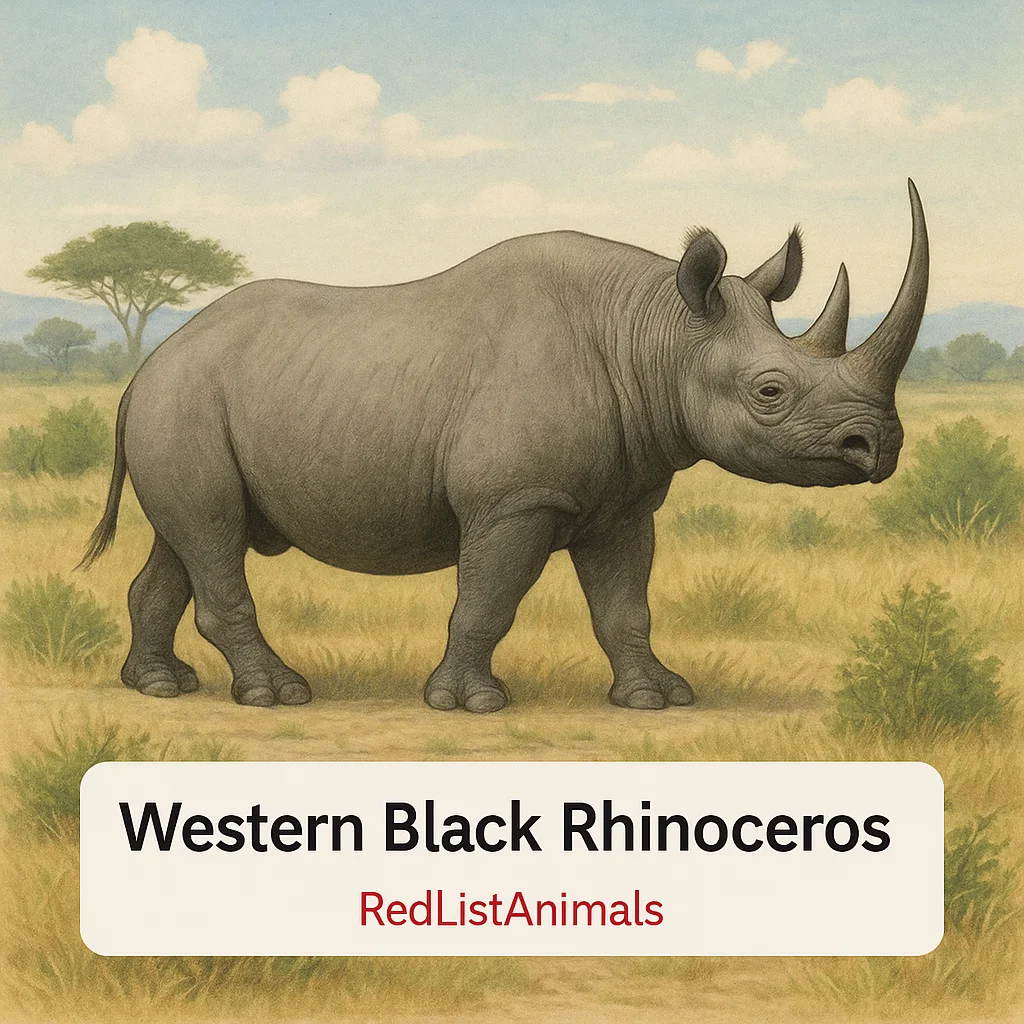
Closely related to other Black Rhinoceroses, the Western Black Rhinoceros shared similar grazing habits but occupied different geographic ranges and habitat preferences. It played a crucial role in its ecosystem as a keystone species, helping to maintain the balance of vegetation. Its disappearance leaves us with lessons about biodiversity and ecosystem health.
In this article, you will explore the Western Black Rhinoceros's habitat, lifestyle, the timeline of its extinction, and the factors contributing to its demise. This education aims to raise awareness of conservation challenges and the complexities involved in saving species from extinction.
🧭 Where It Lived
The Western Black Rhinoceros was predominantly found in western Africa, with its range extending over countries such as Cameroon, Chad, and Nigeria. These regions offered the specific environmental conditions this species needed to thrive. The rhinoceros lived in areas where the seasons could shift dramatically, offering varied foraging opportunities throughout the year.
This subspecies relied heavily on savanna habitats, which are characterized by alternating periods of wet and dry seasons. The open grasslands interspersed with trees and shrubs provided appropriate foraging grounds for feeding, as well as adequate cover from potential threats. The unique ecological makeup of these areas supported a wide range of biodiversity that supported the rhinoceros's dietary needs.
The Western Black Rhinoceros was not island-limited; however, its dependency on specific savanna ecosystems made it highly vulnerable to any habitat alterations or destruction. As these natural landscapes transformed for agricultural purposes or were otherwise altered by human activity, the rhinoceros populations felt the impact acutely. This loss of habitat introduced stresses that hastened the decline of this subspecies.
🌿 Habitat and Daily Life
The climate of the Western Black Rhinoceros's habitat ranged from tropical to semi-arid conditions. These regions experienced varied rainfall patterns and temperatures, which influenced the availability of food and water sources. The rhinoceros was well adapted to navigating these changes, relying on its keen senses and physical durability.
As herbivores, Western Black Rhinoceroses primarily fed on a diet of leafy plants, twigs, and fruits. Their prehensile lips allowed them to grasp vegetation with ease, stripping leaves from branches efficiently. They generally foraged during the cooler parts of the day, early mornings and late afternoons, conserving energy and avoiding the midday heat.
Socially, these rhinoceroses tended to be solitary but were known to form loose associations, especially mothers with calves. Mating was not restricted to a specific season, and female rhinoceroses took significant care in rearing their young, who typically stayed at their side for several years. These rhinoceroses naturally played roles as seed dispersers, contributing to their ecosystem's biodiversity.
🧬 What Made It Unique
The Western Black Rhinoceros was notably distinguished by its size and two prominent horns composed of keratin rather than bone. These horns were not only defensive tools but also aided in foraging by breaking into thorny shrubs to access leaves. Its tough, thick skin provided protection from both the environment and potential predators while allowing for thermoregulation.
In terms of senses, the rhinoceros possessed acute hearing and a strong sense of smell, which helped compensate for its relatively poor eyesight. These adaptations made the rhinoceros an effective navigator and forager in its environment.
Historically, the Western Black Rhinoceros held cultural significance in various African communities. It was often featured in folklore and spiritual beliefs, representing strength and resilience. Unfortunately, this reverence did not provide enough advocacy to prevent its eventual extinction.
⏳ When It Disappeared
Records indicate the Western Black Rhinoceros was last widely observed in the late 20th century, with the last confirmed sightings occurring in the early 2000s. After extensive surveys failed to locate any individuals, the subspecies was declared extinct by the International Union for Conservation of Nature (IUCN) in 2011. This formal declaration marked the end of a lineage that had persisted for millennia.
The complexity of its disappearance lies in the gradual diminution of populations over time. Often in remote and dense covers of savanna, such locations made it difficult for researchers to track and monitor remaining individuals conclusively. Misidentification and sporadic unverified sightings added layers of uncertainty to the timeline of its extinction.
The status "Extinct in the Wild" did not apply to this subspecies since no individuals were maintained in captivity or involved in breeding programs. The confirmation of extinction required thorough investigation and agreement among conservation bodies to ensure no surviving populations existed.
⚠️ Why It Went Extinct
Understanding the extinction of the Western Black Rhinoceros involves examining multiple factors that interplayed over time.
Habitat Loss and Fragmentation: As human populations expanded, more land was converted for agriculture and development, effectively shrinking and fragmenting the natural habitats this rhinoceros needed. This loss of space limited their foraging opportunities and restricted population movements, increasing their vulnerability.
Overhunting: The horns of the rhinoceros were highly prized, serving as symbols of wealth and status in some cultures. This led to extensive poaching, sharply reducing populations as the subspecies was hunted to near extinction despite international protections.
Climate Shifts and Extreme Events: Changes in climate could have contributed to the variability in food and water availability, impacting survival rates. Increased frequency of drought conditions may have exacerbated the already precarious situation for these animals.
Each of these drivers interplayed complexly, creating a cascade of adverse effects that cumulatively led to the subspecies' extinction.
🧩 How We Know (Evidence and Records)
The extinction of the Western Black Rhinoceros is grounded in robust scientific evidence. Researchers rely on historical records, museum specimens, and field surveys to ascertain the status and historical range of the species. These records have been painstakingly curated and cross-referenced for accuracy.
Modern methods such as genetics have been employed to verify the identities of different subspecies and understand their evolutionary history. Attempts to locate the species involved extensive fieldwork in remote areas, with surveys using both direct observation and indirect signs like spoor and dung analysis.
Despite these efforts, challenges remain, especially when the species once inhabited vast and remote areas. Reports of unverified sightings occasionally emerge, but none have been substantiated to revive hope for living populations.
🛡️ Could It Have Been Saved
Early and decisive conservation actions might have offered the Western Black Rhinoceros a chance for survival. Strategies such as creating protected wildlife reserves, implementing strict anti-poaching measures, and promoting sustainable land-use planning could have curbed population declines.
Captive breeding programs, though not employed for this subspecies, have succeeded elsewhere and might have provided a lifeline if initiated sooner. Unfortunately, by the time attention was drawn to the urgency of their conservation, viable population numbers had become untenable.
Trade-offs in conservation funding, regional political instabilities, and prioritization of other species all played roles in delaying action. The Western Black Rhinoceros serves as a poignant reminder of the importance of timely interventions and comprehensive conservation efforts.
🔁 Are There Any Survivors or Close Relatives Today
While the Western Black Rhinoceros is extinct, other subspecies of the Black Rhinoceros, such as the Eastern and Southern Black Rhinoceroses, persist, albeit under threats. These close relatives continue to embody the ecological roles once filled by the Western Black Rhinoceros.
White Rhinoceroses, distinct yet similar, represent part of the diverse rhinocerotid family, sharing habitats and contributing to ecosystem processes akin to their extinct cousins. Conservation efforts focus on these survivors, emphasizing habitat preservation and anti-poaching efforts to ensure their continued existence.
No reintroduction programs for the Western Black Rhinoceros exist, as no genetic or breeding repository remains to support such initiatives. Efforts continue, however, to protect the remaining rhinoceros populations from similar fates.
❓ Common Questions and Misconceptions
Was it hunted to extinction? Yes, poaching for horns was a significant driver of its extinction, though habitat loss also played a critical role.
Why didn’t it adapt or move? The specific habitat needs and the fragmentation of habitats limited its options for adaptation or migration.
Could it still be alive somewhere? Extensive surveys have not found evidence of surviving individuals, leading to its classification as extinct.
What does 'declared extinct' actually mean? It means no living individuals are known to exist after thorough and reliable assessments.
What is the difference between endangered and extinct? Endangered species still have individuals left, whereas extinct species have none known to survive.
Why are island species so vulnerable? Island species often have limited ranges and adaptations that make them susceptible to changes.
📌 Summary
- The Western Black Rhinoceros was a subspecies of the Black Rhinoceros.
- It lived in the savannas of western Africa, such as Cameroon and Chad.
- The subspecies inhabited grasslands with interspersed forests and shrubs.
- Primarily an herbivore, it had a diet consisting of leaves and fruits.
- Known for its two horns and a prehensile upper lip designed for grasping vegetation.
- Last confirmed sightings were in the early 2000s, declared extinct in 2011.
- Main extinction drivers included poaching and habitat loss.
- Evidenced by extensive field surveys, records, and genetic analysis.
- Close relatives include other Black Rhinoceros subspecies and White Rhinoceroses.
- Teaches the importance of early and sustained conservation intervention.
- A reminder of the keen interaction between species and their environments.