🏞️ Sea Mink
🌍 What It Was
The sea mink was a member of the Mustelidae family, which includes otters, weasels, and other mink species. It was distinctive for being larger than its terrestrial relatives, with a more robust build and a gleaming reddish-brown fur.
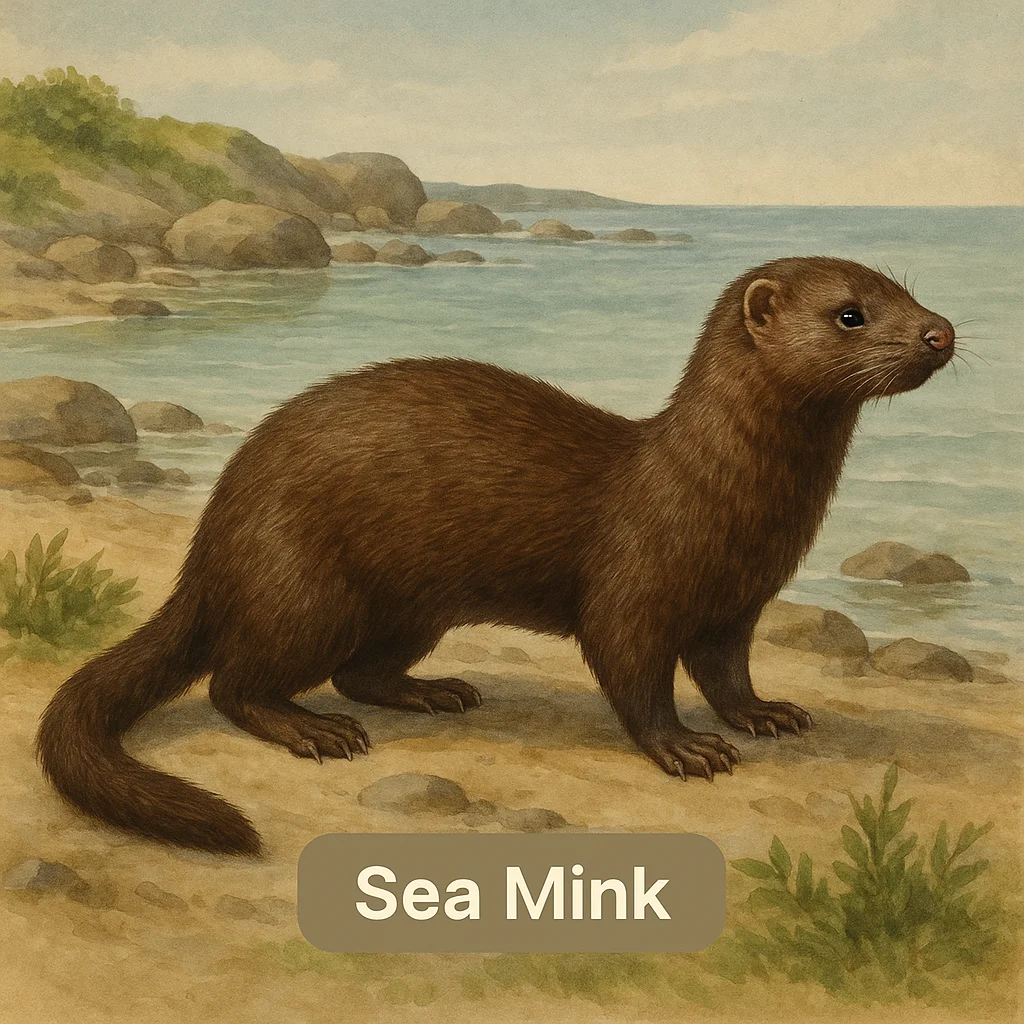
Closely related to today's American mink, the sea mink played a role in its coastal ecosystem, preying on marine and shoreline creatures. Its life and eventual extinction provide insight into the precarious balance between species and their environments.
In this introduction, we will explore where the sea mink lived, its daily life, the reasons behind its extinction, and what lessons it offers for conservation efforts today.
🧭 Where It Lived
The sea mink's range was limited to the northeastern coast of North America, particularly around the Gulf of Maine and parts of Atlantic Canada. This region is characterized by its rugged coastline, dotted with numerous islands and estuaries.
The sea mink was adapted to a coastal habitat, relying heavily on marine resources available in tidal areas and rocky shorelines. Its existence was closely tied to the abundant food supplies of these shorelines, which included fish and other small marine creatures.
Being confined to a relatively narrow geographic area made the sea mink particularly vulnerable. Isolation on islands and coastal areas often elevates the extinction risk for species, as their limited range decreases their resilience against threats like habitat destruction and overexploitation.
🌿 Habitat and Daily Life
The climate of the sea mink's habitat was generally temperate with cold winters and warm summers. Seasonal changes influenced the availability of food sources, affecting its foraging patterns throughout the year.
The sea mink's diet was diverse, including fish, shellfish, and crustaceans. It likely exhibited hunting behaviors similar to its relatives, using its keen senses to locate prey along the water's edge and in shallow waters.
Not much is known about the sea mink's reproductive habits, but it is assumed to have had similarities with the American mink. Offspring likely required parental care, teaching them hunting and foraging skills critical for survival.
🧬 What Made It Unique
The physical traits of the sea mink distinguished it from other mink species. Notably larger, it boasted a thick, water-repellent coat that provided insulation against cold marine environments. This adaptation was essential for its survival in harsh coastal climates.
Although little is recorded about any specific cultural significance the sea mink may have held, its fur was a coveted resource, which unfortunately contributed to its overexploitation by humans.
⏳ When It Disappeared
The sea mink is believed to have vanished by the late 1800s, with the last confirmed records and sightings occurring around this time. Its extinction was formally declared due to the absence of verifiable sightings or evidence since then.
Exact details about the last sea mink remain sparse, attributed to the challenges of studying an elusive species living in remote and rugged terrains. This often complicates efforts to pinpoint the exact timing and reasons surrounding its extinction.
⚠️ Why It Went Extinct
Several factors contributed to the extinction of the sea mink. Habitat loss due to human encroachment and coastline development decreased available space and resources for the species.
Overhunting was a significant driver; the sea mink's fur was highly valued, leading to intensive hunting pressure. This overexploitation sharply reduced their numbers, making population recovery unlikely.
While introduced or invasive species may not have played a direct role, shifts in marine ecosystems and climate changes could have exacerbated the existing pressures, further destabilizing the sea mink's fragile existence.
🧩 How We Know (Evidence and Records)
The primary evidence for the sea mink's existence comes from subfossil remains, field notes from explorers, and occasional museum specimens. Anthropological records, including oral histories, allude to its once-prominent presence along the northeastern coast.
Scientists use these records to verify the sea mink's identity and existence, relying on comparative morphologies with living relatives to distinguish it from other mink species.
The rarity and elusiveness of the sea mink historically posed challenges for accurate and frequent documentation, complicating efforts to fully understand its lifecycle and extinction timeline.
🛡️ Could It Have Been Saved
Realistic conservation measures, such as regulatory hunting limits and protected habitats, might have altered the course for the sea mink. However, such initiatives were deemed unnecessary or were implemented too late by the time the severity of the situation was realized.
With increased awareness and early interventions, strategies protecting the coastal ecosystems and sustainable management of animal populations could have contributed to preserving the sea mink.
🔁 Are There Any Survivors or Close Relatives Today
The closest living relative of the sea mink is the American mink, which shares numerous ecological and behavioral traits. They occupy similar ranges and fulfill comparable ecological roles in their environments.
Ecological replacements do not exist per se for the sea mink, but other species within the region continue to fulfill roles in marine food webs, maintaining a degree of ecological balance.
❓ Common Questions and Misconceptions
Was it hunted to extinction? Overhunting for its fur was one of the significant factors.
Why didn't it adapt or move? The sea mink's specialized habitat and diet left it vulnerable to change.
Could it still be alive somewhere? It's highly unlikely due to a lack of recent sightings or evidence.
What does 'declared extinct' mean? It means no confirmed sightings or evidence of existence for a significant period.
What is the difference between endangered and extinct? Endangered species face a risk of extinction; extinct species have no surviving members.
Why are island species so vulnerable? Limited range and resources increase risk from changes and human activities.
📌 Summary
- The sea mink was a large aquatic member of the mink family.
- It lived along the northeastern coast of North America.
- Its habitat comprised rugged coastlines and marine environments.
- The sea mink's diet included marine and shoreline creatures.
- Adaptations included a thick, water-repellent coat.
- Last known records date to the late 1800s.
- Main extinction drivers included overhunting and habitat loss.
- Evidence from subfossils and historical records supports its history.
- Closest living relative is the American mink.
- Conservation lessons highlight early intervention in habitat and wildlife protection.
- The sea mink's story reflects the need for sustainable human-nature interactions.