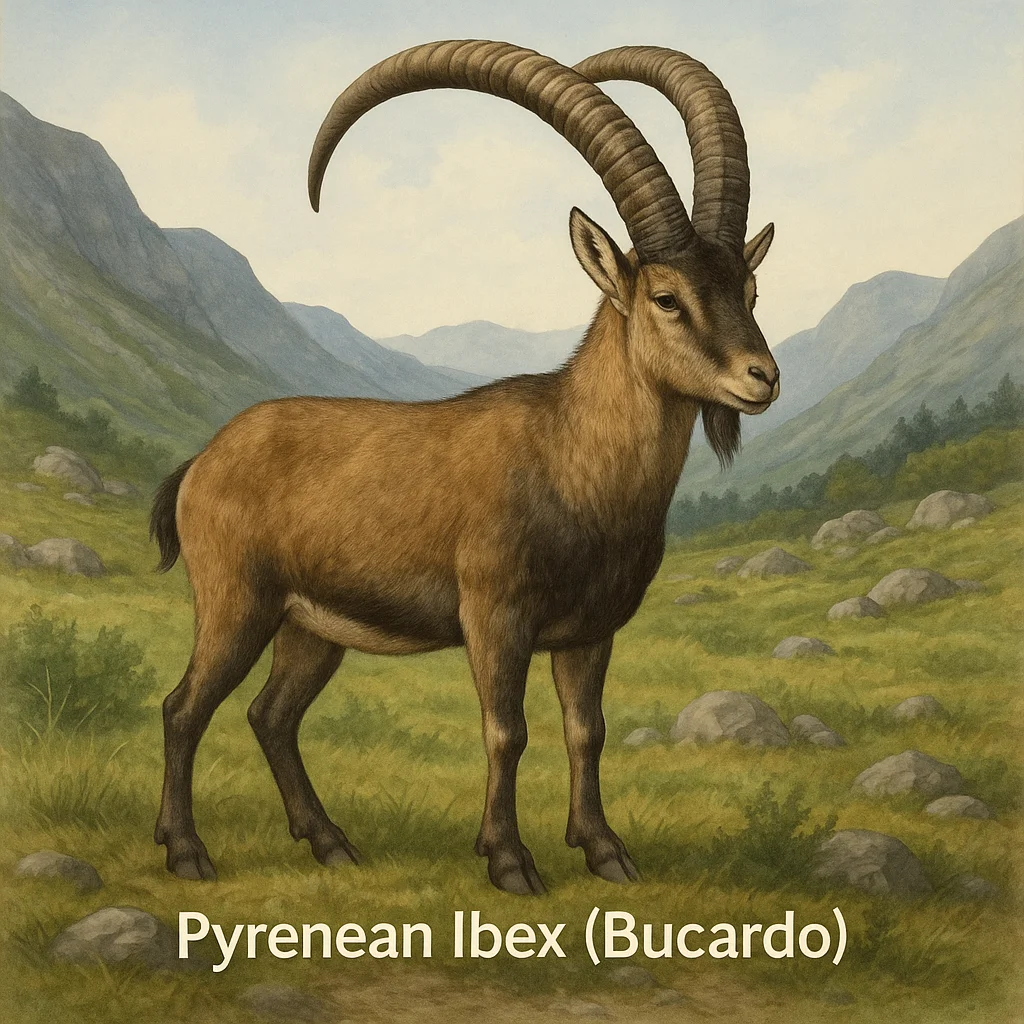
🏞️ Pyrenean Ibex (Bucardo)
🌍 What It Was
The Pyrenean Ibex, also known as "Bucardo," was a type of wild goat that inhabited the mountainous regions of the Pyrenees. It was one of the subspecies of the Spanish ibex, recognized for its stocky build and impressive curved horns, which the males in particular possessed.
As a distant relative of the common domestic goat, the Pyrenean Ibex was closely linked to other ibex species found across Europe, North Africa, and certain parts of Asia. These relatives provide insights into its past ecological role and behaviors.
This article will explore where the Pyrenean Ibex lived, how it managed to thrive in its challenging environment, and the circumstances leading to its disappearance. Understanding its extinction is crucial as it reflects broader patterns seen in the loss of mountain species worldwide.
🧭 Where It Lived
The Pyrenean Ibex was native to the Pyrenean Mountains which form the natural border between Spain and France. This rugged and scenic landscape provided the perfect backdrop for its alpine lifestyle. The ibex preferred rocky terrains, which offered it both safety from predators and ample opportunity for grazing.
Within these mountain ranges, the ibex thrived in steep and rugged alpine landscapes. These areas provided them with the necessary elevations and concealment from potential predators, contributing to their survival for centuries.
Due to its localized range, the Pyrenean Ibex was especially vulnerable to habitat changes. With such a limited geographic area to roam, any alterations to its environment, such as habitat loss or changes in available food sources, posed significant risks to its survival. This localization is a reminder of the vulnerability of specialized mountain species around the world.
🌿 Habitat and Daily Life
The environment of the Pyrenean Mountains is characterized by its alpine climate, which includes cold winters with significant snowfall and mild summers. The ibex demonstrated incredible resilience in adapting to this fluctuating climate, using the seasons to its advantage.
As herbivores, the Pyrenean Ibex primarily consumed grasses, herbs, and other mountain vegetation, which were plentiful during the spring and summer months. They skillfully foraged these alpine meadows, utilizing their climbing abilities to reach areas inaccessible to other wildlife.
The species exhibited a social structure common among wild goats, with individuals often forming small herds that provided protection and facilitated breeding. These herds were typically composed of females and their young, while males would join during the breeding season, which occurs in late autumn.
🧬 What Made It Unique
The Pyrenean Ibex possessed several adaptations that made it well-suited for its mountainous habitat. Its thick coat offered warmth during the cold months, while its distinctive large horns, especially prominent in males, served both as a defense mechanism and a tool for attracting mates.
Adept climbers, these ibex had strong, muscular legs and specialized hooves that allowed them to navigate rocky and uneven terrains with ease. Their agility was crucial for escaping predators and searching for food across the rugged landscape.
In terms of cultural significance, the Pyrenean Ibex held a unique place in local history and folklore, symbolizing the untamed and resilient spirit of the Pyrenean Mountains. Its decline and eventual extinction also serve as a poignant reminder of the fragility of mountain ecosystems.
⏳ When It Disappeared
The journey to extinction for the Pyrenean Ibex was both gradual and complex. The last confirmed sighting of a living Pyrenean Ibex was in January 2000, when the final individual, a female known as "Celia," was found dead.
While Celia's death marked the species' official extinction in the wild, accounts from the late 20th century suggested a steady decline in population due to various human impacts and ecological pressures. Despite some efforts to monitor and conserve the population, their numbers dwindled, leading to its classification as extinct.
As one of the first species to undergo de-extinction attempts via cloning—though unsuccessfully—the Pyrenean Ibex's story gained international attention and illustrated the critical nature of timely conservation action.
⚠️ Why It Went Extinct
Several factors contributed to the extinction of the Pyrenean Ibex. Habitat loss and fragmentation played a significant role as human activities, such as logging and land development, encroached on their living space. These alterations reduced available food sources and suitable habitats.
Overhunting was another central factor. Historically hunted for its impressive horns and meat, the pressure from hunting and poaching exacerbated the decline in its already small populations.
Additionally, climate shifts may have affected their habitat conditions, altering food availability and snow cover, although this remains a debated component among scientists. With all these complex and intertwined causes, the Pyrenean Ibex serves as a case study in the multi-causal nature of extinctions.
🧩 How We Know (Evidence and Records)
The study of the Pyrenean Ibex's extinction is supported by diverse evidence types. Museum specimens and field observations provide tangible records of their existence, while old photographs and oral histories offer insights into their behaviors and decline.
Genetic analysis of remaining material allowed scientists to sequence its genome, offering opportunities for future studies and, in part, facilitating cloning attempts. This research underscores the methodologies used by scientists to study and verify evidence from extinct species.
In remote or challenging environments like the Pyrenees, confirming a species' extinction is challenging due to potential undetected individuals. Conservationists must rely on rigorous data collection and monitoring to ascertain the status of such elusive species accurately.
🛡️ Could It Have Been Saved
Efforts to save the Pyrenean Ibex, particularly towards the end of its existence, focused on increased protection and monitoring. However, conservation actions often faced limitations due to financial constraints and the complex nature of habitat management in the rugged mountains.
More proactive strategies, such as establishing protected reserves earlier or implementing stricter hunting regulations, might have helped stabilize the population. Nonetheless, these efforts would have required significant investments and international cooperation to execute effectively.
The late attempt at de-extinction through cloning, although groundbreaking, came too late to offer a true possibility of survival for the species. Its story highlights the importance of timely intervention in conservation practices.
🔁 Are There Any Survivors or Close Relatives Today
Although the Pyrenean Ibex itself is extinct, its closest relatives, other Spanish and Alpine ibex species, continue to exist across Europe. These living relatives share many similarities in diet, behavior, and ecological roles.
Ecologically, these ibex relatives help maintain their respective environments by contributing to the natural grazing regime, which is essential for plant community dynamics and biodiversity in mountainous regions.
There are no current reintroduction programs specifically for the Pyrenean Ibex. Instead, efforts have focused on conserving existing ibex species and their habitats to prevent similar fates.
❓ Common Questions and Misconceptions
Was it hunted to extinction? Hunting contributed significantly, but other factors like habitat loss and possibly climate change were also involved.
Why didn’t it adapt or move? Its specialized habitat requirements limited its ability to relocate or adapt quickly to changes.
Could it still be alive somewhere? There have been no confirmed sightings since 2000, and it is considered extinct.
What does 'declared extinct' actually mean? It means there have been extensive surveys with no evidence of the species' existence.
What is the difference between endangered and extinct? Endangered means critically at risk of extinction, while extinct means no individuals are left alive.
Why are island species so vulnerable? Their limited ranges and specialized habitats make them particularly susceptible to environmental changes.
📌 Summary
- Pyrenean Ibex was a mountain goat endemic to the Pyrenees.
- It lived in alpine habitats between Spain and France.
- The ibex thrived in rocky, mountainous regions.
- It was herbivorous, navigating tough terrains to forage.
- Possessed unique adaptations for climbing and cold weather.
- Last seen in early 2000; declared extinct shortly afterward.
- Extinction driven by hunting, habitat loss, and climate shifts.
- Known through museum specimens, photographs, and field notes.
- Nearest relatives include other ibex species in Europe.
- An example of the importance of timely conservation.
- The species' extinction raises awareness of mountain species' plight.