🏞️ Bluebuck
🌍 What It Was
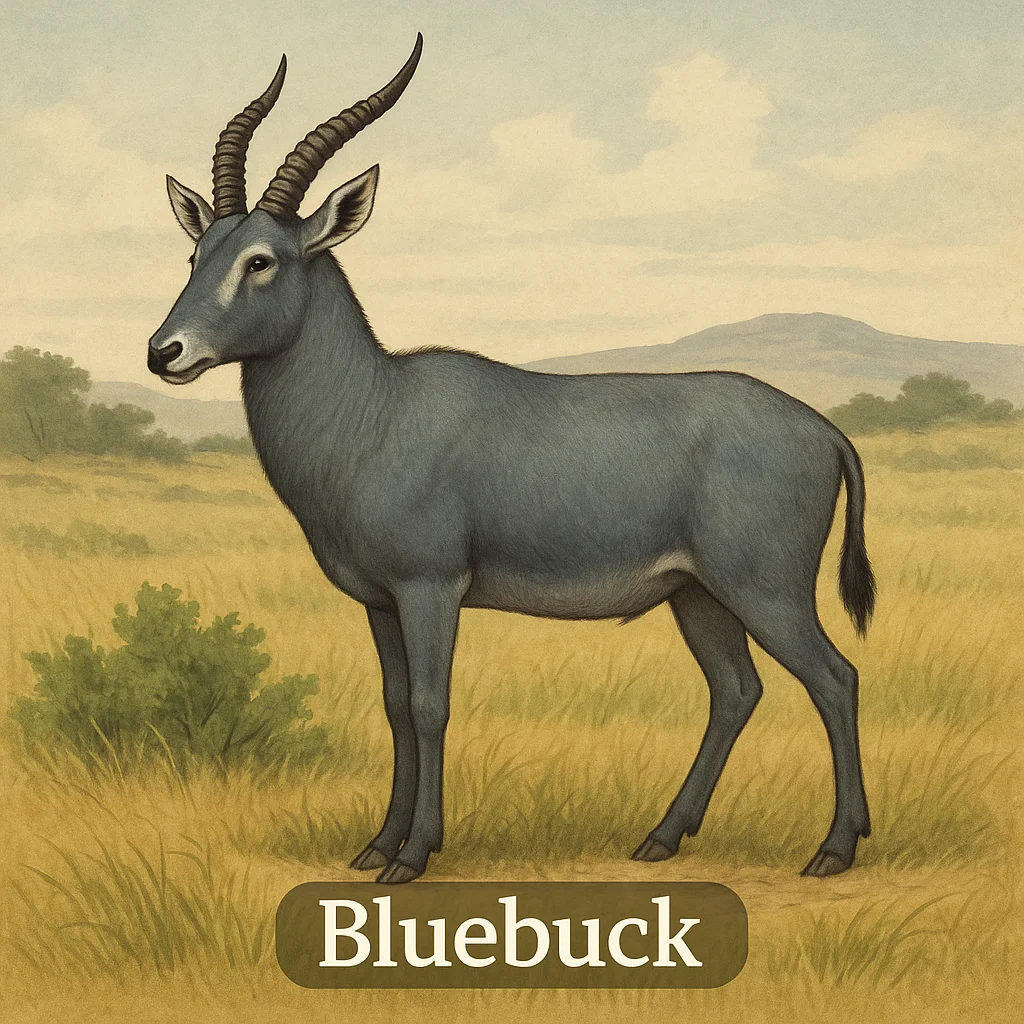
The bluebuck, also known as the blue antelope, was a unique species of antelope native to Africa. It was part of the family Bovidae, which includes other antelopes, goats, and cattle. The bluebuck stood out for its bluish-gray fur and was known for being slightly larger than its close relatives.
The bluebuck shared a closer resemblance to species like the roan antelope and the sable antelope, which are still present today. As a grassland grazer, the bluebuck played an essential role in its ecosystem by maintaining the flora balance and providing prey for predators.
In this article, you will learn about where the bluebuck lived, its daily life, reasons for its extinction, and what makes this species particularly noteworthy in the study of extinct animals.
🧭 Where It Lived
The bluebuck was native to the coastal plains of southwestern South Africa. Its primary range included regions that are now part of the Western and Eastern Cape provinces. These regions were characterized by diverse ecosystems, which included a mix of grasslands and bushy areas.
The bluebuck thrived in temperate grasslands, where it could graze on a variety of grasses. These open terrains offered the right conditions for grazing and were suitable for their social behavior, often moving in herds for better protection from predators.
Limited to a relatively small geographic range, the bluebuck faced increased risks of extinction. Its confined distribution meant that any significant habitat changes could have a drastic impact on its survival, as dispersal to new areas was limited due to its specialized habitat preferences.
🌿 Habitat and Daily Life
The climate in the bluebuck's natural habitat was temperate, experiencing moderate rainfall and mild temperatures throughout the year. These conditions favored the growth of grasslands that the bluebuck depended on for food.
As herbivores, bluebucks primarily fed on grasses. They were known to graze methodically, which also helped prevent overgrowth of certain plant species. Their grazing patterns contributed to the health and sustainability of their habitats.
Bluebucks typically lived in groups, which offered safety from predators like lions and hyenas. In terms of reproduction, they had a defined breeding season, and the females were responsible for caring for the offspring until they could join the herd.
The bluebuck interacted with its environment not just by grazing but by serving as prey to apex predators. This relationship was crucial for maintaining ecological balance within its native regions.
🧬 What Made It Unique
Bluebucks were medium-sized antelopes with distinctive bluish-gray coats, a feature that set them apart from other antelope species. This unique coloration was likely an adaptation for camouflage within their grassland habitats.
They had long, slightly curved horns that were used for defense and dominance displays within their groups. These physical characteristics played a significant role in daily survival and social interactions.
Aside from their ecological importance, the bluebuck had historical significance. It was among the first large mammals to be documented as extinct in the modern era, highlighting early human impacts on wildlife.
⏳ When It Disappeared
The bluebuck was last observed in the wild in the late 18th century. Comprehensive records indicate that the species was declared extinct by the early 19th century. Reliable sightings became increasingly rare, leading conservationists to conclude its extinction.
The lack of detailed records from its time has bred uncertainty about the exact timeline of its decline. Limited historical documentation makes it challenging to determine the specific year the last bluebuck survived, but by the 1800s, it was largely absent from its native areas.
Distinct from categories like 'functionally extinct', where a species might still exist in low numbers or in captivity, the bluebuck was declared 'extinct', meaning no known individuals were left worldwide.
⚠️ Why It Went Extinct
Multiple factors contributed to the extinction of the bluebuck. Habitat loss was a significant driver, as European settlers in South Africa converted grasslands to agricultural lands, reducing the available habitat for grazing.
Overhunting also played a crucial role. The bluebuck was hunted extensively by settlers for its meat and hide, and without effective regulation, populations dwindled rapidly before any conservation measures could be enacted.
Although invasive species or diseases were less documented as direct causes, they might have also contributed indirectly. The introduction of domestic livestock led to increased competition for resources, further pressuring the bluebuck's survival.
These factors combined to create a situation where the bluebucks could not adapt quickly enough or relocate to new areas, leading to their eventual extinction.
🧩 How We Know (Evidence and Records)
The primary evidence for the existence and extinction of the bluebuck comes from preserved museum specimens, historical written records, and some artistic depictions from the era. The preserved skulls and horns found in museums provide tangible proof of the bluebuck's physical characteristics.
Through careful examination of these specimens, scientists can confirm the bluebuck’s identity and make inferences regarding its population decline. Historical accounts from settlers and early naturalists offer additional insights into its extinction timeline.
While genetic evidence is scarce due to the lack of preserved tissues, ongoing advancements in genetic technology might someday provide further insights into the bluebuck's history and its relationship to extant species.
🛡️ Could It Have Been Saved
With the knowledge available today, several conservation strategies could potentially have been used to save the bluebuck. Establishing protected reserves early on could have safeguarded its natural habitat from agricultural expansion.
Enforcing hunting limits might have helped prevent overexploitation. Such regulations, coupled with a better understanding of the bluebuck’s ecological role, might have ensured more sustainable coexistence with humans.
Unfortunately, these practical steps were not taken in time, and by the time the bluebuck's plight was recognized, it was already too late for meaningful intervention.
🔁 Are There Any Survivors or Close Relatives Today
Today, the bluebuck's closest living relatives are likely the roan antelope and the sable antelope, which share similar habitats and ecological niches. These species help fill the ecological roles once occupied by the bluebuck.
While no direct reintroduction or captive breeding programs exist for bluebucks, the conservation of these related species can offer indirect insights into the habitat requirements and ecological functions that the bluebuck once represented.
❓ Common Questions and Misconceptions
Was it hunted to extinction? Yes, excessive hunting significantly contributed to its extinction, alongside habitat loss.
Why didn’t it adapt or move? Its specialized habitat needs and resulting limited range made relocation and adaptation difficult.
Could it still be alive somewhere? Given the comprehensive records, it is improbable that any bluebucks remain undiscovered today.
What does 'declared extinct' actually mean? It means no known individuals exist alive in the wild or in captivity.
What is the difference between endangered and extinct? Endangered species are at high risk, but still exist; extinct species have no living individuals left.
Why are island species so vulnerable? Limited ranges and isolated environments make them particularly susceptible to changes and human impacts.
📌 Summary
- The bluebuck was a unique antelope species native to South Africa.
- It lived primarily in the coastal plains of the Western and Eastern Cape.
- Preferred grassland habitats, which are critical for grazing.
- Fed primarily on grasses and moved in herds for protection.
- Distinguished by its bluish-gray coat and long, curved horns.
- Last known period alive was late 18th to early 19th century.
- Main extinction drivers included habitat loss and overhunting.
- Evidence comes from museum specimens and historical records.
- Closest relatives today are roan and sable antelopes.
- Highlights the need for early conservation measures to prevent extinction.
- A memorable takeaway is its role as one of the first large mammals recorded as extinct in modern human history.