🏞️ St. Helena Giant Earwig
🌍 What It Was
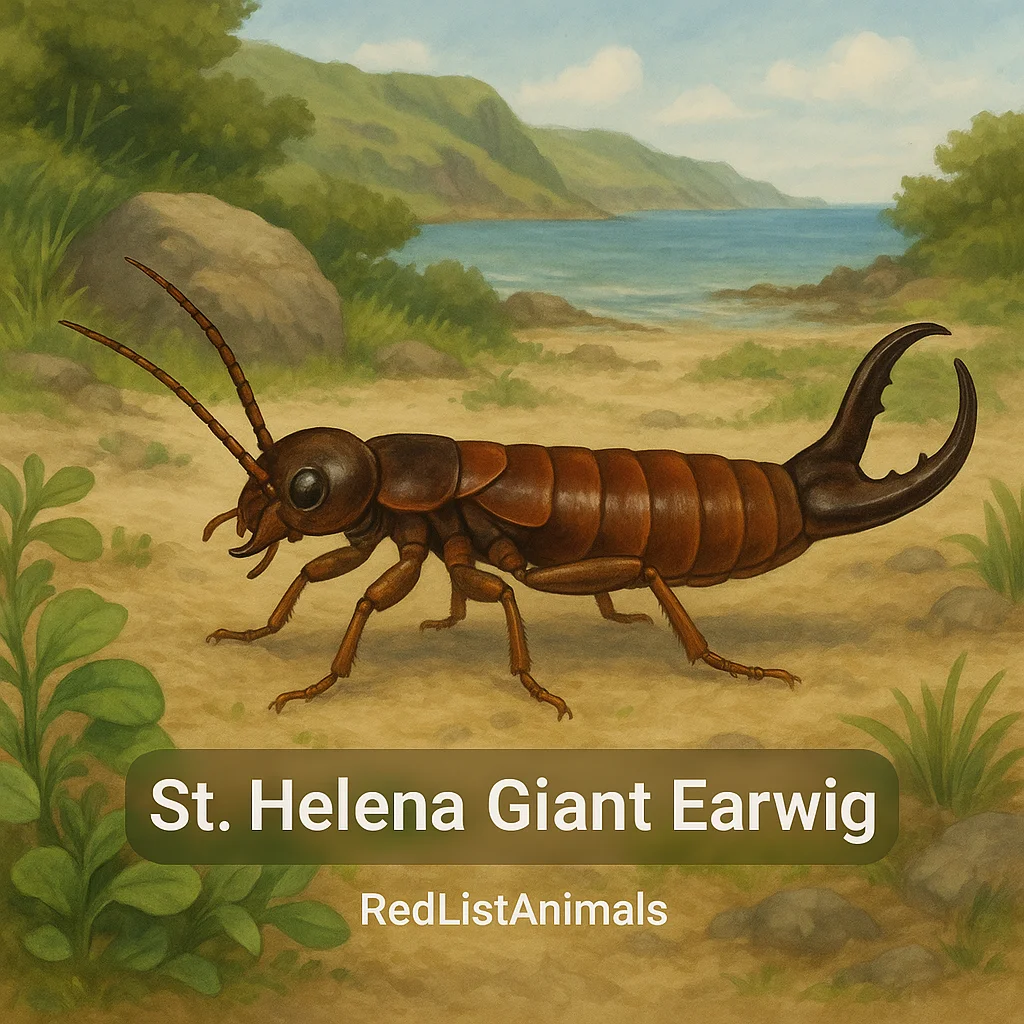
The St. Helena Giant Earwig was a large insect native to the island of St. Helena in the South Atlantic Ocean. It was the largest earwig in the world, known for its sizable forceps at the rear which it would use for defense and manipulation of its environment. As an insect, it was part of the order Dermaptera, which includes a variety of smaller earwig species found globally.
The closest living relatives to the St. Helena Giant Earwig are other, smaller species of earwigs that inhabit various ecosystems worldwide. Earwigs in general are known for their nocturnal habits and preference for damp, sheltered locations.
This article will explore where the St. Helena Giant Earwig lived, its behaviors, what made it unique, and why it eventually disappeared. Understanding its story gives insight into the broader themes of extinction science and conservation.
🧭 Where It Lived
The St. Helena Giant Earwig was found exclusively on St. Helena, a remote volcanic island in the South Atlantic Ocean. This island is known for its unique biodiversity, hosting species not found anywhere else in the world.
The earwig inhabited the island’s arid and semi-arid regions, often seeking shelter under rocks or within soil and leaf litter. The specific habitats it relied on included the mid to upper elevations of the island, where moisture and cover were more dependable.
Being limited to a single island increased the species' risk of extinction. Isolation often prevents species from relocating in response to environmental changes, making them especially vulnerable to habitat loss or other local threats.
🌿 Habitat and Daily Life
St. Helena experiences a mild climate, influenced by the surrounding ocean, with relatively stable temperatures and moderate rainfall. This climate supported the variety of ecosystems on the island, from coastal regions to higher-altitude arid zones where the giant earwig lived.
The diet of the St. Helena Giant Earwig is not well-documented, but like other earwigs, it likely included plant matter and small insects. Earwigs typically forage in the night to avoid predators and conserve moisture.
Reproduction in earwigs involves complex mating rituals and egg-laying, with females often providing care for their eggs and young. The St. Helena Giant Earwig was presumed to have a similar life cycle, with care strategies that protected offspring in the island's challenging conditions.
🧬 What Made It Unique
Physically, the St. Helena Giant Earwig was distinguished by its size, reaching lengths of up to 80 millimeters (about 3 inches). This size was quite remarkable compared to other earwigs, which may reach only a few millimeters in length.
The large forceps of the giant earwig were its most distinctive feature, used for protection against predators and competition. Its size and strength allowed it to manipulate its environment, turning over small stones or breaking up leaf litter to find food and shelter.
Though there is little evidence on cultural significance, the unique biodiversity of St. Helena makes every species, including the giant earwig, an integral part of its ecosystem's history.
⏳ When It Disappeared
The last confirmed sighting of the St. Helena Giant Earwig was in the early 1960s. Efforts to locate the species in its natural habitat have since been unsuccessful, leading to it being declared extinct by conservationists.
Extinction declarations are made when thorough searches provide no evidence of surviving individuals. Misidentifications can occur, but after extensive surveys by scientists and conservationists, the conclusion of extinction generally stands.
The status "extinct" indicates that no individuals are known to exist anywhere in the wild or captivity, a conclusion reached after significant search efforts across possible habitats.
⚠️ Why It Went Extinct
The extinction of the St. Helena Giant Earwig was likely due to a combination of factors, with habitat loss playing a central role. Human activity on the island led to landscape changes, reducing the suitable environments for the earwig.
Introduced species, such as rats and domestic animals, likely contributed to its decline by predating on the earwigs or competing for the same resources. Non-native plants may have also altered the habitat structure, further stressing the local ecosystem.
Environmental changes such as climate shifts may have exacerbated these pressures, altering the island's delicate balance. These multiple causes combined to reduce the earwig's ability to survive and reproduce.
🧩 How We Know (Evidence and Records)
The knowledge of the St. Helena Giant Earwig comes from historical field notes, museum specimens, and records from naturalists who studied the island's fauna. These specimens provide crucial physical evidence for both identification and study.
Museum collections house preserved samples that help scientists confirm the existence and features of extinct species. These specimens can be invaluable in verifying the status of rare organisms and understanding their physical characteristics.
🛡️ Could It Have Been Saved
Conservation actions that might have helped the St. Helena Giant Earwig include habitat protection and management of invasive species. Creating designated conservation areas could have preserved its natural habitat.
Efforts to control or eradicate introduced species might have reduced the predation and competition pressures faced by the earwig. However, these actions were not pursued in time to prevent the extinction.
🔁 Are There Any Survivors or Close Relatives Today
No known direct descendants of the St. Helena Giant Earwig exist today. However, other earwig species around the world share similar ecological roles, although they do not match the same size or island-specific adaptations.
Ecologically similar species might partially fill the role of the giant earwig in some systems, although none inhabit St. Helena with the same attributes.
❓ Common Questions and Misconceptions
Was it hunted to extinction? There is no evidence that the St. Helena Giant Earwig was directly hunted. Its decline is attributed primarily to habitat loss and invasive species.
Why didn’t it adapt or move? Being an island species, it had limited ability to move elsewhere, and rapid environmental changes outpaced potential adaptations.
Could it still be alive somewhere? While it's possible, the extensive surveys showing no sign of the earwig make its continued existence unlikely.
What does 'declared extinct' actually mean? It means there are no known individuals left in the wild or captivity after exhaustive searches.
What is the difference between endangered and extinct? Endangered species face a high risk of extinction but still have surviving individuals. Extinct species have none known to exist.
Why are island species so vulnerable? Island species often evolve in isolated, unique environments, making them highly susceptible to changes and pressures from introduced species.
📌 Summary
- The St. Helena Giant Earwig was a large insect native to St. Helena island.
- It lived exclusively on the island of St. Helena in the South Atlantic Ocean.
- The earwig depended on arid and semi-arid regional habitats.
- Its diet likely included plant matter and small insects.
- Unique for its large size and forceps, used for defense and manipulating its environment.
- Last seen in the early 1960s, declared extinct after extensive surveys.
- Main extinction drivers included habitat loss and invasive species.
- Evidence is based on museum specimens and historical records.
- Closest relatives are other smaller earwig species worldwide.
- Highlights the importance of habitat protection and invasive species management in conservation.
- Remembered for being the largest earwig known to exist.