🏞️ Pollinator Loss: When Insects Disappear
🌍 What It Was
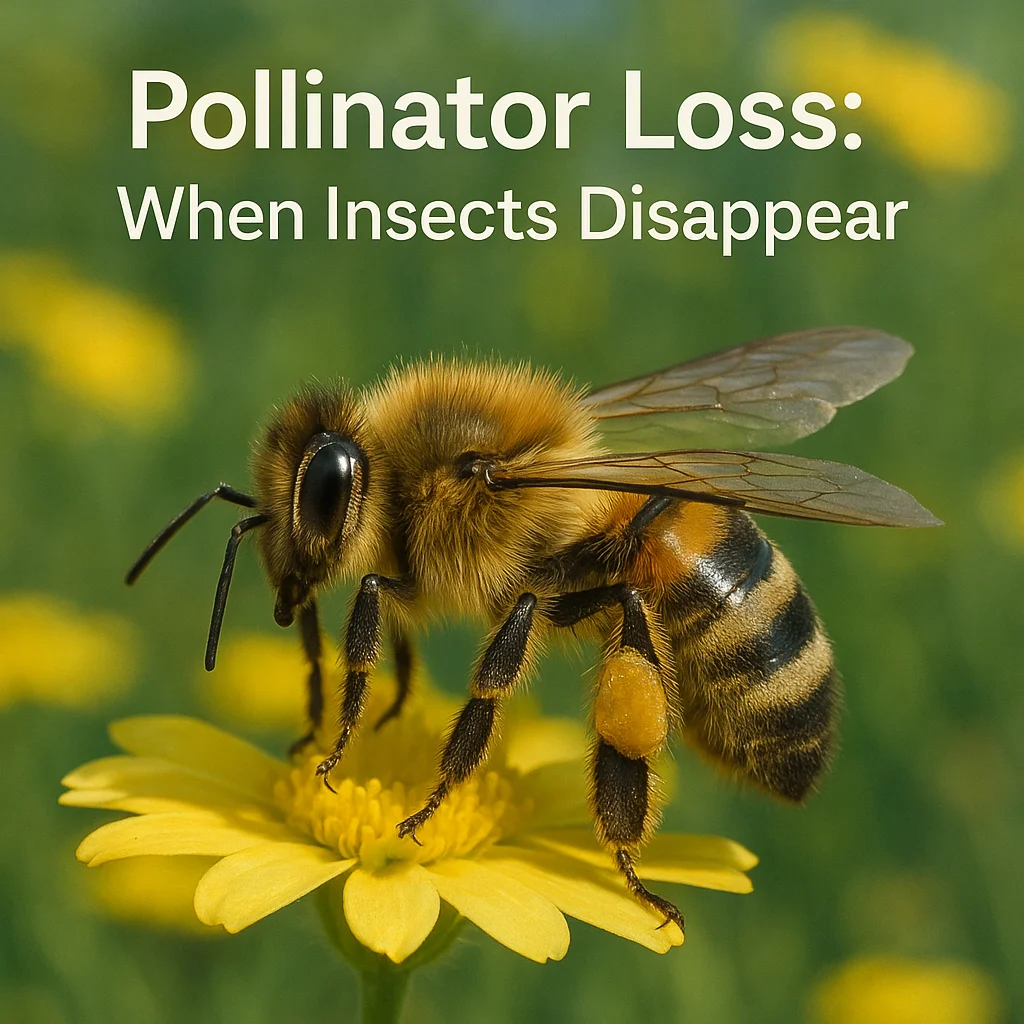
Pollinators, particularly insects, play a crucial role in maintaining healthy ecosystems and agriculture. Among them, bees, butterflies, and beetles are some of the most vital. These insects facilitate the reproduction of many flowering plants by transferring pollen from one flower to another. This process not only ensures the plants' survival but also the production of fruits and seeds, which are vital food sources for various other species.
The closest relatives to these pollinating insects include other insects within the same families but performing different ecological roles. For example, while bees are primarily known for pollination, some of their close relatives focus more on scavenging rather than facilitating plant reproduction.
In this article, we will explore the habitats where these insects thrived, their daily activities, unique traits, and the reasons behind their decline. We'll discuss the ecological impact caused by their disappearance and the scientific evidence surrounding their extinction.
🧭 Where It Lived
Pollinating insects were found on every continent except Antarctica. Their presence was essential in various regions, including the dense forests of the Amazon, the grasslands of North America, and the diverse ecosystems of Southeast Asia. Each region supported a variety of species adapted to specific climatic and environmental conditions.
In forested areas, many pollinators relied on the abundance of flowering plants to sustain their populations. Grasslands offered ample wildflowers, providing a vast food source. Wetlands also supported pollinators, often hosting unique plant species that required specific insects for reproduction.
Certain pollinating insects were island-bound, making them particularly susceptible to extinction. Being confined to limited geographic areas meant any changes in their habitats could lead to dire consequences due to a lack of alternative environments to which they could migrate.
🌿 Habitat and Daily Life
Pollinators often thrived in climates with clearly defined seasons, which dictated the blooming of flowers. Temperatures varied widely depending on the specific ecosystem, from the tropical heat of rainforests to the cooler temps of temperate regions. Rainfall played a significant role in plant growth, directly affecting food availability.
These insects primarily fed on nectar and pollen, which shaped their daily foraging routines. Bees, for example, are known for their social structures and communication methods, such as the 'waggle dance' used to inform others about food locations. Butterflies often migrated long distances to find suitable breeding and feeding grounds.
The breeding cycles of pollinators were intricately tied to their environments. Bees, for instance, have colonies where workers nurture offspring, while butterflies lay eggs on specific host plants. These behaviors ensured the survival and continuity of their populations.
🧬 What Made It Unique
Pollinating insects have evolved specialized traits to aid in their ecological roles. Bees are equipped with hairy bodies to collect pollen, while butterflies possess long proboscises to access nectar deep within flowers. These adaptations not only benefited the insects but encouraged the evolution of floral traits in plants for more efficient pollination.
Many pollinators are pivotal in maintaining biodiversity and ecosystem resilience. Their role in plant reproduction and seed dispersal supports various food webs, ensuring the survival of countless animal species.
Culturally, insects like bees have held significance in human agriculture and symbolism throughout history, being revered for their industrious nature and as symbols of community and productivity.
⏳ When It Disappeared
The disappearance of certain pollinator species is a relatively recent phenomenon, with many facing drastic declines in the late 20th and early 21st centuries. For some species, clear timelines are difficult to establish due to inconsistent monitoring records and the challenges of studying small, elusive insects.
Scientists typically declare a species extinct after extensive surveys fail to locate any individuals in their known habitats over a prolonged period. Errors in identification and the remote or cryptic nature of some species add layers of complexity to confirming extinctions.
Instances where species are declared "extinct in the wild" occur when they survive only in captivity, typically as part of conservation programs. Such declarations underscore the precarious nature of their existence.
⚠️ Why It Went Extinct
The decline of pollinator populations results from multiple interacting factors. Habitat loss due to urban development, agriculture expansion, and deforestation means fewer flowers and nesting sites are available for these insects.
Invasive species compete for resources or introduce new diseases, significantly impacting native insect populations. Additionally, the use of pesticides in agriculture poses a direct threat to pollinators, harming their health and reproductive capabilities.
Climate change alters the timing of plant flowering and weather patterns, creating mismatches between pollinators and their food sources. Unusually warm temperatures or intense storms can decimate populations and disrupt established ecological balances.
🧩 How We Know (Evidence and Records)
The evidence for pollinator declines comes from various sources, including long-term ecological studies, museum specimens, and modern genetic analyses. Field notes dating back decades provide historical baselines, while photographs and newer technologies verify recent population statuses.
Museums hold vast collections of insect specimens, allowing researchers to study changes over time in species distribution and abundance. Modern genetic techniques also assist in confirming species identity and uncovering hidden population structures.
The elusive nature of some insects makes definitive extinction declaration challenging. Many are solitary or operate at night, making them difficult to locate in large, complex habitats.
🛡️ Could It Have Been Saved
Realistic conservation strategies could have included the establishment of protected areas rich in biodiversity, promoting land-use practices that conserve habitats, and reducing pesticide usage. Incentives for farmers to maintain wildflower margins and hedgerows might have contributed positively.
In some regions, monitoring and quickly reacting to emerging threats could have mitigated declines. Investment in research to better understand species needs and interactions could have guided effective conservation policies.
Late interventions often occur when populations are already critically low, making recovery efforts more difficult. Captive breeding programs could have provided a backup for species facing imminent extinction, though they come with significant challenges and trade-offs.
🔁 Are There Any Survivors or Close Relatives Today
Today, many pollinator species still survive, though some closely related groups, especially within specific bees and butterfly families, face threats. Conservation efforts focus on maintaining diversity and health across all remaining species.
Ecological replacements, such as certain fly species that can perform similar pollination roles, have started to fill gaps left by declining populations. However, they may not be as effective as the original pollinators.
In controlled settings, some species exhibit potential for reintroduction programs, though they require meticulous preparation to ensure successful integration into natural environments.
❓ Common Questions and Misconceptions
Was it hunted to extinction? Pollinators were not typically hunted, but human activities indirectly led to their decline.
Why didn’t it adapt or move? Many pollinators are highly specialized, limiting their adaptability and mobility, especially when rapid environmental changes occur.
Could it still be alive somewhere? Possibilities exist for some pollinators to survive unnoticed in remote pockets, though systematic surveys often fail to find them.
What does 'declared extinct' actually mean? This designation occurs when exhaustive surveys confirm no surviving individuals in their natural habitat.
What is the difference between endangered and extinct? An endangered species still exists but is at high risk of extinction, while extinct species have no surviving individuals.
Why are island species so vulnerable? They often lack flexibility and alternatives, making them vulnerable to habitat changes and introduced threats.
📌 Summary
- Pollinators such as bees and butterflies played vital ecological roles.
- They lived on every continent except Antarctica, with diversity in forests, grasslands, and wetlands.
- Habitats included areas rich in flowering plants providing necessary resources.
- Diet consisted mainly of nectar and pollen, promoting essential foraging behaviors.
- Unique adaptations like hairy bodies in bees facilitated effective pollination.
- Last known period marked by drastic population declines in late 20th and early 21st centuries.
- Extinction drivers include habitat loss, pesticide use, and climate change.
- Exhibited evidence includes museum specimens and ecological studies.
- Closest living relatives continue playing critical roles in ecosystems.
- Key conservation lesson: proactive habitat protection is essential.
- A memorable takeaway: pollinators are vital for sustaining natural and agricultural systems.