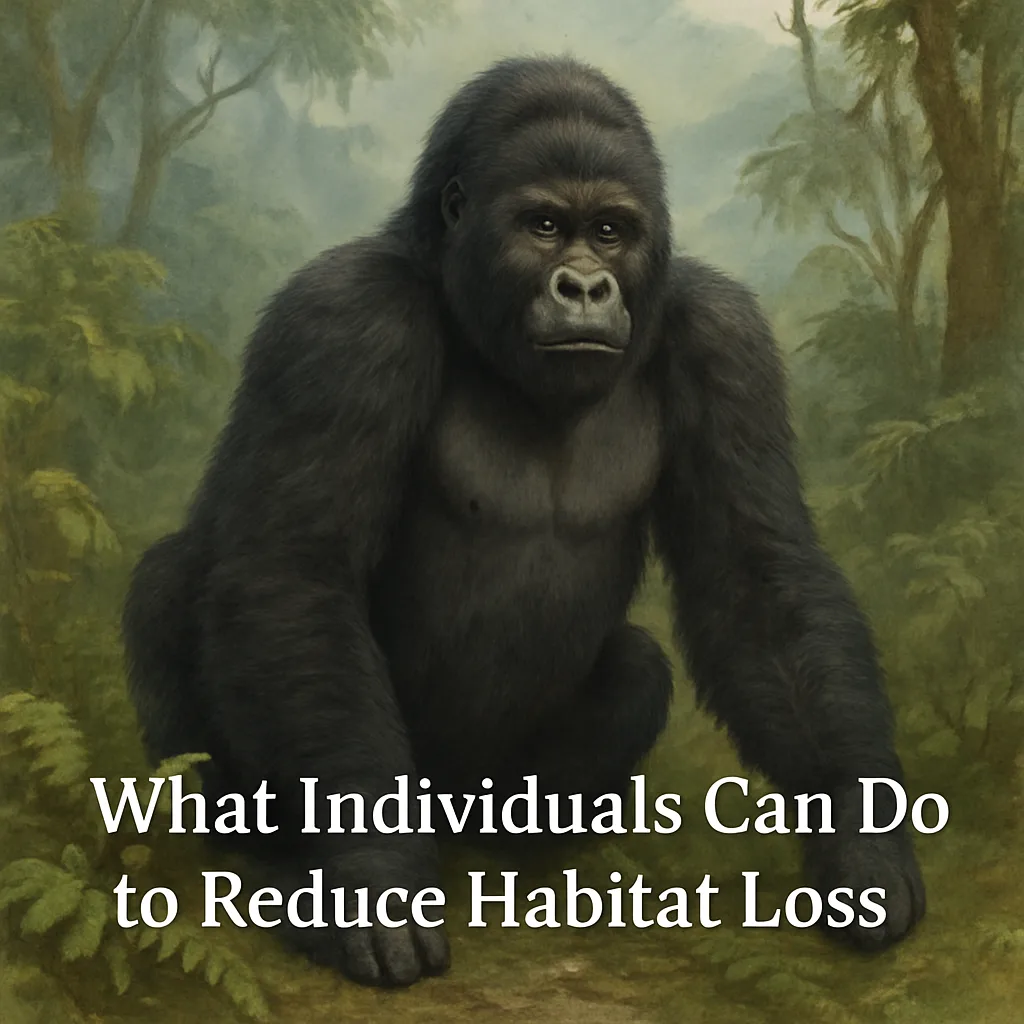
🏞️ What Individuals Can Do to Reduce Habitat Loss
🌍 What It Was
The concept of habitat loss revolves around the disappearance of natural environments that are home to various plant and animal species. Over time, changes in these habitats can lead not only to the endangerment of certain species but also to their eventual extinction.
Many extinct animals, such as the dodo or the passenger pigeon, have become emblematic of the challenges faced by wildlife across the globe. These animals were unique in their own right, with distinctive adaptations that allowed them to thrive in their native environments.
In understanding the process of habitat loss, individuals can learn about where these species lived, how they survived, when they disappeared, and why such changes occurred. This knowledge is crucial in shaping conservation efforts aimed at protecting existing species from a similar fate.
🧭 Where It Lived
Extinct animals were often found in specific geographic ranges, tailored to their environmental needs. For instance, the dodo was endemic to the island of Mauritius in the Indian Ocean, while the passenger pigeon was a native of North American forests.
These species relied heavily on their habitats for survival. The dodo thrived in the wooded ecosystems of Mauritius, while the passenger pigeon depended on the dense forests of North America for food and nesting sites. The destruction or alteration of these habitats proved catastrophic for their survival.
Islands often harbored species that existed nowhere else in the world, which made island-limited species particularly vulnerable. The confined space and specific resources mean any environmental change or disturbance can quickly lead to significant issues such as limited food supply or increased competition.
🌿 Habitat and Daily Life
The dodo lived in a tropical climate with a steady temperature and seasonal rains. This environment provided ample food sources such as fruits and nuts. On the ground, they foraged for food, pecking at whatever was accessible.
On the other hand, the passenger pigeon was a migratory bird, wandering across North America's vast forests in search of food. These birds nested in massive colonies and relied on their social structure for survival.
Reproductive strategies varied significantly across species. The dodo laid eggs on the ground, vulnerable to predators, while passenger pigeons nested in trees in enormous numbers. These strategies dictated how each species interacted with their environment and other species sharing their habitat.
🧬 What Made It Unique
Each extinct species had specific physical traits and behaviors that made them unique. The dodo was large, flightless, and had a distinctive beak shape, which helped in foraging. It played an ecological role in seed dispersal, aiding in the propagation of its native plant species.
The passenger pigeon was known for its massive flocks that could darken skies during migration. This behavior affected the ecosystems they moved through by helping control insect populations and affecting seed dispersal patterns by feeding on various forests’ flora.
Historically, these species held cultural significance, with the dodo becoming an icon of the danger of extinction and the passenger pigeon serving as a stark reminder of the impact of human activity on wildlife.
⏳ When It Disappeared
The precise timeline of extinction varies. The dodo was last reportedly seen in the late 1600s, with the exact date debated due to limited records. Similarly, the passenger pigeon, once abundant, saw its numbers dwindle in the 19th century, with the last confirmed sighting recorded in 1914.
Extinction is officially declared after exhaustive searches yield no evidence of the species’ existence. However, remote or difficult-to-access habitats pose challenges, sometimes delaying official declaration due to uncertainties and reported sightings without verification.
In some cases, species categorized as "Extinct in the Wild" survive in captivity, though such instances are rare. It signifies retained genetic material in living conditions outside their natural environment.
⚠️ Why It Went Extinct
Various interlinked factors contribute to extinction, often occurring simultaneously. Habitat loss and fragmentation divide environments, leading to smaller and isolated populations incapable of sustaining viable gene pools.
Overhunting and collection also significantly contribute to dwindling numbers. The passenger pigeon was hunted at unsustainable rates due to their large flocks, making them easy targets. Introduced species, along with invasive species, further threaten native biodiversity by increasing competition for food or preying on native species.
Diseases introduced through new species can devastate populations lacking immunity. Climate shifts and extreme weather events exacerbate existing vulnerabilities, while pollution can alter landscapes and detrimentally affect habitats.
🧩 How We Know (Evidence and Records)
Understanding extinction events relies on various evidence types, including fossils, subfossils, museum specimens, field notes, and oral histories. These provide clues about the species' existence, habits, and eventual decline.
Scientists cross-verify records through techniques such as radiocarbon dating and genetic analysis. For bird species, feathers preserved in collections can offer DNA insights, allowing modern science to study historical populations.
Some species are harder to confirm due to their elusive nature or remote habitats, making field studies difficult. In these cases, indirect evidence through ecological impacts or oral histories supports investigations.
🛡️ Could It Have Been Saved
Realistic conservation actions could have mitigated the decline of many species. Protected habitats and implementing hunting limits are examples of proactive measures. Controlling invasive species may have supported native populations struggling against new competition.
Late attempts, like captive breeding programs, face challenges due to the reduced genetic diversity and adapting species to conditions outside their natural habitats. Efforts often came when numbers were already critically low.
Despite the potential for effective intervention, recognition of risks and actions was often delayed, underscoring the need for timely conservation strategies when populations begin to show signs of stress.
🔁 Are There Any Survivors or Close Relatives Today
While no direct survivors exist, some of the extinct species have close living relatives. The dodo, for example, is related to the Rodrigues solitaire, which is now also extinct, though more distantly linked relatives like pigeons and doves continue to thrive.
Ecological replacements—a term describing species that fulfill similar roles—sometimes occur naturally or through conservation efforts. In some cases, captive programs aim to reintroduce species by preserving genetic materials to promote biodiversity.
The reconstruction of ecosystems through closely related species helps partially reclaim ecological roles lost with the extinct organisms.
❓ Common Questions and Misconceptions
Was it hunted to extinction? - Overhunting was a major factor for some species, like the passenger pigeon.
Why didn’t it adapt or move? - Adaptation depends on various factors, and rapid changes can outpace evolutionary responses.
Could it still be alive somewhere? - Unverified sightings persist but lack credible evidence.
What does 'declared extinct' actually mean? - It signifies comprehensive searches found no evidence the species survives in the wild.
What is the difference between endangered and extinct? - Endangered means species are at risk of extinction, while extinct means none exist globally.
Why are island species so vulnerable? - Limited ranges and resources make them particularly susceptible to environmental changes and invasions.
📌 Summary
- Habitat loss is the disappearance of natural environments.
- Extinct species include animals like the dodo and passenger pigeon.
- Islands were crucial habitats, increasing extinction vulnerability.
- Varied diets and social behaviors were linked to their environment.
- Unique traits like non-flight and flock size were adaptations.
- The dodo vanished by the late 1600s, passenger pigeons by 1914.
- Extinction drivers include habitat loss and overhunting.
- Mixed evidence methods confirm extinction events.
- Closest relatives often continue the ecological roles.
- Key conservation lessons emphasize proactive strategy and recognition.
- The impact of humans is significant, highlighted across history.