🏞️ Wetland Drainage and Lost Wildlife
🌍 What It Was
Wetlands, often called the "kidneys of the landscape," are defined as ecosystems that are permanently or seasonally saturated with water. They host a variety of plant and animal species uniquely adapted to these environments. These ecosystems are crucial for biodiversity, flood control, and water purification.
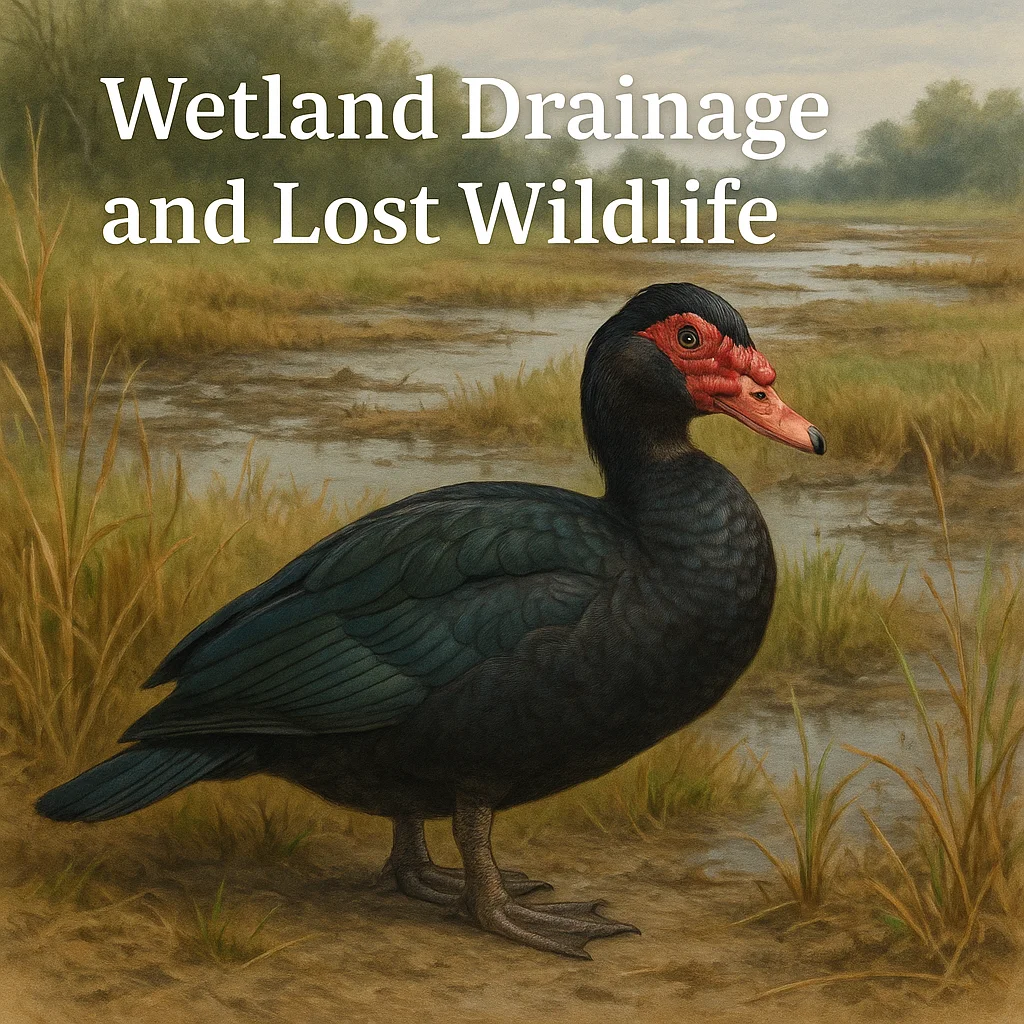
Wetland ecosystems included a variety of organisms, such as birds, reptiles, amphibians, mammals, and countless invertebrates. Many species once thriving there have gone extinct or are now endangered due to habitat loss and human activities. Their unique characteristics allowed them to fit into specific ecological niches within these water-saturated environments.
In this article, you will learn about the geographic range of wetland species, how they lived, when they disappeared, and the reasons behind their extinction. We will explore how wetland drainage has played a significant role in the loss of wildlife.
🧭 Where It Lived
Wetland species once inhabited regions across the globe, from the expansive marshes of North America to the rich delta systems of Asia. These ecosystems could be found on continents, islands, and coastal areas, providing essential habitats to the creatures that called them home.
Specific wetland habitats include marshes, swamps, bogs, and fens. Marshes, with their herbaceous plants, provided nesting grounds for waterfowl. Swamps, dominated by trees, offered refuge to mammals and wading birds. Bogs with acidic conditions supported unique plant species. Fens, with alkaline conditions, supported a distinct array of flora.
Island-limited wetlands were often hotspots of endemism, where species evolved in isolation and became highly specialized. This specialization made them more vulnerable to extinction when their habitats were altered or destroyed by human activities.
🌿 Habitat and Daily Life
Wetland climates typically feature significant rainfall and humidity, fostering a rich diversity of life. These areas experienced distinct wet and dry seasons, influencing the resident species' life cycles. Temperatures varied across different regions, from tropical warmth to temperate climates.
Many wetland animals exhibited specialized diets. For example, some birds thrived on fish and small invertebrates, while certain mammals grazed on lush plant life. The foraging and hunting techniques they used depended on their ecological roles and physical adaptations.
Reproduction varied widely among wetland species. Some creatures engaged in elaborate courtship displays, while others laid eggs in secure environments. Breeding seasons could be synchronized with rainfall, ensuring ample resources for raising offspring. Symbiosis was prevalent, with species relying on each other for mutual benefit and survival.
🧬 What Made It Unique
Wetland animals exhibited a range of physical traits that allowed them to thrive in saturated environments. Webbed feet, buoyant bodies, and specialized bills helped birds and mammals navigate waterlogged terrains. Vivid plumage and camouflaged patterns provided both attraction and protection.
Special adaptations like enhanced scent detection, acute vision in low light, and the ability to filter nutrients from the water were observed. Many species played essential roles, such as pollination and seed dispersal, contributing to ecosystem health. Certain species also held cultural and historical significance for local communities, often revered as symbols of balance and purity.
⏳ When It Disappeared
Many wetland species faced extinction over varying timelines. Some were last observed during the early to mid-1900s, while others disappeared more recently. The process of declaring a species extinct involves rigorous field surveys and assessments by experts, but uncertainty remains due to the challenging nature of searching in dense wetlands.
This uncertainty is exacerbated by remote and hard-to-reach habitats, where species could persist undetected. Some species were categorized as "Extinct in the Wild," meaning they survive only in captivity, though reintroduction efforts are often considered.
Recognizing extinction, especially for cryptic or elusive species, requires careful evaluation of all available evidence, including reports from local observers and historical records.
⚠️ Why It Went Extinct
The main drivers of wetland species extinction include habitat loss, overhunting, introduced species, disease, climate change, and pollution. Each factor affected species differently, often in combination, rather than as isolated threats.
Habitat loss and fragmentation primarily occurred through wetland drainage for agriculture, urban development, and infrastructure, removing critical breeding and foraging sites. Overhunting and overfishing disrupted populations, whether for consumption or trade.
Introduced species, such as aggressive predators or competitors, altered the balance of wetland ecosystems, while diseases sometimes took a toll on already vulnerable populations. Climate shifts and extreme weather events, like floods and droughts, further reduced suitable habitats. Lastly, pollution from pesticides and industrial waste degraded water quality, impacting all life stages.
🧩 How We Know (Evidence and Records)
Evidence of wetland species comes from a variety of sources, including subfossils, museum specimens, oral histories, and genetics. Fossil records reveal past distributions and ecological roles, while specimens help in the taxonomic identification of species.
Field notes and scientific surveys chart the decline of populations over time, providing insights into the timing and extent of extinctions. Oral histories from local communities fill gaps left by scientific data, offering anecdotal evidence of changes in species presence.
For some species, genetic analysis has confirmed their identity and evolutionary history, though the difficulty of accessing remote and inhospitable environments sometimes hampers complete assessments.
🛡️ Could It Have Been Saved
Preventing wetland species extinction would have required a combination of conservation actions, such as protecting key habitats, enforcing hunting limits, managing invasive species, and implementing captive breeding programs. Early intervention might have provided alternative outcomes.
However, conservation efforts often faced challenges due to limited resources, political and economic factors, and sometimes a lack of scientific understanding. In some instances, efforts were made too late, when species numbers were already critically low or when key habitats had been irreversibly altered.
Where conservation attempts were made, they typically involved localized habitat restoration and protection measures, though success varied depending on the species and region.
🔁 Are There Any Survivors or Close Relatives Today
Many wetland species have close relatives that continue to inhabit similar ecosystems. These relatives often share morphological traits and ecological roles, continuing the legacy of those lost to extinction.
Some remaining species may serve as "ecological replacements," fulfilling similar ecological functions and supporting biodiversity. In some cases, captive breeding programs aim to sustain small populations with the hope of future reintroduction.
Maintaining the health of existing wetlands and their resident species is crucial in preventing further losses and ensuring that the ecological balance remains intact for future generations.
❓ Common Questions and Misconceptions
Was it hunted to extinction? While hunting contributed, habitat loss was a more significant factor for many wetland species.
Why didn’t it adapt or move? Rapid environmental changes outpaced species' ability to adapt or relocate, especially for those with specialized needs.
Could it still be alive somewhere? Remote and inaccessible habitats could theoretically harbor undiscovered populations, but the likelihood decreases over time.
What does "declared extinct" actually mean? It indicates the absence of any credible sightings over a relevant period, despite comprehensive surveys.
What is the difference between endangered and extinct? Endangered species are at risk of extinction but still exist in the wild, whereas extinct species have no surviving individuals.
Why are island species so vulnerable? Isolation leads to specialization and lack of competitors, making them susceptible to environmental changes and invasive species.
📌 Summary
- Wetlands were critical habitats for diverse plant and animal life.
- Species inhabited marshes, swamps, bogs, and fens worldwide.
- Wetland climates varied, supporting specialized flora and fauna.
- Species had evolved unique diets and behaviors tailored to wetland life.
- Physical adaptations included specialized feet, bodies, and sensory abilities.
- Many were last observed from the early 1900s to recent decades.
- Drivers of extinction included habitat loss, invasive species, and pollution.
- Evidence of existence and extinction comes from fossils and historical records.
- Close relatives continue to thrive, maintaining ecological functions.
- Lessons learned highlight the need for early and sustained conservation action.
- Memorable takeaway: Wetlands are essential for ecological balance, and their loss resonates through the biodiversity they supported.