🏞️ Thicktail Chub
🌍 What It Was
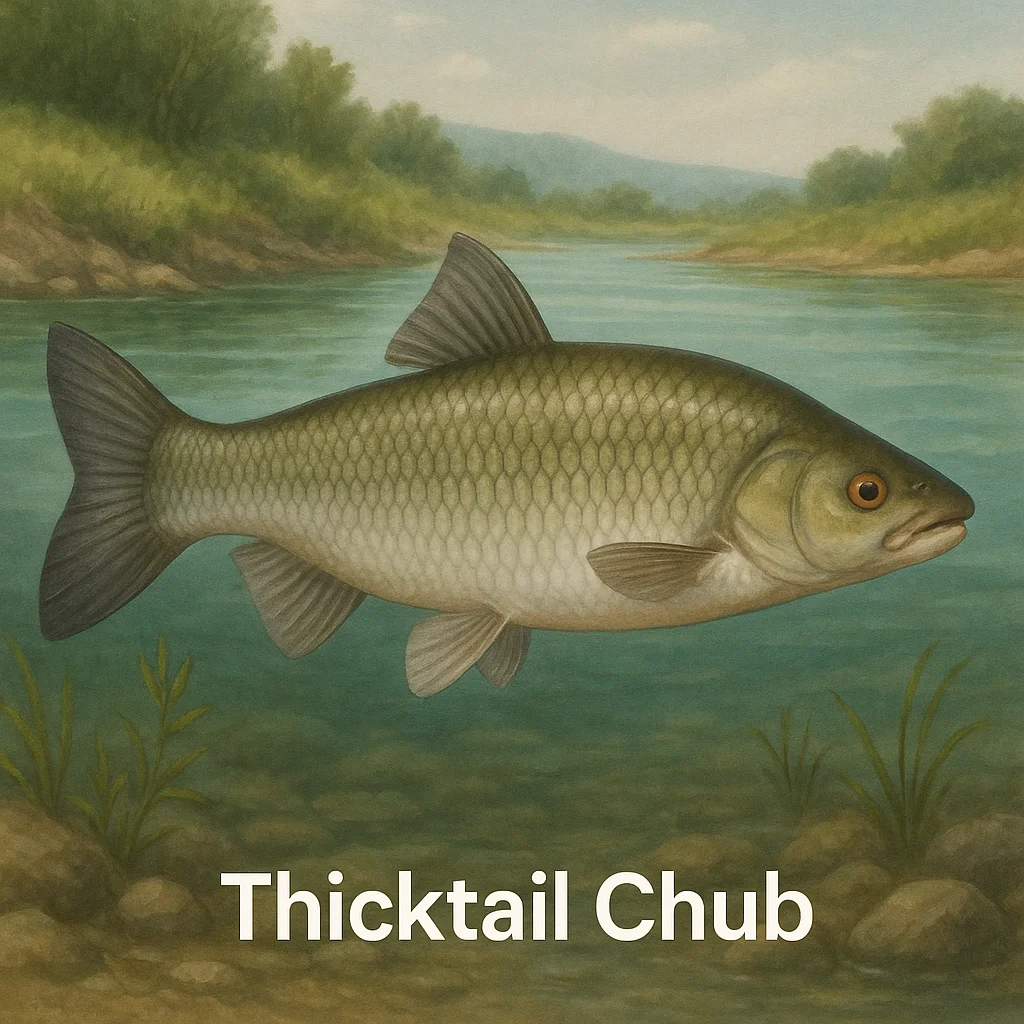
The Thicktail Chub was a small freshwater fish native to North American waterways. It was part of the minnow family and demonstrated distinctive features that made it stand out from other fish in its habitat. This species had a notably thick, robust tail, which gave it its name. The Thicktail Chub played a crucial role in its ecosystem as both prey for larger fish and birds and as a predator of smaller aquatic organisms.
Closely related to other chub species found in North America, the Thicktail Chub shared its habitat with various fish and aquatic organisms, contributing to a balanced ecosystem. As we explore its life, habitat, and eventual disappearance, you will gain insight into how interconnected natural environments are and how easily they can be disrupted.
This article will guide you through where the Thicktail Chub lived, how it survived in its environment, the timeline of its extinction, and the factors that contributed to its decline. Understanding these aspects provides a glimpse into the complex web of extinction science and the efforts needed to prevent further losses in biodiversity.
🧭 Where It Lived
The Thicktail Chub was predominantly found in the Central Valley of California, thriving in the rivers and freshwater lakes of the region. Its distribution was largely confined to these geographical areas, making its population particularly vulnerable to environmental changes.
Its preferred habitats included slow-moving rivers and lakes, where the water was typically warm. These bodies of water were rich in vegetation, which provided the Thicktail Chub with both food and shelter. The dense aquatic plants offered protection from predators and a place to lay eggs during breeding seasons.
Being limited to California's Central Valley posed significant risks for the Thicktail Chub, as its restricted range made it more susceptible to habitat disturbances. Unlike species with broader distribution, a localized species like the Thicktail Chub could face extinction due to changes in a relatively small geographical area.
🌿 Habitat and Daily Life
The climate of California's Central Valley is characterized by hot, dry summers and mild, wet winters, conditions that shaped the Thicktail Chub's life cycle. The fish adapted to these seasonal changes by utilizing the diverse aquatic environments available in the valley.
The Thicktail Chub fed on a variety of aquatic invertebrates and smaller fish. It employed a strategy of foraging among submerged vegetation and along sandy or muddy riverbeds. This diet supported a simple yet effective sustenance strategy within its ecological niche.
During the breeding season, female Thicktail Chubs laid their eggs among submerged plants, where the eggs were fertilized and later hatched. After hatching, the young fish remained in the protective embrace of the plant life, slowly venturing out as they grew. Socially, the fish tended to form loose schools, which offered some measure of protection against predators.
The Thicktail Chub's predators included larger fish species and birds that preyed on both adult fish and juveniles. Despite these threats, the chub maintained its presence in the ecosystem until significant environmental changes began to occur.
🧬 What Made It Unique
The Thicktail Chub was distinguished by its stout body and particularly thick tail, features that helped it thrive in its specific habitat. This robust body form allowed it to navigate and thrive in the slow-moving waters of its home range.
In terms of coloration, the chub typically displayed hues of yellow to brown, providing effective camouflage amongst riverine vegetation and sediments. This natural camouflage was a crucial adaptation for avoiding predators.
Ecologically, the Thicktail Chub played an essential role in nutrient cycling within its habitat. By preying on smaller organisms and being preyed upon by larger species, it contributed to the balance of its ecosystem. Though not widely known to have significant cultural importance, its role in the biodiversity of California's waterways was invaluable.
⏳ When It Disappeared
Records suggest that the Thicktail Chub became extinct in the mid-20th century. The last known specimens were collected in the late 1950s. Despite efforts to locate remaining populations, no confirmed sightings have occurred since.
Due to the gradual nature of its decline, pinpointing an exact date of extinction can be challenging. The combination of habitat alteration and increased human activities had a profound impact that led to the species' extinction being officially declared in the late 20th century.
The concept of being "extinct in the wild" doesn’t apply here since the Thicktail Chub was entirely lost from natural habitats without any established populations in captivity.
⚠️ Why It Went Extinct
The extinction of the Thicktail Chub can be attributed to several main drivers. Habitat loss was a critical factor, with large-scale water management projects altering the natural flow of rivers in California. Reservoir construction and water diversion disrupt the slow-moving waters that the chub thrived in.
Pollution also played a role, with agricultural runoff introducing harmful chemicals and altering water quality. Increased sedimentation from land development further degraded their habitats.
Overfishing and collection, while less directly impactful compared to habitat alterations, contributed to the decline. As waterways were modified and access increased, more chubs fell victim to accidental capture and disturbance.
Invasive species introduced to California’s waterways competed with the Thicktail Chub for resources. The presence of non-native fish altered the balance of the ecosystem, placing additional pressure on indigenous species.
🧩 How We Know (Evidence and Records)
Evidence of the Thicktail Chub's existence comes from a combination of sources including preserved specimens in museums, field notes by early naturalists, and photographic documentation. These records provided a comprehensive overview of its physical characteristics and habitat preferences.
Researchers use these preserved specimens to verify the identity of the Thicktail Chub and confirm records of its distribution. Advances in genetic analysis offer potential insights, although genetic material for the chub is limited.
Due to the gradual disappearance and lack of focused historical documentation on this species, some aspects of its life remain speculative. Nonetheless, the existing evidence offers a robust understanding of its ecological role and reasons for its extinction.
🛡️ Could It Have Been Saved
Conservation actions that might have helped the Thicktail Chub include strict habitat protection and water management practices that maintained natural river flows. Establishing protected aquatic reserves could have provided the undisturbed environment necessary for survival.
The introduction of fishing limits and a greater emphasis on pollution controls would have also improved the conditions for the chub. However, such measures were either too late or not strongly enforced during the critical period of the species' decline.
No known late conservation attempts specifically targeted the Thicktail Chub, largely due to the lack of awareness and resources at the time.
🔁 Are There Any Survivors or Close Relatives Today
While the Thicktail Chub itself is no longer present, its closest living relatives are other chub species found within North America. These relatives share similar features and ecological roles within their respective freshwater habitats.
No direct ecological replacements specifically fill the Thicktail Chub’s niche. However, other native fish continue to contribute to the biodiversity and balance of similar habitats.
Reintroduction efforts have not been directed at this species, largely due to its complete extinction and the consequent absence of suitable populations for breeding programs.
❓ Common Questions and Misconceptions
Was it hunted to extinction? The Thicktail Chub was not directly hunted to extinction; rather, it fell victim to habitat changes and competition.
Why didn’t it adapt or move? Being highly specialized to its environment, the chub couldn't easily adapt to rapid changes or move to new habitats that were already occupied or unsuitable.
Could it still be alive somewhere? There have been no confirmed sightings since the 1950s, making the likelihood of undiscovered populations very small.
What does 'declared extinct' actually mean? It means that there is no reasonable doubt that the last individual has died after extensive surveys of known habitats.
What is the difference between endangered and extinct? Endangered species are at very high risk of becoming extinct, while an extinct species has no living individuals left.
Why are island species so vulnerable? Island species often have limited ranges and specialized adaptations, making them more sensitive to environmental changes and human impacts.
📌 Summary
- The Thicktail Chub was a native freshwater fish of the Central Valley, California.
- It inhabited slow-moving rivers and lakes with rich vegetation.
- The diet consisted primarily of aquatic invertebrates and small fish.
- Unique due to its thick tail and stout body which aided in its riverine habitat.
- The species became extinct by the late 1950s or early 1960s.
- Main drivers of extinction included habitat loss, pollution, and invasive species.
- Evidence comes from preserved specimens and historical records.
- Closest relatives are other North American chub species.
- Key lesson: Protecting habitat and biodiversity is crucial to prevent extinction.
- A memorable fact: The Thicktail Chub highlights the vulnerability of localized species to environmental change.