🏞️ Tecopa Pupfish
🌍 What It Was
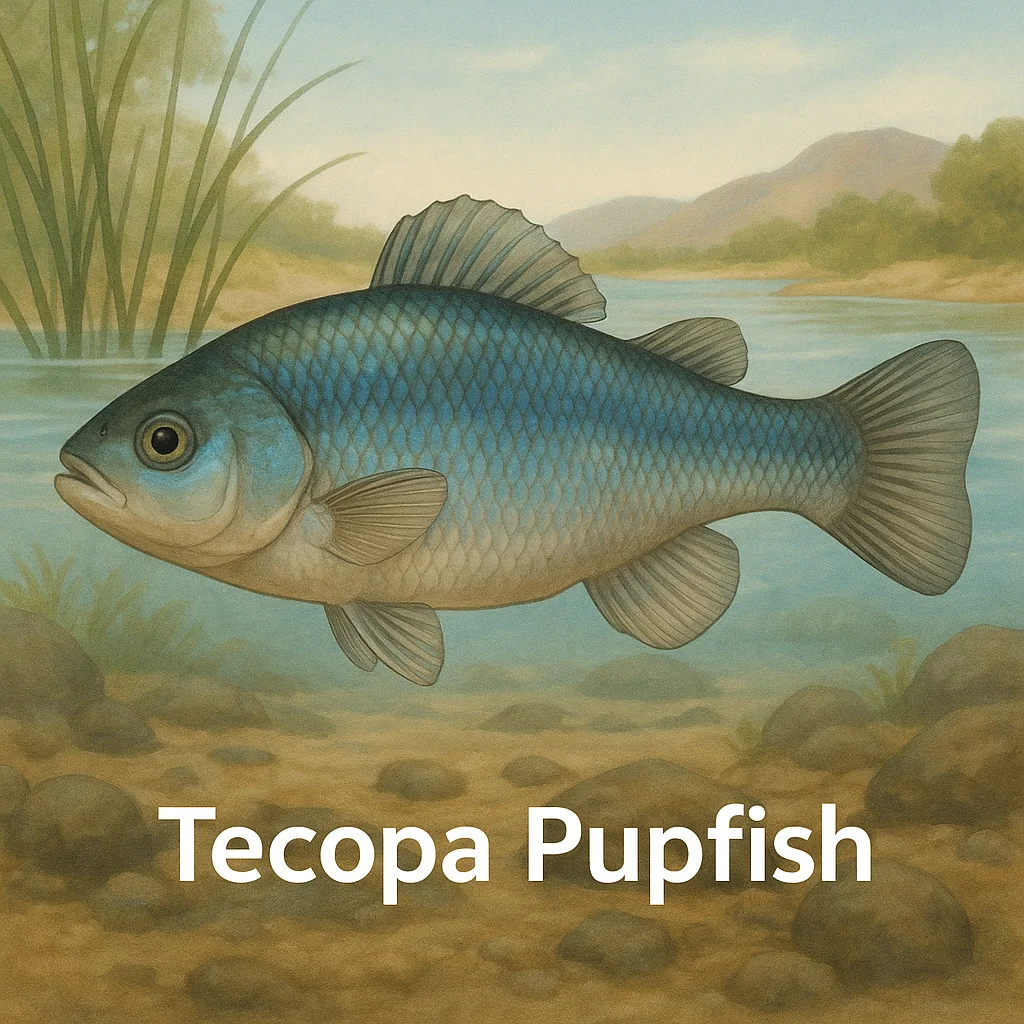
The Tecopa Pupfish was a small freshwater fish that belonged to the cyprinodontid family, a group known for their adaptability to various water conditions. Its scientific name was Cyprinodon nevadensis calidae, and it was unique due to its ability to thrive in the hot springs environment of the American desert.
Closest living relatives include other pupfish species, many of which also inhabit extreme environments. The Tecopa Pupfish played an integral role in its ecosystem, mainly as a part of the food chain and as an indicator of the ecological health of its habitat.
This article will provide insight into where the Tecopa Pupfish lived, how it lived, when it disappeared, and the factors that contributed to its extinction. Understanding this extinct species helps us learn more about the interconnectedness of life and the impact of human activities on biodiversity.
🧭 Where It Lived
The Tecopa Pupfish was endemic to the Mojave Desert in California, specifically thriving in the warm waters of the Tecopa Hot Springs area. Endemic species are those found only in a particular limited region, which often makes them more vulnerable to extinction.
Its limited geographic range was confined to the hot springs' outflows in Tecopa, where warm water temperatures created a specialized habitat unsuitable for many other fish species. This high level of specialization enhanced its regeneration in such niche environments but also increased its vulnerability to environmental changes.
Living in such a localized habitat meant that any disruption, such as water redirection or habitat modification, could have immediate and devastating effects on its population. This emphasizes the importance of maintaining intact ecosystems, especially for species with such limited ranges.
🌿 Habitat and Daily Life
The Tecopa Hot Springs environment was characterized by high temperatures and limited rainfall, typical of a desert climate. The pupfish had adapted to these extreme conditions, thriving in water temperatures that could reach up to 40°C (104°F).
The pupfish's diet consisted primarily of algae and invertebrates, which it foraged from rocks and sediments within its aquatic environment. It displayed behaviors typical of many small fish, including schooling to evade predators and aggressive interactions, possibly territorial, with other pupfish.
Reproduction involved a simple life cycle, where females laid eggs in the warm, shallow waters, and males often exhibited bright coloration to attract mates. The young pupfish would hatch after a short incubation period and grow rapidly in the nutrient-rich waters, reaching maturity within a few months.
🧬 What Made It Unique
The Tecopa Pupfish was small, rarely exceeding 5 cm (approximately 2 inches) in length. Its small size and blue and silvery coloration helped it blend into the shimmering waters of the hot springs, providing some protection from predators.
This species had adapted gills that allowed it to survive in low-oxygen environments, a fascinating trait typical of fish living in warm, stagnant waters. Its resilience in extreme hot-spring conditions highlights the fascinating adaptability seen in pupfish, a trait that captures the interest of biologists studying evolution and adaptation.
Culturally, the Tecopa Pupfish held little significance as it was unknown to most people until its extinction became a cautionary tale in conservation circles. This highlights the broader theme of how unrecognized species contribute to biodiversity and ecosystem functioning.
⏳ When It Disappeared
The Tecopa Pupfish was last observed in the wild during the early 1970s. Its extinction was officially declared in 1981 after multiple surveys failed to find any surviving individuals. The declaration of extinction typically follows exhaustive investigations that confirm that no members of the species persist in the wild.
The precise timeline of its disappearance is uncertain due to scant detailed records, a common issue when dealing with remote and less-studied species. Sometimes species thought to be extinct may be rediscovered, emphasizing the importance of comprehensive surveys and lasting conservation measures.
This species serves as an example of how habitat-specific organisms can decline rapidly, often unnoticed, once their environmental conditions are altered beyond their ability to adapt.
⚠️ Why It Went Extinct
The extinction of the Tecopa Pupfish is attributed to several interrelated factors. One significant driver was habitat loss and fragmentation due to the development of hot spring resorts and the consequent alteration of the natural water flow. This disruption in natural habitats is detrimental to species with very specific habitat requirements.
Invasive species, particularly other fish introduced by humans to these environments, also played a role by outcompeting the pupfish for food and space, and possibly preying on their young. Invasive species often disrupt native ecosystems, leading to the decline of original inhabitants.
Climate change and extreme events like droughts could have further stressed the already fragile populations. Fluctuations in water levels and temperatures due to changing climate patterns may have further reduced the species' ability to survive and reproduce effectively.
🧩 How We Know (Evidence and Records)
Our understanding of the Tecopa Pupfish stems from museum specimens, historical records, and field studies conducted during the time of its decline. These records provide insights into the pupfish's population dynamics and its eventual disappearance.
Scientists rely on such evidence to assess past and present biodiversity, and the data obtained aids in conservation efforts for related or similarly vulnerable species. Misidentification and missing data can challenge these assessments, underscoring the need for rigorous documentation and monitoring of wildlife.
The story of the Tecopa Pupfish underscores the importance of historical and current records in learning from past conservation failures to develop better strategies in the future.
🛡️ Could It Have Been Saved
Conservation actions such as habitat protection, controlling water usage, and the removal of invasive species might have helped preserve the Tecopa Pupfish. Protecting the natural flow of the hot springs would have been crucial in maintaining a viable habitat for this unique fish.
However, conservation awareness and actions often came too late to reverse the damage done. The challenges of managing limited resources and balancing human development with conservation needs remain ongoing struggles.
There were no known comprehensive conservation attempts focused on this species before its extinction, highlighting a common issue in the conservation field where urgent action is often hampered by funding and priority challenges.
🔁 Are There Any Survivors or Close Relatives Today
Close relatives of the Tecopa Pupfish include other species in the Cyprinodon genus, many of which also occupy specialized environments in desert regions. The Devil's Hole Pupfish, for example, shares its extreme habitat adaptation traits.
These relatives continue to serve as important models for the study of evolution and adaptation. While not "ecological replacements," they represent the resilience and diversity of life forms that continue to exist in other harsh environments.
No known reintroduction programs target this extinct fish, as conservation efforts are now more focused on ensuring the survival of its endangered relatives.
❓ Common Questions and Misconceptions
Was it hunted to extinction? No, the Tecopa Pupfish was not hunted but instead impacted by habitat changes and competition with introduced species.
Why didn’t it adapt or move? The pupfish was highly adapted to its niche environment, and the rapid changes exceeded its capacity to adapt or migrate.
Could it still be alive somewhere? It is unlikely, as comprehensive surveys have found no survivors, leading to its extinction declaration.
What does 'declared extinct' actually mean? It means no individuals have been observed in the wild for an extended period, with little hope of finding any.
What is the difference between endangered and extinct? "Endangered" means facing a high risk of extinction in the near future, whereas "extinct" means no known individuals remain alive.
Why are island species so vulnerable? Island species are vulnerable due to limited ranges, specialized habitats, and lack of predators which make them less adaptable to rapid changes.
📌 Summary
- The Tecopa Pupfish was a small freshwater fish species.
- It lived in the hot springs of the Mojave Desert, California.
- The habitat was characterized by extreme temperatures.
- Its diet included algae and small invertebrates.
- Adaptations allowed it to thrive in high-temperature waters.
- It was last observed in the early 1970s and declared extinct in 1981.
- Main extinction drivers included habitat loss and invasive species.
- Evidence comes from historical records and museum specimens.
- Close relatives include other pupfish species in harsh environments.
- Understanding this extinction reinforces the importance of habitat conservation.
- Its story is memorable as a cautionary conservation tale.