🏞️ New Zealand Grayling
🌍 What It Was
The New Zealand grayling was a freshwater fish endemic to New Zealand, making it unique to the region. Known for its distinct, slender body and shimmering scales, it was a notable member of the region's aquatic fauna.
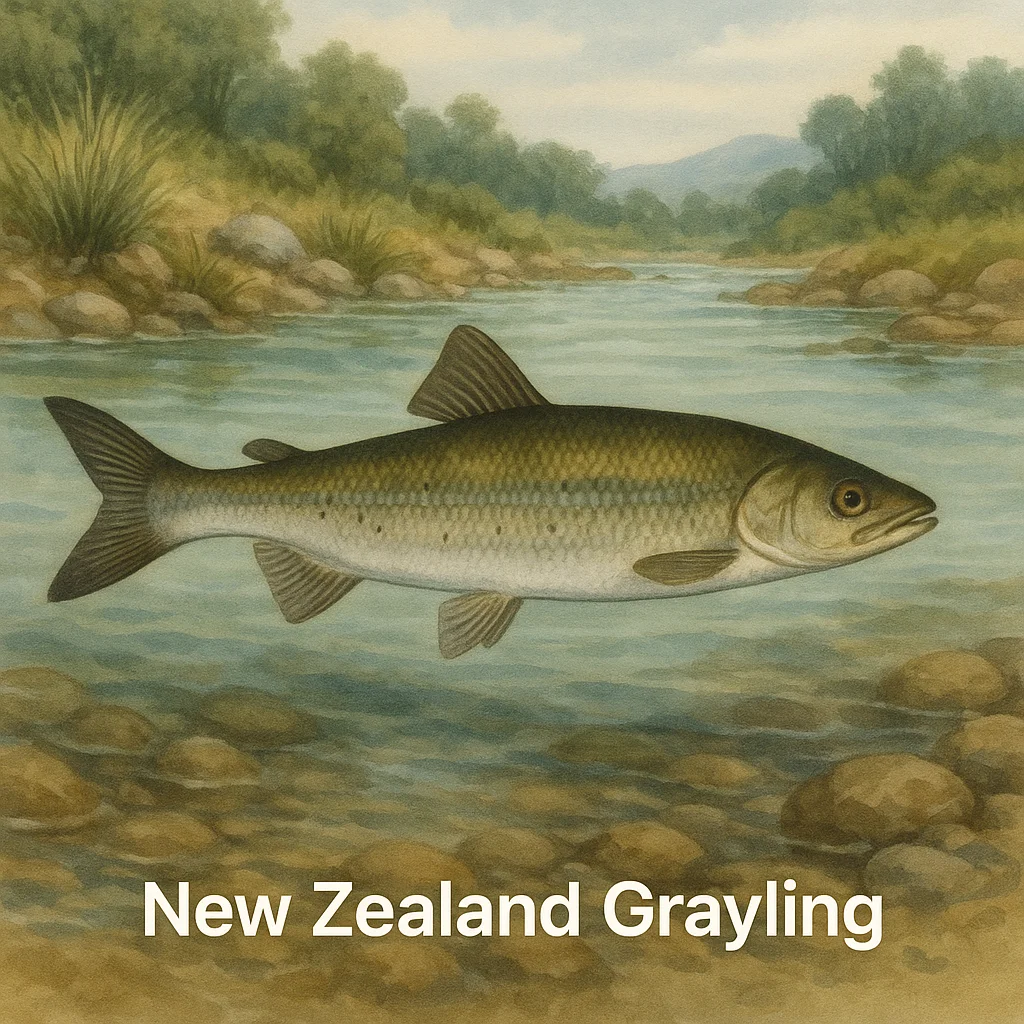
While not closely related to many living fish today, it is believed to have shared some characteristics with the younger family of fish known as the Southern grayling. This provided insights into its lifestyle and ecological role.
This article aims to explore the environment the New Zealand grayling inhabited, its life, reasons behind its extinction, and what remains as its legacy in the ecosystem.
🧭 Where It Lived
The New Zealand grayling existed exclusively in the rivers and streams of New Zealand. It was predominantly found in the North Island but was also present in parts of the South Island. The fact that it was confined to this geographic region meant it had limited ability to migrate or expand its habitat range.
Habitats for the grayling included freshwater rivers and streams that were abundant throughout New Zealand's dense forests and lush landscapes. These water bodies had the oxygen-rich, clear water that graylings preferred.
Because it was highly localized, the New Zealand grayling faced greater risks from environmental changes and human activities. Isolation on an island with limited range made it especially susceptible to extinction threats like habitat degradation and introduced species.
🌿 Habitat and Daily Life
The climate in New Zealand, especially around its river habitats, featured moderate temperatures and varying rainfall. These rivers provided not just ideal temperatures but seasonal changes that supported a diverse range of aquatic life.
The diet of the New Zealand grayling consisted mainly of small aquatic invertebrates and plants. It foraged by swimming through the water and picking food items from the water column or substrate.
Breeding for the grayling was believed to occur in spring, where females would lay eggs in gravel beds. The young graylings, known as fry, would then emerge and live in the shallow waters until they matured. Interaction with other species included being prey to larger aquatic and bird species.
🧬 What Made It Unique
One of the most unique physical features of the New Zealand grayling was its elongated body, which reached lengths of about 30 centimeters. Its scales were shiny and reflective, helping it blend with sunlight-dappled waters to avoid predators.
Its role in the ecosystem included controlling populations of smaller invertebrates and acting as a food source for larger predators. Despite lacking special senses, its adaptations for life in clear, fast-running streams were crucial for its survival.
⏳ When It Disappeared
The last confirmed sighting of the New Zealand grayling was recorded in the early 1920s. Reports and anecdotal evidence suggested decreasing numbers before complete disappearance, but precise timelines are difficult to verify.
The eventual declaration of the species as extinct followed from no further confirmed sightings or captures despite focused surveys, particularly in its known habitats.
Uncertainties surrounding its extinction arise from possible misidentifications and a lack of comprehensive records from areas less frequented by humans.
⚠️ Why It Went Extinct
Central to the extinction of the New Zealand grayling was habitat loss. The clearing of forests for agriculture and the subsequent siltation of rivers degraded its natural habitat.
Overfishing and collection by both indigenous populations and settlers added further stress, as fish were caught faster than they could reproduce.
The introduction of predatory fish and competitors reduced available resources, while changes in climate patterns possibly altered their lifecycle timings, further stressing populations.
Each of these factors, while impactful alone, worked in conjunction to push the New Zealand grayling towards extinction.
🧩 How We Know (Evidence and Records)
Evidence for the existence and extinction of the New Zealand grayling includes preserved specimens in museums, as well as historical records and sketches made by early naturalists exploring New Zealand.
These specimens and records are vital for research, allowing scientists to confirm the grayling's characteristics and when it may have last existed.
Due to the constraints of its habitat and a lack of technology at the time, confirming its disappearance was challenging yet ultimately achieved through the absence of the species in thorough surveys.
🛡️ Could It Have Been Saved
Conservation efforts could have included the establishment of protected river habitats, restrictions on fishing, and control of invasive species, potentially alleviating pressures on the natural populations.
Yet, at the time of rapid ecological change through human activity, awareness of conservation was minimal. Even minor interventions might have helped, but they were not implemented.
As seen with other species, proactive conservation requires foresight, which in the case of the New Zealand grayling, was unfortunately absent.
🔁 Are There Any Survivors or Close Relatives Today
Although the New Zealand grayling is gone, its closest relatives, the Southern grayling and other relatives in the grayling family, share similar ecological roles in other parts of the world.
These fish continue similar roles, such as controlling aquatic invertebrate populations, emphasizing the lost ecological niche of the New Zealand grayling.
Efforts to conserve these relatives in their habitats stress the importance of maintaining biodiversity to preserve such valuable ecological functions.
❓ Common Questions and Misconceptions
Was it hunted to extinction? While overfishing contributed, habitat loss and invasive species were significant factors in its decline.
Why didn’t it adapt or move? Being endemic to New Zealand limited its ability to migrate elsewhere, trapping it amidst rapid environmental changes.
Could it still be alive somewhere? Given thorough surveys and its ecological needs, it's unlikely that undiscovered populations remain.
What does 'declared extinct' actually mean? It signifies that there is no reasonable doubt that the last member of the species has died out.
What is the difference between endangered and extinct? Endangered species are at significant risk of extinction, whereas extinct species no longer exist.
Why are island species so vulnerable? Limited ranges, isolated habitats, and exposure to invasive species make island species particularly susceptible to extinction.
📌 Summary
- New Zealand grayling was a unique freshwater fish endemic to New Zealand.
- Lived predominantly in rivers and streams across the North and South Islands.
- Dependent on oxygen-rich freshwater environments.
- Primarily fed on small invertebrates and aquatic plants.
- Characterized by its slender, shiny body and adaptation to river life.
- The last confirmed records date back to the early 1920s.
- Major extinction drivers included habitat loss and invasive species.
- Knowledge stems from museum specimens and early naturalist records.
- Closest relatives are within the Southern grayling family.
- Highlights the impact of habitat protection and species number monitoring in conservation.
- The New Zealand grayling serves as a reminder of the delicate balance in island ecosystems.