🏞️ Harelip Sucker
🌍 What It Was
The Harelip Sucker was a species of freshwater fish known for its unique appearance, most notably the distinctive lip structure that gave it its name. It was part of the family of fish known as suckers, which are known for their bottom-feeding habits.
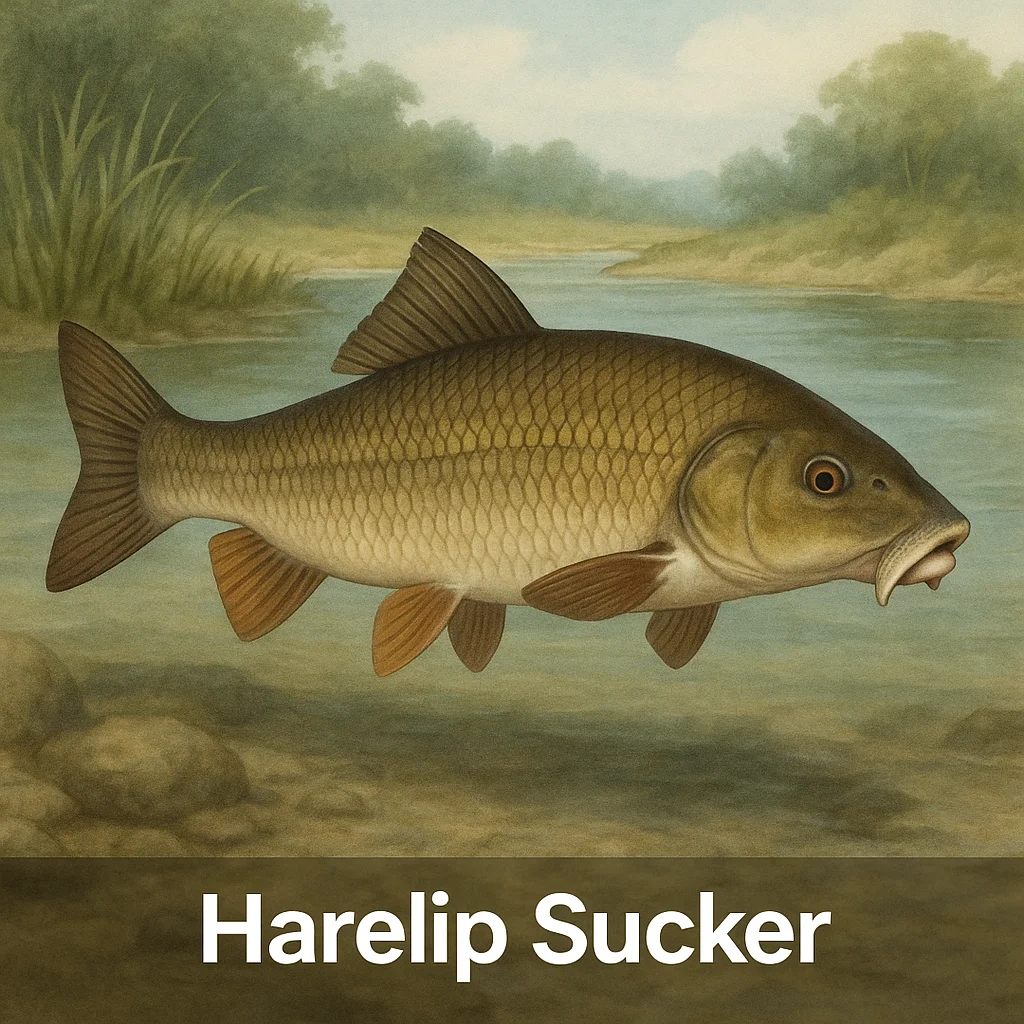
Closely related living species include the other members of the sucker family, such as the Northern Hogsucker. The Harelip Sucker played an essential role in its ecosystem by assisting in the maintenance of the riverbed habitat it thrived in.
In this article, you will learn about where the Harelip Sucker lived, how it lived its daily life, when it disappeared, and the reasons behind its extinction.
🧭 Where It Lived
The Harelip Sucker was native to parts of the United States, with its range primarily in the southeastern region. It preferred the river systems and streams found in these areas, which provided the suitable habitat it needed.
This fish species was dependent on clear, fast-flowing rivers and creeks, which are characteristic of the southeastern U.S. landscape. Such environments offered both the food resources and the conditions favorable for its survival.
Because of its specific habitat requirements and limited geographical range, the Harelip Sucker faced heightened risks from changes in its environment. Being highly localized, any disruptions to its habitat could have significant impacts on its population.
The limitations in its range, combined with its reliance on particular habitat conditions, made the Harelip Sucker particularly vulnerable to ecological disruptions. Its habitat choices were confined to specific river systems, increasing its risk of extinction as changes unfolded in these ecosystems.
🌿 Habitat and Daily Life
The habitat of the Harelip Sucker was characterized by a temperate climate with distinct seasonal changes. These environments experienced moderate temperatures and seasonal rainfall, creating suitable river flow conditions necessary for the species.
The Harelip Sucker primarily fed on small invertebrates and detritus found on the riverbed. It utilized its specialized mouth structure to scavenge along the river bottom, a behavior typical of its family.
The reproduction of the Harelip Sucker involved breeding during a specific season, where spawning occurred in suitable areas within the river systems. Little detailed information remains about their exact breeding habits, but they likely shared similar behaviors to other sucker species.
Other species in the river ecosystem included various aquatic invertebrates and fish that both competed for resources and served as prey, establishing a balanced ecological interplay.
🧬 What Made It Unique
The most unique feature of the Harelip Sucker was its mouth, adapted for bottom-feeding in the river system. Its specialized lips helped it sift through sediment and collect food from the riverbed efficiently.
This adaptation allowed it to play a role in maintaining the health of the river ecosystem by controlling detritus levels and influencing the availability of nutrients across the riverbed, affecting other organisms in the environment.
The Harelip Sucker also held interest from scientific communities for its peculiar adaptations, though it was not widely recognized outside ecological studies before its extinction.
⏳ When It Disappeared
Records suggest that the Harelip Sucker became extinct in the early 1900s. There are no recent confirmed sightings of this species, and it is officially declared extinct based on the extensive searches that found no evidence of its continued existence.
Some uncertainty exists regarding the exact timeline of its disappearance due to the lack of comprehensive historical records at the time. Its habitats were not continuously monitored, contributing to an unclear picture of its final decline.
This classification of extinction reflects the absence of the species both in the wild and in any documented captivity, indicating a total loss of the population.
⚠️ Why It Went Extinct
The primary drivers behind the extinction of the Harelip Sucker included a combination of habitat loss and fragmentation, pollution, and overfishing. These factors affected its population viability significantly.
Habitat loss and fragmentation occurred as river systems were altered by human activities, such as dam construction and water pollution, disrupting the natural river flow and habitats the Harelip Sucker relied upon for survival.
Additionally, pollution from agricultural runoff and industrial activities degraded water quality, further eroding the suitable living conditions for the sucker species.
Overfishing and collection likely also played a role, with the species being caught either intentionally or as bycatch, leading to a decline in population numbers.
Interconnected causes are common in extinction events, illustrating how multiple environmental pressures together reduce species survival prospects.
🧩 How We Know (Evidence and Records)
The knowledge about the Harelip Sucker and its extinction comes from a combination of physical evidence like museum specimens, field notes by early naturalists, and historical records of the regions it inhabited.
These records allow scientists to verify the identity of the Harelip Sucker and to piece together its existence timeline through comparison with similar species and verification using historical accounts.
The challenges in confirming the status of such species were compounded by its relatively cryptic nature and confined habitat, which often went unmonitored.
🛡️ Could It Have Been Saved
Conservation efforts that might have helped the Harelip Sucker include habitat protection, stronger restrictions on water pollution, and the establishment of protected areas to guard against habitat alterations.
Restricting the construction of dams and implementing policies to manage water quality could have preserved the critical conditions necessary for its survival.
Tragically, conservation actions were either insufficient or arrived too late, as the decline continued unnoticed due to limited ecological awareness at the time.
🔁 Are There Any Survivors or Close Relatives Today
Although the Harelip Sucker itself is extinct, its nearest living relatives are other sucker species still present in North American freshwater systems. These relatives share similar ecological roles in bottom-feeding and contributing to ecosystem dynamics.
Ecological replacements do exist within these environments, such as other sucker species that continue the roles formerly occupied by the Harelip Sucker, although no direct reintroduction or captive breeding efforts are currently known for this particular species.
❓ Common Questions and Misconceptions
Was it hunted to extinction? While overfishing and collection were factors, they were not the sole causes of extinction.
Why didn’t it adapt or move? The Harelip Sucker was highly specialized and localized, reducing its ability to adapt or relocate in response to changing conditions.
Could it still be alive somewhere? It is unlikely due to extensive searches yielding no sightings; however, historical records were not comprehensive.
What does 'declared extinct' actually mean? A species is declared extinct when there is no reasonable doubt that the last individual has died.
What is the difference between endangered and extinct? Endangered means a species is at high risk of extinction in the wild, while extinct means all members of the species are gone.
Why are island species so vulnerable? Island species are vulnerable due to limited range, specialized adaptation, and small population sizes, making them more susceptible to changes.
📌 Summary
- The Harelip Sucker was a freshwater fish with distinctive lip features.
- It lived in the southeastern United States.
- The species relied on river and stream habitats.
- Diet consisted of invertebrates and detritus on riverbeds.
- Had specialized mouth adaptation for bottom-feeding.
- Last known to exist in the early 1900s.
- Main drivers of extinction were habitat loss, pollution, overfishing.
- Evidenced by museum specimens and historical records.
- Closest living relatives are other North American sucker species.
- Conservation lessons highlight the need for habitat protection.
- Memorable takeaway: even specialized species with unique adaptations can be vulnerable without sufficient conservation efforts.