🏞️ Catarina Pupfish
🌍 What It Was
The Catarina Pupfish was a small freshwater fish endemic to Mexico. Endemic species are those found naturally in a specific place and nowhere else. Known for its adaptation to extreme environments, this species belonged to the family of pupfishes, scientifically called Cyprinodontidae.
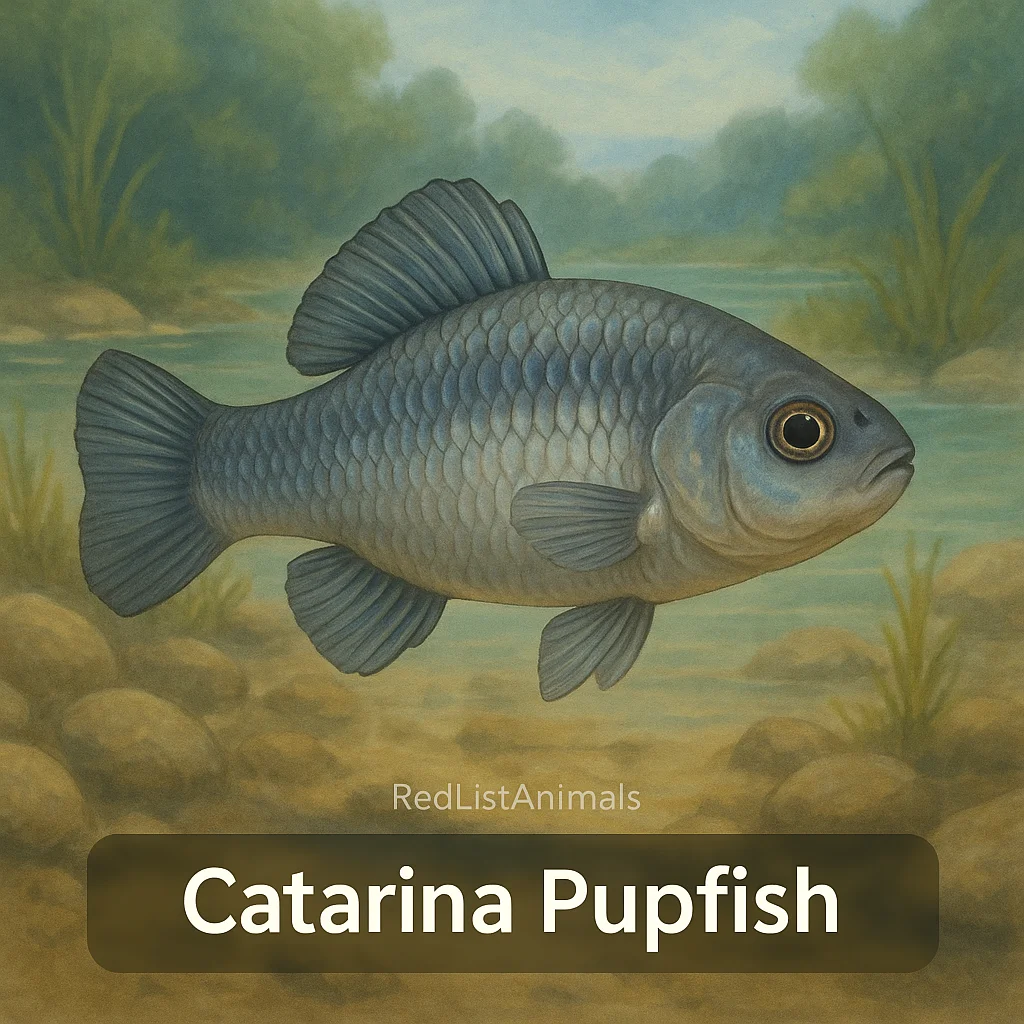
Pupfishes are notable for their resilience and ability to thrive in harsh conditions such as salty or alkaline waters. The closest living relatives of the Catarina Pupfish include other pupfish species that inhabit similar challenging environments across North America.
This article will explore where the Catarina Pupfish lived, its lifestyle and habitat, what unique characteristics it had, the timeline of its extinction, the reasons behind its demise, and whether any similar species exist today.
🧭 Where It Lived
The Catarina Pupfish was found in a very limited geographic range. It inhabited a small spring known as Ojo de Catarina, located in the desert region of Nuevo León, Mexico. This confinement to a single location made it extremely vulnerable to environmental changes and human activities.
The habitat of the Catarina Pupfish consisted of freshwater springs that provided a steady source of clean water. The habitat included shallow, warm waters with abundant vegetation, which provided food and cover for these small fish.
Being restricted to such a narrow habitat range increased the Catarina Pupfish's extinction risk. When species are limited to isolated locations, they are more susceptible to local disturbances, be it environmental or human-induced, as they cannot simply relocate to a more suitable area.
🌿 Habitat and Daily Life
The climate in the region where the Catarina Pupfish lived was generally arid, with hot temperatures and low rainfall. This environment shaped the fish's life, as it had to adapt to survive in such conditions. The springs where it thrived offered a unique microhabitat different from the surrounding desert landscape.
The diet of the Catarina Pupfish mainly included small insects, aquatic plants, and detritus. This varied diet allowed them to serve as essential players in the local food web, including being a food source for larger predators.
Little is known about the specific social structures of the Catarina Pupfish, but pupfishes typically exhibit diverse reproductive strategies. Breeding often occurs in well-vegetated waters where males establish and defend territories to attract females.
Interactions with other species would have been limited due to its isolated habitat, but it likely competed with other small fish species for resources. The balanced ecosystem of the spring supported a range of species, each playing a role in maintaining its stability.
🧬 What Made It Unique
The Catarina Pupfish was adapted to survive in unusually harsh conditions. Small in size, it featured a compact body and a mouth suited for picking at small bits of food in its home waters. Like other pupfishes, it had the ability to tolerate varying levels of salinity and temperature.
These adaptations were crucial for its survival in the dynamic environments of desert springs. Yet, they also meant that the pupfish was heavily reliant on its specific habitat conditions, which couldn’t be easily replicated elsewhere.
The Catarina Pupfish holds some cultural significance as a symbol of the unique and fragile ecosystems found in Mexico's desert regions. These ecosystems highlight the delicate balance between species and their habitats, offering lessons in biodiversity conservation.
⏳ When It Disappeared
The Catarina Pupfish was last recorded in the late 20th century. Exact dates are often debated, as records can be incomplete or observations misidentified. Reliable sightings were already becoming scarce by that time.
Extinction declarations are based on the absence of recorded sightings over a significant period. For species like the Catarina Pupfish, isolated habitats make this verification challenging, as certain remote or overlooked areas might hold undiscovered survivors.
The species is now considered extinct. Unlike "Extinct in the Wild," where species persist only in captivity, "Extinct" means that no known living representatives exist anywhere.
⚠️ Why It Went Extinct
Several interrelated factors contributed to the extinction of the Catarina Pupfish, emphasizing that extinction is often a complex process. One of the primary drivers was habitat loss and fragmentation. Human activities, such as water diversion and agricultural expansion, altered the vital spring habitat.
Pollution from nearby farming and urban areas introduced contaminants into the water. These pollutants reduced water quality, affecting both the health and reproductive success of the pupfish.
The introduction of invasive species posed another threat. Non-native fish species, introduced through human activities, competed with the pupfish for resources or directly preyed on them.
Climate shifts and extreme weather events, such as droughts, further stressed the delicate environment of the springs. As the pupfish relied on consistent water supply and quality, these changes severely impacted its survival chances.
🧩 How We Know (Evidence and Records)
The primary sources of evidence for the Catarina Pupfish include museum specimens, which have been preserved for scientific study. These collections help verify physical characteristics and allow researchers to compare DNA with related species.
Field notes and occasional photographs provide insights into the historical distribution of the species. Although fewer in number, oral histories might convey local knowledge about the fish's presence and its disappearance.
Scientific studies often rely on comparing various evidence forms, ensuring the species identity is clear, and understanding the context of each record. When habitats are remote, these pieces of evidence are vital for telling the complete story of a species.
🛡️ Could It Have Been Saved
Realistic conservation measures could have potentially saved the Catarina Pupfish. Protecting its spring habitat would have been crucial, as well as implementing water management practices to maintain its natural conditions.
Control of invasive species could have reduced competition and predation pressures on the pupfish. In certain cases, captive breeding programs might have provided a safeguard against extinction.
Despite the possibilities, these actions often came too late. By the time a species is visibly declining, its population numbers can be so low that recovery becomes extremely challenging.
🔁 Are There Any Survivors or Close Relatives Today
No direct survivors of the Catarina Pupfish exist today, but it shares its family tree with other pupfish species that continue to inhabit North America. These relatives exhibit similar physiological traits, adapted to thrive in various extreme water conditions.
Some species might act as ecological replacements, filling similar niches within their ecosystems. These replacements ensure the roles performed by extinct species, like nutrient cycling or population control, continue in some form.
While it's possible for certain extinct species to be reintroduced through captive breeding, the specific circumstances and habitat needs of the Catarina Pupfish make it unlikely.
❓ Common Questions and Misconceptions
Was it hunted to extinction? No, there is no evidence suggesting the Catarina Pupfish was hunted. Instead, habitat changes and competition from invasive species were primary factors.
Why didn’t it adapt or move? As an endemic species with highly specialized habitat needs, it couldn't adapt rapidly or migrate to new locations beyond its spring habitat.
Could it still be alive somewhere? While it's intriguing to think so, its isolated habitat and thorough searches make its survival unlikely.
What does 'declared extinct' actually mean? It means there have been no confirmed sightings over an appropriate timescale, and exhaustive searches have failed to find any individuals.
What is the difference between endangered and extinct? Endangered species are at high risk of extinction in the wild, whereas extinct species have no surviving individuals known.
Why are island species so vulnerable? Limited ranges and unique ecosystems make island and isolated habitat species more susceptible to disturbances and extinctions.
What happened to its habitat? Agricultural developments and water usage altered its natural springs, reducing its habitat quality and size.
Are pupfish generally endangered? Several pupfish species face threats due to their restricted habitats and similar pressures faced by the Catarina Pupfish.
📌 Summary
- The Catarina Pupfish was a small freshwater fish endemic to Mexico.
- It lived in the Ojo de Catarina spring in Nuevo León, Mexico.
- The habitat type was desert spring, with warm and clean waters.
- Its diet included small insects and aquatic plants.
- Unique for its resilience to harsh conditions and specific habitat adaptations.
- Last known period alive was in the late 20th century.
- Main extinction drivers included habitat loss, pollution, and invasive species.
- Evidence includes museum specimens, field notes, and photographs.
- Closest living relatives are other North American pupfish species.
- Conservation emphasizes the protection of small, unique habitats.
- Memorable takeaway: Endemic species are particularly vulnerable due to their limited living spaces.