🏞️ Blue Walleye
🌍 What It Was
The Blue Walleye was a unique type of fish, distinguished by its bluish hue. It was a freshwater fish, a member of the perch family. This species was closely related to the Yellow Walleye, which is still common today. The Blue Walleye played a significant role in its ecosystem, contributing to the food web and supporting biodiversity.
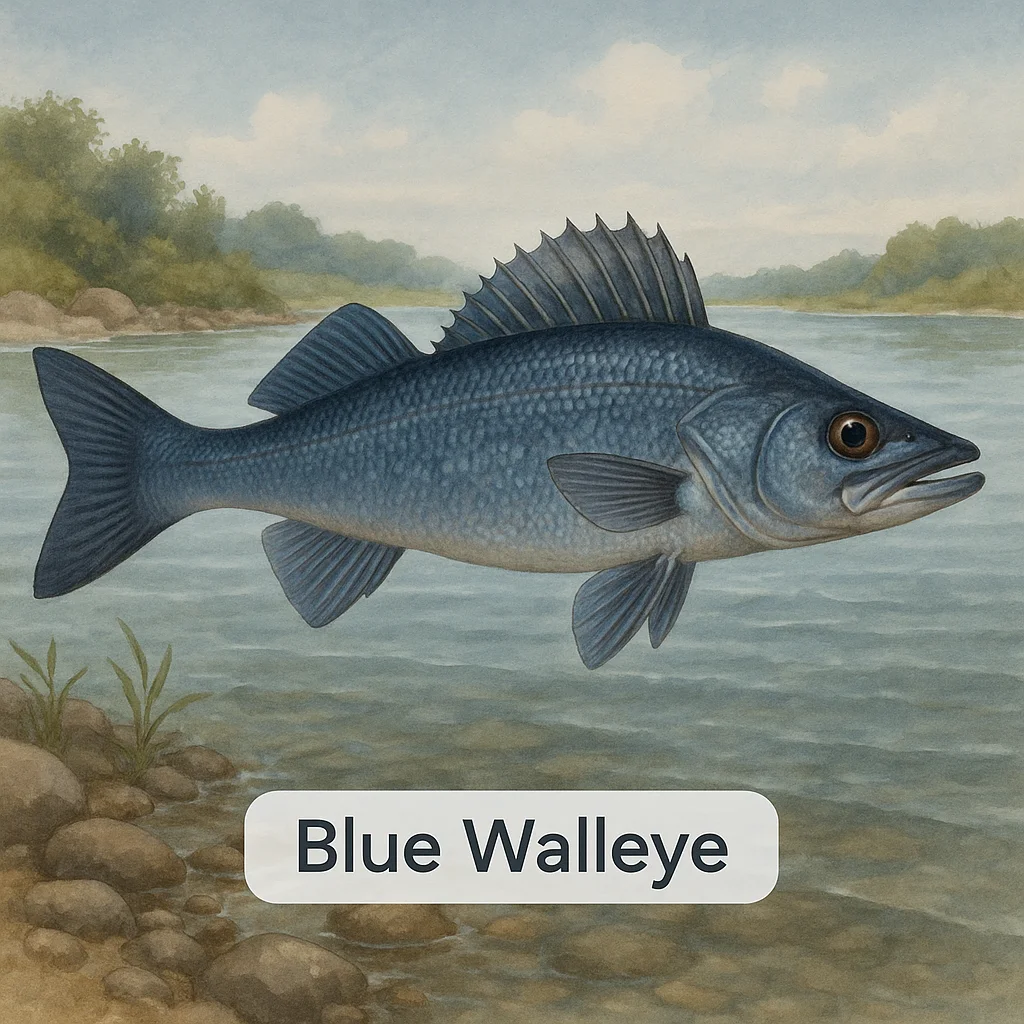
What set the Blue Walleye apart was its distinctive coloring and the specific freshwater lakes it inhabited. Often admired for its beauty, it was a subject of interest among anglers and researchers. Though it is now extinct, understanding more about this fish and its life provides insights into how species become endangered and the delicate balance of freshwater ecosystems.
In this article, readers will learn about the Blue Walleye's habitat, lifestyle, the timeline of its extinction, and the factors that led to its disappearance. We will also explore what scientists have discovered about this extinct species and consider what lessons we can learn for future conservation efforts.
🧭 Where It Lived
The Blue Walleye predominantly lived in the Great Lakes region of North America. Specifically, it called Lakes Erie and Ontario its home. These freshwater environments provided the conditions the Blue Walleye needed to thrive, serving as a perfect habitat with ample food and space.
The fish thrived in temperate freshwater lakes with a range of temperatures and substantial seasonal changes. The water bodies it inhabited were rich in nutrients, supporting a wide array of fish species and aquatic life. The ecological structure of these lakes provided the Blue Walleye with a competitive advantage, allowing it to prosper until environmental changes began to occur.
As a localized species, the Blue Walleye was at a higher risk of extinction due to its restricted geographical range. Its limited distribution meant that any disturbances or changes in its habitat could have far-reaching effects on its population, eventually leading to its disappearance.
🌿 Habitat and Daily Life
The climate in the Great Lakes region can be quite varied, with cold winters and warm summers. These seasonal shifts affected the behaviors and life cycles of many aquatic species, including the Blue Walleye. It adapted to this environment, showing a particular resilience to temperature fluctuations.
The Blue Walleye was primarily a carnivorous fish, feeding on smaller fish and invertebrates. It utilized its stealth and speed to hunt, often employing ambush tactics. Its diet placed it as both a predator and a prey species, maintaining an essential position in the aquatic food web.
Reproduction for the Blue Walleye involved seasonal spawning, where females would lay eggs in shallow waters. The resulting fry would then grow to maturity, continuing the cycle of life. Socially, Blue Walleyes were often found in schools, offering some protection against predators.
Interactions with other species in its habitat included both competition and predation. Larger fish, birds, and human activity posed threats to its population. The Blue Walleye had to navigate these threats while maintaining its role in the ecosystem.
🧬 What Made It Unique
The Blue Walleye was most notable for its blue-tinted scales, an adaptation that might have provided camouflage in its lake environment. This coloring helped it blend with the water, evading predators and sneaking up on prey.
It also possessed acute vision, adapted to the lake's murky waters, allowing it to detect movements with precision. Its streamlined body enabled efficient swimming, necessary for both hunting and avoiding being hunted.
In the past, the Blue Walleye held cultural significance for indigenous peoples and local communities who relied on it as a food source. It was also an important species for commercial fishing before its decline, contributing to the regional economy.
⏳ When It Disappeared
The disappearance of the Blue Walleye was incremental, with last reliable sightings in the late 20th century. By the 1980s, it was declared extinct due to the absence of confirmed sightings and capture despite extensive fishing efforts and surveys.
Declaring a species extinct involves monitoring habitats for the absence of the species over a period of time. In the case of the Blue Walleye, the efforts to confirm its status were thorough, given its former abundance and economic importance.
Due to its extinction in the wild, and without any remaining captive populations, the Blue Walleye is considered to be completely extinct. This means there are no known living individuals anywhere in the world today.
⚠️ Why It Went Extinct
Several factors likely contributed to the extinction of the Blue Walleye. One significant driver was habitat loss and fragmentation. Increasing pollution and changes in lake ecosystems altered the conditions, making them less hospitable for the Blue Walleye.
Overfishing also played a critical role, as intense fishing pressures depleted populations faster than they could reproduce. Combined with fishing, competition with introduced species like the rainbow smelt further stressed the Blue Walleye populations.
Pollution from industrial activities and agricultural runoff dramatically altered water quality. These pollutants likely affected the reproductive success rates and health of the Blue Walleye, reducing its ability to sustain population levels.
It is likely that the extinction of the Blue Walleye was due to a combination of these factors. Together, they created an environment that the Blue Walleye could no longer survive in, leading to its decline and eventual disappearance.
🧩 How We Know (Evidence and Records)
The Blue Walleye's existence and eventual extinction were documented through a variety of sources. Museum specimens collected over the years provide physical evidence of the species' once-thriving populations.
Field notes and reports from anglers and researchers offered insights into the population trends and statuses of the Blue Walleye over time. These records were crucial in understanding the species’ decline and eventual extinction.
Despite extensive searches, no confirmed sightings have occurred in recent decades. Genetic analyses comparing museum specimens to living Yellow Walleye populations also reaffirm the distinctness and extinction of the Blue Walleye.
🛡️ Could It Have Been Saved
Conservation efforts for the Blue Walleye might have included stricter fishing regulations and pollution controls. Protecting the habitats from further industrial impact could have alleviated some of the stressors harming the Blue Walleye.
However, these efforts were either too late or insufficiently enforced, as the decline happened rapidly. Raising awareness and creating reserves could have helped maintain genetic diversity and population numbers.
There were some late efforts to breed Blue Walleye in captivity, but they were hampered by difficulties in maintaining viable breeding populations. The lack of early intervention and poor understanding of the species' needs contributed to the failed conservation attempts.
🔁 Are There Any Survivors or Close Relatives Today
The closest living relative to the Blue Walleye is the Yellow Walleye, which still inhabits many North American lakes today. These fish share similar ecological roles and behaviors, though they lack the distinct blue coloring.
With the Blue Walleye extinct, the ecological niche it occupied has been partially filled by other fish species, such as the aforementioned Yellow Walleye and invasive species that alter the ecosystem balance.
Currently, there are no reintroduction or captive breeding programs for the Blue Walleye, as no viable genetic material or live individuals remain to form the basis of such projects.
❓ Common Questions and Misconceptions
Was it hunted to extinction? Overfishing was a significant factor, but not the sole cause of its extinction.
Why didn’t it adapt or move? Limited geographical range and rapid changes in habitat didn’t allow sufficient time for adaptation or relocation.
Could it still be alive somewhere? With no confirmed sightings and extensive searches, it's highly unlikely.
What does 'declared extinct' actually mean? It means that no living individuals have been found, and the species cannot be feasibly found in the wild.
What is the difference between endangered and extinct? 'Endangered' means there are still some individuals left, but extinction is a risk; 'extinct' means there are no individuals left alive.
Why are island species so vulnerable? Limited habitats and small populations make them more susceptible to environmental changes and human impacts.
📌 Summary
- The Blue Walleye was a freshwater fish with a distinctive blue tint.
- It lived primarily in the Great Lakes region, especially Lakes Erie and Ontario.
- It preferred temperate freshwater lakes with seasonal variations.
- It was a carnivorous fish that played both predator and prey roles.
- Its unique blue coloring helped with camouflage.
- It was last reliably sighted in the 20th century, declared extinct by the 1980s.
- Main extinction factors included habitat loss, overfishing, and pollution.
- Evidence from museum specimens and field records confirmed its extinction.
- Closest relative is the Yellow Walleye, a still abundant species.
- A key conservation lesson: timely intervention is crucial for survival.
- The Blue Walleye’s story highlights the delicate balance of ecosystems.