🏞️ Preventing the Next Disease Extinction
🌍 What It Was
The golden toad, a now-extinct species, was a type of amphibian that once caught the eyes of herpetologists due to its distinctive bright orange hue. Known scientifically as Incilius periglenes, this small toad was particularly known for its vibrant coloring and small size.
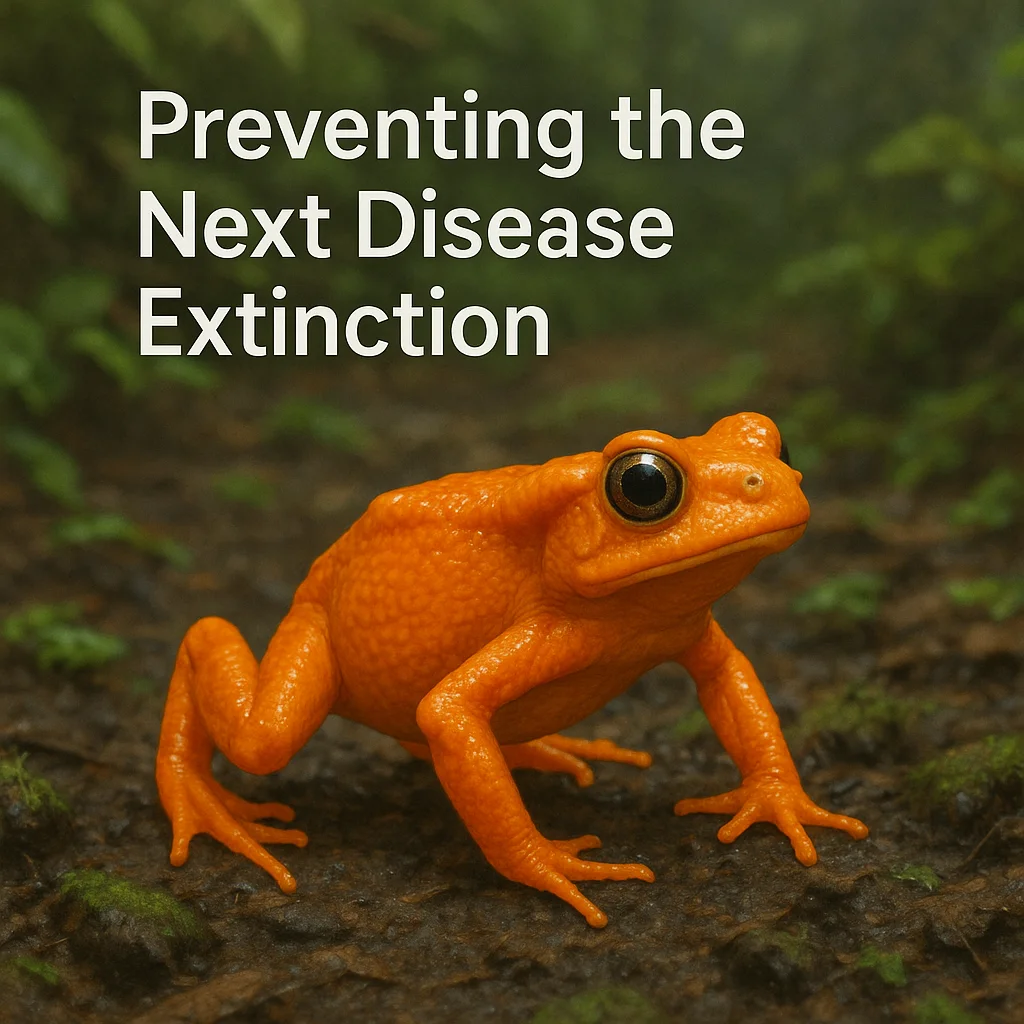
Its closest living relatives include other species of toads found in Central and South America. However, none share its peculiar coloration. In its ecosystem, the golden toad played a critical role in insect population control, contributing to the ecological balance of its habitat.
In this article, you'll learn about where the golden toad lived, how it survived, its abrupt disappearance, and the complex reasons behind its extinction. By understanding these factors, we can better grasp the broader implications for conservation biology and disease extinction prevention.
🧭 Where It Lived
The golden toad was endemic to a small region of cloud forest in Costa Rica, specifically in the Monteverde Cloud Forest Preserve. Its habitat was highly restricted, making it extremely vulnerable to environmental changes and threats.
This region is characterized by dense forests, high altitudes, and frequent cloud cover, which creates a moist and humid environment. Such conditions were ideal for the golden toad, which relied on the wet forest floor for part of its lifecycle.
The limited geographic range made it difficult for the species to escape adverse conditions or to migrate to favorable environments. Island-like habitats, whether actual islands or isolated highlands, often present significant risks for the species living there due to their isolation.
🌿 Habitat and Daily Life
The Monteverde Cloud Forest is known for its unique climate, with consistent rainfall and mild temperatures. These conditions supported not just the golden toad but a plethora of flora and fauna, all adapted to moist and stable environmental conditions.
The golden toad’s diet consisted mainly of small invertebrates, such as insects and worms, which were abundant on the forest floor. As a predator, the toad helped regulate the populations of these small creatures, which in turn sustained the ecological balance.
Breeding occurred during a narrow window each year, triggered by the onset of the wet season. Male toads would gather at ponds to call to females, who laid eggs in the water. The offspring then lived as tadpoles until they metamorphosed into adults.
🧬 What Made It Unique
The golden toad was most distinguished by its striking coloration. Unlike many amphibians that sport dull colors, its bright orange skin made it easily recognizable, a rare trait that fascinated scientists and tourists alike.
Their vibrant color may have played a role in mating displays, helping males attract females during the breeding season. Moreover, the toads had specialized glands in their skin, which likely offered protection from some predators and environmental hazards.
While the golden toad did not hold significant cultural importance, its unusual appearance and quick decline made it a focal point in discussions about biodiversity loss and conservation efforts in the 20th century.
⏳ When It Disappeared
Golden toads were first described in scientific literature in 1966. However, by the late 1980s, their numbers had begun to decline dramatically. The last confirmed sighting was in 1989, after which no further sightings were recorded despite intensive searches.
Due to the lack of confirmed sightings and the toad's specific habitat requirements, it was declared extinct in 1994. The declaration process involves thorough documentation and confirmation of no surviving individuals over a prolonged period.
The toad’s extinction highlights difficulties in determining the status of species inhabiting remote or difficult-to-access environments. Sometimes extensive searches are hindered by difficult terrain and limited funding.
⚠️ Why It Went Extinct
The rapid disappearance of the golden toad is attributed to several intertwined factors. First, habitat loss and fragmentation played a crucial role. As Monteverde faced deforestation and degradation, the toad’s specific needs were compromised.
Second, the emergence of a fungal disease, chytridiomycosis, devastated amphibian populations worldwide. This disease attacks the skin, which is essential for amphibian respiration and hydration, severely affecting their survival attempts.
Lastly, climate change possibly exacerbated the situation. Shifts in temperature and precipitation patterns could have altered the toad’s habitat, rendering it inhospitable. Changes in dry and wet seasons might have disrupted their breeding cycles.
🧩 How We Know (Evidence and Records)
The extinction of the golden toad is supported by extensive field studies and research efforts. Researchers collected data through direct observations, and photographic evidence supplemented extensive field notes.
Museum specimens provide further validation of the toad’s existence and its characteristics. In recent years, genetic research has begun to offer new insights, though it remains challenging due to limited DNA samples.
Despite thorough surveys, nocturnal and small amphibians are inherently difficult to study, rendering certain species hard to conclusively declare extinct, thus opening the door for continuous scientific inquiry.
🛡️ Could It Have Been Saved
In hindsight, clearer understanding and earlier intervention could have helped protect the golden toad. Habitat preservation initiatives would have secured their environment and possibly mitigated disease transmission.
Captive breeding programs might have helped increase population numbers, while stricter measures against deforestation would have prolonged their habitat’s viability. However, awareness and technology were not as advanced during their decline.
Despite late efforts by conservationists, strategies were either elusive or too delayed to counteract the cumulative threats. Such situations underscore the need for proactive conservation policies worldwide.
🔁 Are There Any Survivors or Close Relatives Today
No known populations of the golden toad exist today; it is declared both functionally and biologically extinct. However, many related toads continue to thrive in other parts of Central and South America.
These relatives share some morphological traits and ecological roles, helping maintain ecological balance in their respective environments. Nevertheless, the unique genetic makeup and ecological niche of the golden toad are lost.
There are no active reintroduction efforts, as the likelihood of undiscovered populations is exceedingly slim. Nonetheless, the knowledge gained continues to contribute to amphibian conservation strategies.
❓ Common Questions and Misconceptions
Was it hunted to extinction? No, hunting was not a significant factor in the extinction of the golden toad.
Why didn’t it adapt or move? Its highly specialized habitat requirements and limited range impaired its ability to adapt quickly or migrate.
Could it still be alive somewhere? It is highly unlikely, as extensive surveys have found no evidence of surviving populations since 1989.
What does 'declared extinct' actually mean? It means no individuals have been observed despite thorough and repeated efforts over many years.
What is the difference between endangered and extinct? Endangered species are at risk of extinction, while extinct species have no living individuals left.
Why are island species so vulnerable? Island species are often isolated with small populations, making them more susceptible to threats like disease and habitat changes.
📌 Summary
- The golden toad was a small, brightly colored amphibian.
- It lived exclusively in Costa Rica's Monteverde Cloud Forest.
- The habitat was a moist, humid cloud forest.
- The toad's diet consisted of small invertebrates.
- Unique for its vivid coloration and ecological role.
- Last seen in the late 1980s, declared extinct in 1994.
- Extinction drivers included habitat loss, disease, and climate changes.
- Evidence from field studies, museum specimens, and photographs.
- Closest relatives are other toads in Central America.
- Lesson: Urgent conservation action is crucial.
- Memorable takeaway: Disease can exacerbate extinction drivers rapidly.