🏞️ Emerging Diseases in a Warming World
🌍 What It Was
Emerging infectious diseases are illnesses caused by pathogens such as bacteria, viruses, or fungi, that have recently increased in number or geographical range. They can significantly impact wildlife populations and ecosystems, leading to declines or even extinctions.
Historically, wildlife diseases have shaped ecosystems by maintaining balance between species. However, with changes in climate, these diseases are emerging at an unprecedented rate.
This article will explore how warming temperatures have influenced the spread of diseases, where these changes are occurring, the impact on wildlife, and why preventing extinctions is crucial for biodiversity.
🧭 Where It Lived
Emerging diseases due to climate change have been recorded across all continents, from the tropics to the poles. Regions such as sub-Saharan Africa, Southeast Asia, and the Amazon Rainforest are particularly affected due to their high biodiversity and complex ecosystems.
The habitats most susceptible to these changes include tropical forests, grasslands, and coastal areas. These environments offer ideal conditions for pathogens and hosts to thrive, including warm temperatures, high humidity, and diverse species interactions.
Island ecosystems are especially vulnerable due to their isolation and limited biodiversity, which makes species less able to adapt to the introduction of new diseases. Environmental changes on islands can have disproportionate effects, putting endemic species that exist nowhere else at high risk.
🌿 Habitat and Daily Life
The changing climate alters not just temperature but also patterns of rainfall and seasonality, impacting habitats worldwide. As climates warm, pathogens that were once restricted to specific regions can now survive in previously inhospitable environments.
Infected species often display changes in key behaviors such as altered migration patterns, foraging habits, and social structures. Such changes disrupt the food web and ecological balance.
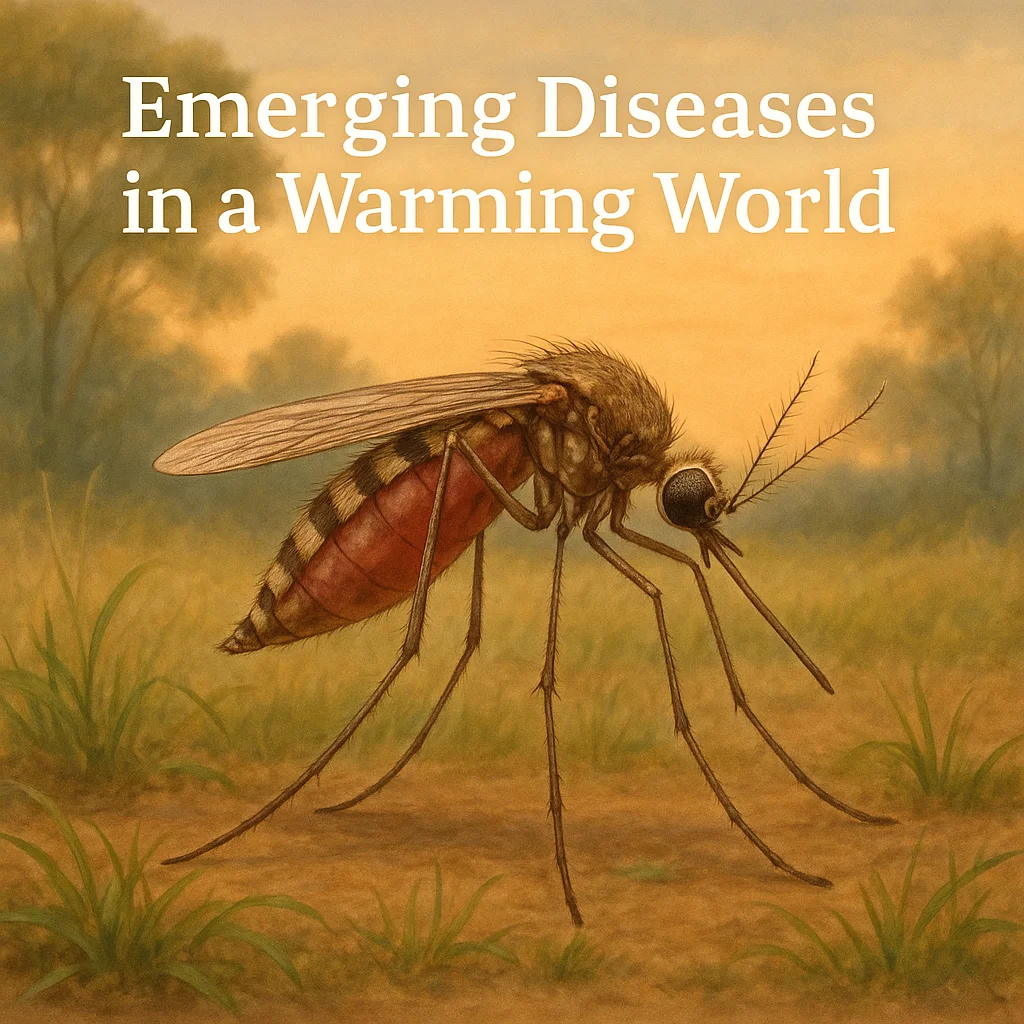
For instance, insect vectors like mosquitoes, which carry diseases such as malaria, thrive in warm, moist conditions. As temperatures rise, these insects are found in new areas, spreading diseases to vulnerable wildlife populations not previously exposed.
🧬 What Made It Unique
Each emerging disease is unique in its pathogen, host, and mode of transmission. Some pathogens have adapted to exploit climate change by expanding into new territories, facilitated by their hosts. For example, the chytrid fungus has devastated amphibian populations worldwide, driven by changes in temperature and moisture.
Diseases can also arise from the complex interplay of wildlife with human activities, leading to increased transmission rates. As habitats shrink and species are forced into closer proximity, the chances for new diseases to develop increase.
Pathogens may also evolve special mechanisms like heat resistance, enabling them to thrive across a wider range of climates, altering ecosystems in unprecedented ways.
⏳ When It Disappeared
Though specific records of when diseases disappear are rare, the timeline of infection impacts is more evident. Wildlife populations often experience sharp declines or a gradual decrease over time before reaching extinction.
Modern records suggest that some emerging diseases become endemic, establishing a permanent presence, while others are controlled or fade away. A disease may be declared "extinct" in an area if it is controlled or eradicated, but this is rare for wildlife diseases.
The process of declaring a disease extinct involves careful monitoring, absence of new cases for extended periods, and often, the destruction of the pathogen itself in habitats to prevent reemergence.
⚠️ Why It Went Extinct
Many emerging diseases in wildlife are linked to climate change, which acts as a catalyst for other extinction drivers.
- Habitat loss/fragmentation: Reduced habitats lead to higher contact rates between species, increasing disease transmission.
- Climate shifts/extreme events: Altered weather patterns favor pathogens and vectors, expanding their ecological range.
- Introduced/invasive species: Non-native species can be vectors for diseases new to native populations, which have no immunity.
While direct overhunting or pollution may not be primary disease drivers, they weaken populations, making them less resilient to disease outbreaks.
🧩 How We Know (Evidence and Records)
Identifying the impact of emerging diseases involves multiple types of evidence. Field studies and wildlife monitoring provide firsthand data on disease spread and impact.
Scientific research, including genetic analysis, enables the identification and tracking of pathogens. Historical records help reconstruct how diseases have influenced past extinction events.
Photographs, oral histories, museum specimens, and fossils provide additional insights, especially for regions lacking extensive scientific documentation. Together, these evidence types build a comprehensive picture of disease impact over time.
🛡️ Could It Have Been Saved
Efforts to counter emerging diseases focus on improving environmental conditions and controlling vectors. Protected reserves reduce human-wildlife conflict and limit disease spread.
Invasive species control and habitat restoration are crucial to reducing risks. Targeted conservation actions can include monitoring high-risk areas, improving biosecurity, and researching more about zoonotic diseases.
While these measures may not reverse all effects of past diseases, they can prevent future losses and help vulnerable populations recover, provided they are implemented in a timely manner.
🔁 Are There Any Survivors or Close Relatives Today
When examining survivors of emerging diseases, it’s essential to consider the closest living relatives of affected species. These relatives may share ecological niches or physiological traits, informing resilience to disease.
Ecological replacements – species that fulfill similar roles in ecosystems – can sometimes emerge. This is more common among generalist species capable of adapting to different environments.
Efforts such as captive breeding, where applicable, may bolster surviving populations. Success depends on the species’ ability to adapt and the effectiveness of conservation strategies.
❓ Common Questions and Misconceptions
Was it hunted to extinction? While hunting may contribute to declines, climate change-related diseases are a distinct threat causing extinctions.
Why didn’t it adapt or move? Many species have limited adaptability or face obstacles like habitat fragmentation that prevent migration out of diseased areas.
Could it still be alive somewhere? Severe disease outbreaks leave lasting impacts, but cryptic species may sometimes survive unnoticed, though rare.
What does 'declared extinct' actually mean? This status indicates no confirmed sightings or evidence of survival over a specified period despite thorough searches.
What is the difference between endangered and extinct? Endangered species are at risk of extinction, whereas extinct species no longer exist anywhere on Earth.
Why are island species so vulnerable? Island species often have small, isolated populations with limited genetic diversity, making them less resistant to new diseases.
Do all climate changes lead to diseases? Not all ecological changes result in disease, but shifts in climate can favor proliferation of certain pathogens.
Are humans at risk from these diseases? While primarily affecting wildlife, some emerging diseases can jump species barriers, potentially impacting human health directly or indirectly.
📌 Summary
- Emerging diseases are spikes of new or expanding illnesses impacting wildlife.
- They are recorded worldwide, prominently in tropical and sub-Saharan regions.
- Habitats like forests and islands are most impacted, increasing extinction risks.
- Diseases influence behaviors and disrupt food webs, exacerbating vulnerability.
- Pathogens exploit climate shifts, expanding their reach and adaptation potential.
- Records are rare, but monitoring helps trace disease impacts over time accurately.
- Isolation vastly increases the risk for endemic island species.
- Evidence from multiple sources is crucial to understanding past outbreaks.
- Conservation can focus on habitat protection and minimizing invasive species.
- The extinction timeline assists in gauging conservation urgency and waste.
- Ultimately, preserving biodiversity can help prevent future outbreaks.
- The takeaway is climate change’s critical influence on expanding disease impacts.