🏞️ Chytrid Fungus and Amphibian Crashes
🌍 What It Was
Chytrid fungus is a type of microscopic fungus that has been linked to significant global declines in amphibian populations. It was a novel pathogen to many amphibians, causing a disease called chytridiomycosis. This disease affects the skin of amphibians, which is crucial for their respiration and hydration.
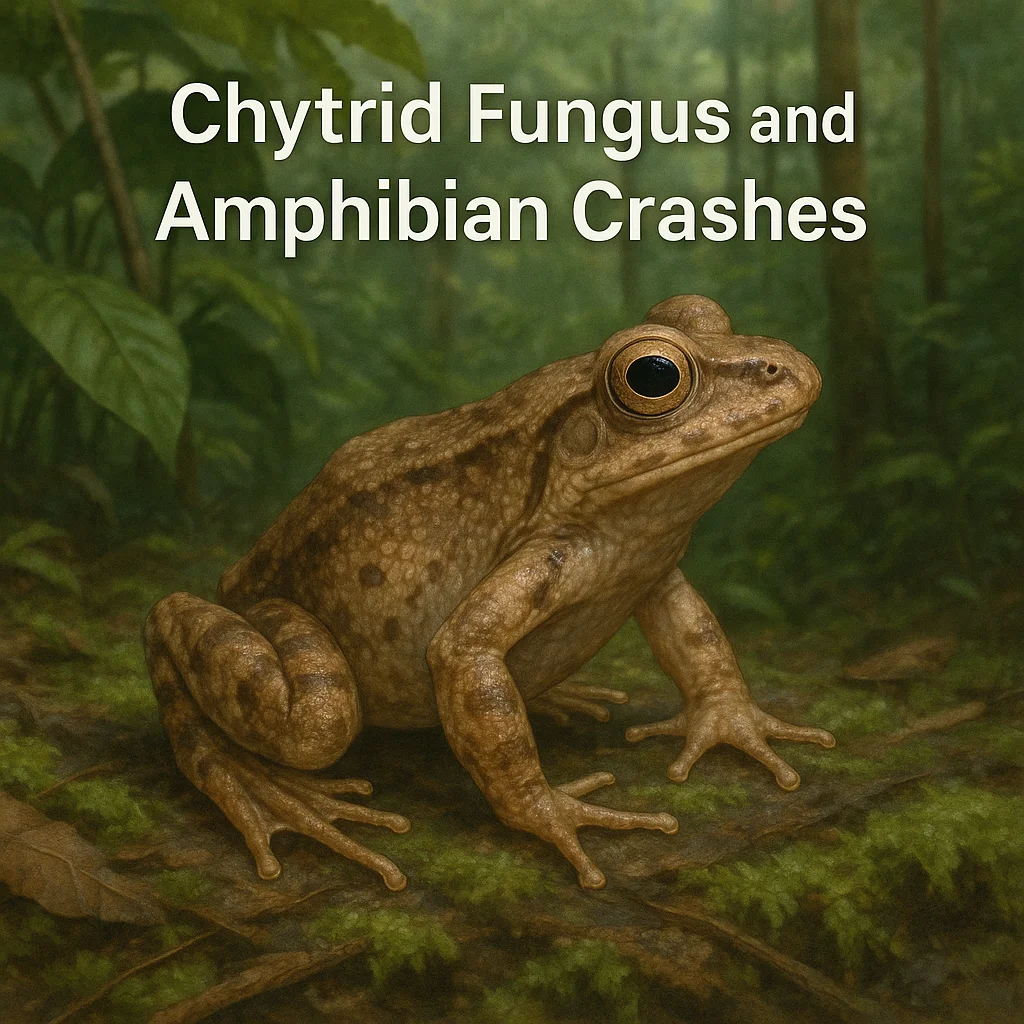
Amphibians, such as frogs, toads, newts, and salamanders, are among the closest living relatives most affected by chytrid fungus. These creatures play a critical role in both aquatic and terrestrial ecosystems by controlling insect populations and serving as food for various predators.
This article will explore where these amphibians lived, their habitats, how they lived, their unique physical traits, and the unfortunate events leading to massive population declines, or in some cases, extinction, due to chytrid fungus.
🧭 Where It Lived
Amphibians are found on every continent except Antarctica. The species most affected by chytrid fungus commonly inhabited regions in Central and South America, such as Panama and Costa Rica, as well as various parts of Australia.
These creatures relied on a variety of habitat types, including rainforests, temperate forests, wetlands, and mountain streams. Their need for moist environments stems from their unique skin, which requires contact with water to function properly.
Amphibian populations on islands or remote, highly localized areas faced increased risks with chytrid fungus as the limited geographic range often made them more vulnerable to rapid extinction when a novel pathogen is introduced.
🌿 Habitat and Daily Life
The habitats of affected amphibians range from cool, high-altitude cloud forests to warm lowland tropical settings. Temperature and rainfall are crucial elements, as many species are sensitive to changes in these environmental factors.
Amphibians are typically carnivorous, feeding on insects and small invertebrates. Their foraging style can vary, with some being ambush predators while others actively hunt for food.
Reproduction usually occurs in water, where they lay eggs. Many amphibian species exhibit parental care, such as guarding eggs or carrying them on their backs until hatching. They often interact with other species as both predator and prey, and some have symbiotic relationships, like mutualistic associations with certain aquatic plants or algae.
🧬 What Made It Unique
Amphibians have unique physical traits like permeable skin that aids in respiration and moisture absorption. These adaptations are essential for their survival, allowing them to thrive in humid environments.
Many amphibians have vibrant colors, serving both as camouflage and deterrents to predators. Some can absorb toxins from their prey, making their skin poisonous to potential threats.
Amphibians have held cultural significance in many societies, often featured in folklore as symbols of transformation due to their metamorphic life cycle from tadpole to adult.
⏳ When It Disappeared
Reports of amphibian declines began surfacing in the late 20th century. The extinction of some species, such as the golden toad of Costa Rica, was declared in the late 1980s and early 1990s.
Declaring a species extinct requires thorough surveys, and amphibians pose unique challenges due to their elusive nature and remote habitats. The term "Extinct in the Wild" applies when captive populations exist, but no individuals are left in their natural ranges.
Many other amphibian species have since been declared extinct or critically endangered, illustrating a larger trend of population crashes rather than isolated events.
⚠️ Why It Went Extinct
Habitat loss and fragmentation have severely impacted amphibian populations by reducing the suitable living area and isolating populations, hampering gene flow and resilience.
Disease, particularly chytridiomycosis caused by the chytrid fungus, has been a significant driver of declines. It affects the skin of amphibians, eventually leading to cardiac arrest.
Climate shifts, such as increased temperatures and altered rainfall patterns, affect breeding cycles and habitat conditions, further stressing populations.
Pollution from agricultural runoff and industrial waste also introduces harmful substances into water bodies, negatively affecting amphibian health and breeding success.
🧩 How We Know (Evidence and Records)
Researchers use various evidence to track amphibian declines, including field surveys, museum specimens, genetic analysis, and photographic records. These tools help verify the identity and historical abundance of species.
Chytrid fungus was identified through laboratory tests on specimens collected from affected areas. Scientists then compared genetic samples to confirm the presence of the pathogen.
The elusive nature of amphibians often complicates surveys. Nocturnal habits and remote locations can lead to difficulties in confirming the absence or persistence of certain species.
🛡️ Could It Have Been Saved
Conservation actions that might have helped prevent or mitigate chytrid-related declines include creating protected habitats, establishing captive breeding programs, and regulating human activities that facilitate the spread of the fungus.
Unfortunately, these efforts often came too late for some species. The speed of the chytrid fungus spread, coupled with limited conservation resources, impeded effective responses.
In some regions, late attempts have been made to mitigate the impact of chytrid fungus by treating infected populations and restoring habitats to support recovery. However, success has been variable and generally depends on the specific ecological context.
🔁 Are There Any Survivors or Close Relatives Today
Many of the affected amphibian species have close relatives that still thrive in different parts of the world. For instance, the tree frogs found in other continents share similarities with those affected by chytrid in Central and South America.
Some species adapted or have natural resistance to chytrid fungus, acting as ecological replacements in regions where susceptible species have vanished.
Captive breeding programs exist for some critically endangered species, aimed at eventual reintroduction to their natural habitats when conditions stabilize or are deemed safe.
❓ Common Questions and Misconceptions
Was it hunted to extinction? While hunting has impacted some amphibian species, the chytrid fungus is a more significant cause of recent declines.
Why didn’t it adapt or move? Rapid spread and lethal effectiveness of the fungus prevented many species from adapting or migrating quickly enough.
Could it still be alive somewhere? For some species, it is possible, especially those in hard-to-reach locations, but ongoing surveys are needed for confirmation.
What does 'declared extinct' actually mean? It indicates no confirmed sightings in the wild after thorough research and surveys over a specific period.
What is the difference between endangered and extinct? "Endangered" refers to species at risk of extinction, while "extinct" means no known individuals are alive today.
Why are island species so vulnerable? Limited range and isolation make island species more susceptible to rapid changes, such as disease outbreaks.
📌 Summary
- Chytrid fungus caused significant declines in amphibian populations.
- Affected species primarily lived in Central and South America, and parts of Australia.
- They required moist environments like rainforests and wetlands.
- Carnivorous diet, including insects and small invertebrates.
- Permeable skin and unique life cycles were key adaptations.
- Last known period alive ranged from late 1980s to early 2000s.
- Main drivers of extinction included disease, habitat loss, and climate change.
- Evidence includes laboratory tests, field surveys, and genetic analysis.
- Close relatives still exist, some with natural resistance to chytrid.
- Conservation actions, if timely, could have mitigated some impacts.
- Amphibians play a critical ecological role, emphasizing conservation importance.
- Chytrid fungus highlights complex, multi-faceted challenges in biodiversity conservation.