🏞️ Captive Breeding as a Last Rescue
🌍 What It Was
Many animals have become extinct due to a combination of natural and human-related causes. Captive breeding has emerged as a crucial strategy for conservationists attempting to rescue species on the brink of extinction. This method involves breeding animals in controlled environments, such as zoos or wildlife reserves, to create a stable population that can potentially be introduced back into the wild.
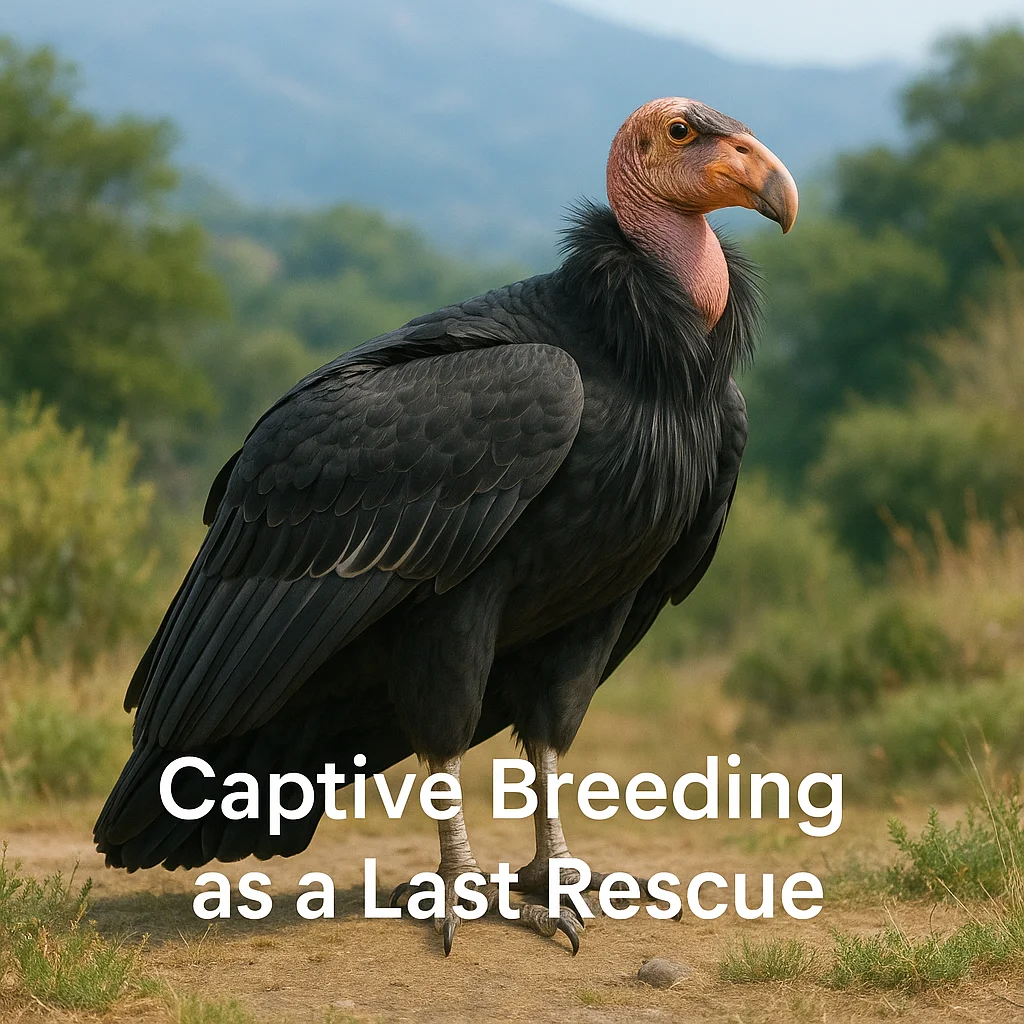
Among the species that have benefited from captive breeding are the California condor and the black-footed ferret. These animals, once teetering on the edge of extinction, are slowly being reintroduced into their natural habitats with the hope of rebuilding their populations.
This article will provide insight into where these species originally lived, how they interacted with their environments, and what factors contributed to their decline. By understanding the past, we can learn valuable lessons for conserving biodiversity.
🧭 Where It Lived
The California condor, a majestic bird with a wingspan of up to 10 feet, historically roamed across North America. It inhabited a range of environments, from coastal regions to mountainous areas. The wide distribution allowed it to adapt to various habitats, including forests, grasslands, and deserts.
In contrast, the black-footed ferret was more specialized in its habitat preference, living primarily in the grasslands of North America where prairie dog populations were abundant. These creatures depended heavily on prairie dogs not just for food but also for their burrows as shelter.
Animals that are restricted to specific habitats or island locales often face increased extinction risks. Limited range means a single catastrophic event, such as a disease outbreak or habitat destruction, can have devastating impacts on their populations.
🌿 Habitat and Daily Life
The regions once roamed by the California condor experienced varied climates, with temperatures and rainfall patterns shifting sharply across its range. These birds primarily fed on carrion, relying on their keen eyesight to spot carcasses from high in the sky. The California condor played an essential role in its ecosystem by helping to clean up dead animals.
Black-footed ferrets led a more sedentary life compared to condors. They were nocturnal predators, hunting prairie dogs during the night. Their life cycle was closely linked to the availability of their prey, and they had a breeding season that typically occurred once a year, with mothers providing intensive care to their young.
Both species had specific ecological niches and interactions with other species, highlighting the complex web of life they were part of. This rich tapestry of interactions underscores the importance of preserving ecosystems as a whole, rather than focusing solely on individual species.
🧬 What Made It Unique
The California condor is notable for its impressive size and powerful wings designed for soaring. Its bare head, while striking, is an adaptation to its scavenging habits, keeping it clean while feeding on carcasses. The black-footed ferret, with its slender build and masked face, was uniquely adapted for life in the underground burrows of prairie dogs, its primary prey.
Both animals hold cultural significance. The condor, for instance, is considered sacred by some Native American tribes and features in folklore and mythologies. The ferret, although lesser-known, represents a specialized predator with a critical role in controlling prairie dog populations, thus maintaining the health of grassland ecosystems.
⏳ When It Disappeared
The decline of the California condor was noted as early as the 20th century, with the last wild birds captured in the 1980s for a captive breeding program. These captures marked the shift from the bird being considered "Extinct in the Wild" to ongoing breeding efforts aimed at reestablishment.
For the black-footed ferret, sightings diminished until they were thought extinct in the wild in the 1970s. A small population was later discovered in the 1980s, prompting urgent breed-and-release efforts. These animals' stories highlight the importance of timely intervention and continuous monitoring.
Both cases illustrate the challenges in pinpointing extinction dates, stemming from isolated last sightings and the difficulty in confirming the absence of individuals in large or remote habitats.
⚠️ Why It Went Extinct
Several driving factors contributed to the near extinction of these species. The California condor was heavily impacted by habitat loss and fragmentation due to human expansion and land-use change, limiting its food sources and nesting sites. The use of lead ammunition also posed a significant threat, as condors ingested lead fragments from carcasses and became poisoned.
For the black-footed ferret, habitat loss was primarily linked to the decline of prairie dog towns, which were destroyed due to agricultural expansion and pest control measures. This led to food scarcity and loss of shelter for the ferrets.
Moreover, both species faced challenges from disease. The spread of canine distemper and sylvatic plague among prairie dog populations indirectly affected ferrets, while condors were susceptible to contamination from environmental pollutants.
🧩 How We Know (Evidence and Records)
The evidence for these species' declines comes from a variety of sources. For the California condor, records from aerial surveys, field notes, and studies of lead poisoning incidents provide comprehensive documentation. For the black-footed ferret, rediscovery efforts were aided by tracking, trapping, and genetic studies confirming their identity.
In both cases, conservationists have relied on robust data collection and verification methods to confirm sightings and numbers, sometimes relying on field biologists' detailed observations and museum specimens to understand population trends over time.
🛡️ Could It Have Been Saved
Captive breeding played a crucial role in saving both the California condor and the black-footed ferret. By removing a limited number of individuals from the wild, intense efforts were made to breed them under controlled conditions. This approach also allowed for medical treatments, increased survival rates, and safe environments for breeding.
However, captive breeding is not without trade-offs. It often means intervening heavily in natural processes and can lead to genetic bottlenecks if not managed correctly. Additionally, returning these species to the wild requires addressing the initial causes of decline to ensure sustainable populations.
While there were conservation dangers due to delays in actions, the eventual efforts have proven that with focused attention, recovery is possible, albeit with challenges.
🔁 Are There Any Survivors or Close Relatives Today
The California condor and black-footed ferret have no true equals, but their closest living relatives share partial ecological roles. Turkey vultures, for instance, are similar scavengers, while other members of the weasel family, like badgers, share predatory and burrow-related behaviors.
Through captive breeding programs, both species have seen increases in population numbers. Reintroduction into native ranges is ongoing, with careful management and monitoring. Although challenges remain, these efforts offer hope that these near-extinct species might one day thrive again.
❓ Common Questions and Misconceptions
Was it hunted to extinction? In many cases, hunting and human-related deaths contributed, but factors like habitat destruction and pollution were also significant.
Why didn’t it adapt or move? Some species are highly specialized, limiting their ability to adapt to rapid environmental changes or relocate.
Could it still be alive somewhere? While unlikely for many species, there are instances where presumed extinct species were later rediscovered.
What does 'declared extinct' actually mean? Declaring a species extinct involves thorough investigations confirming no individuals survive in the wild.
What is the difference between endangered and extinct? Endangered species still have existing populations, albeit dwindling. Extinct species have no living individuals.
Why are island species so vulnerable? Island ecosystems are isolated, with limited resources and genetic diversity, making them highly susceptible to change.
📌 Summary
- Captive breeding as a conservation strategy.
- The California condor once lived across North America.
- Black-footed ferrets thrived in North American grasslands.
- Condors scavenge while ferrets hunt prairie dogs.
- Condors have vast wingspans, ferrets live in prairie dog burrows.
- Rapid declines noted in the 1980s for both species.
- Main extinctions drivers: habitat loss, pollution, disease.
- Evidence includes field notes, genetic studies.
- Closest relatives are vultures and other weasels.
- Conservation requires early, multi-pronged action.
- Hope remains through rigorous captive breeding programs.