🏞️ Tipping Points in Ecosystems
🌍 What It Was
When ecosystems reach a tipping point, they undergo rapid and often irreversible changes. These points can lead to significant consequences for the species that live within them. Learning about tipping points in ecosystems is essential for understanding how various species, including some that have gone extinct, were affected by changes in their environment.
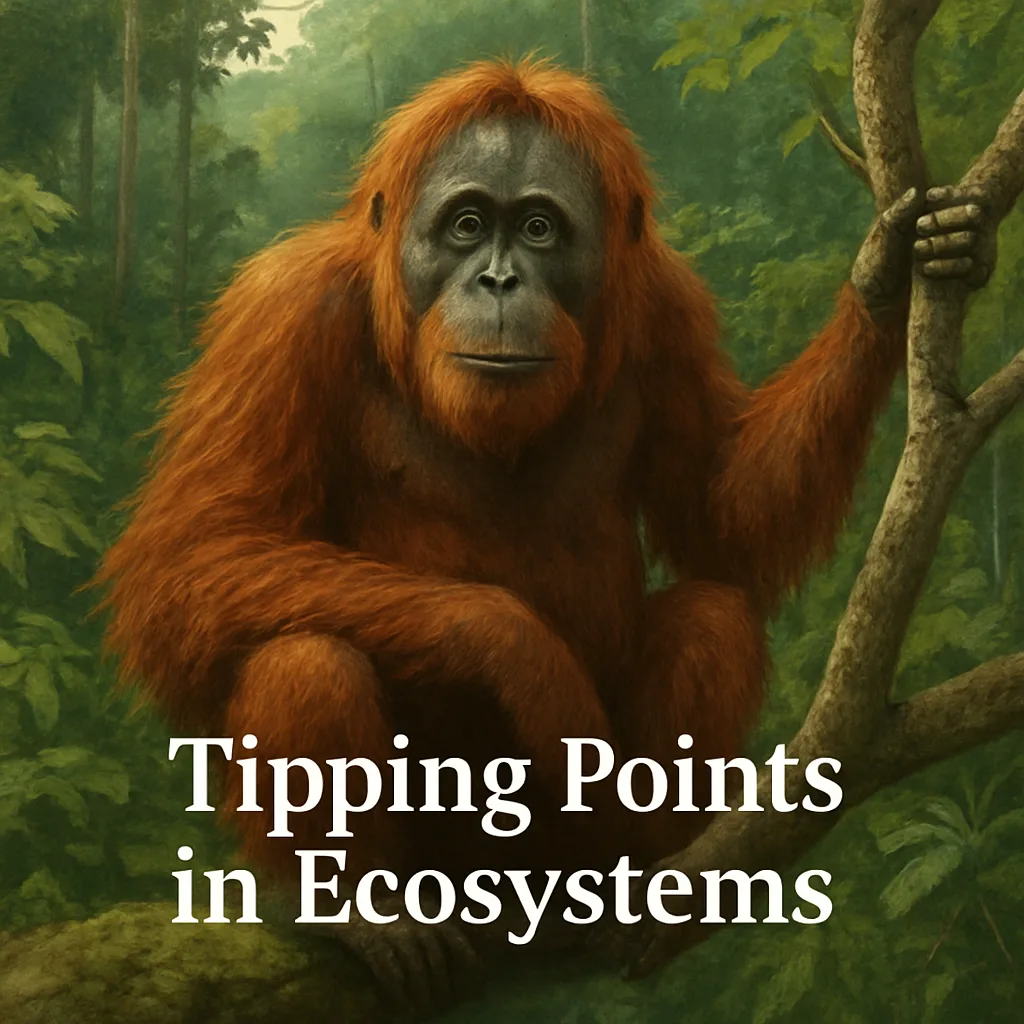
In this article, we'll explore the concept of tipping points in ecosystems and focus on some extinct animals that were caught in these critical moments. By examining their histories, we aim to shed light on where they lived, how they survived, and why they eventually disappeared.
Many of these animals had close relatives that still exist today, giving us insights into how they fit into their ecosystems. As we delve into these histories, you'll learn about the factors that contributed to their extinction, including habitat loss, introduced species, and climate change.
🧭 Where It Lived
The extinction of species at ecosystem tipping points often reflects changes in their geographical range and habitat. Many of these species were endemic, meaning they were found only in specific regions or islands. This limited range made them particularly vulnerable to changes.
For example, ecosystem shifts in dense tropical forests and isolated islands could drastically alter the habitat conditions. Many extinct animals depended on specialized habitats like wetlands, reefs, or grasslands, where even minor environmental changes could have catastrophic effects.
In some cases, species that lived in well-defined regions, such as Madagascar or New Zealand, faced heightened pressures due to their geographic isolation. This isolation restricted their ability to migrate to new habitats as their original ones changed or disappeared.
🌿 Habitat and Daily Life
Understanding the climate and environment in which these species lived helps explain how they thrived and what made their ecosystems vulnerable to tipping points. Temperate regions with defined seasons offered distinct challenges and resources.
The diets and foraging habits of these animals varied widely, from herbivores grazing on savanna grasses to carnivores hunting in dense forests. Some species were solitary, while others formed complex social groups, relying on cooperative behaviors for survival.
Reproduction and life cycle patterns were often finely tuned to their environments. Breeding seasons might coincide with rainy periods when food was abundant. Offspring care varied, with some species providing extensive parental investment to ensure survival.
🧬 What Made It Unique
These animals possessed unique physical traits and adaptations that allowed them to exploit specific niches within their ecosystems. Whether it was the shell of a giant tortoise or the keen eyesight of a forest predator, each adaptation had a distinct purpose.
Certain species played critical ecological roles, such as seed dispersal by fruit-eating birds or the creation of habitats by coral-building organisms. These roles often contributed to the stability and resilience of their ecosystems.
In many cultures, these animals held historical or cultural significance, symbolizing the connection between human communities and their natural environments. This significance often adds an emotional dimension to their stories of extinction.
⏳ When It Disappeared
Pinpointing the exact timeline of an extinction can be challenging. Last confirmed records and reliable sightings are crucial in determining when a species disappeared. These records provide evidence that helps declare a species extinct or extinct in the wild.
However, uncertainties often exist due to incomplete records and remote habitats. Misidentifications and infrequent sightings can complicate the timeline, leading to debates among researchers about the exact moment of extinction.
For some species, extinction in the wild means they no longer exist in their natural habitat but might survive in captivity. Understanding these distinctions provides context for conservation efforts and the classification of species.
⚠️ Why It Went Extinct
The extinction of species at ecosystem tipping points is rarely due to a single cause. Instead, it results from multiple, interconnected factors that disrupt survival and reproduction. These factors include habitat loss, which fragments essential territories, making it difficult for animals to find food or mates.
Overhunting or overfishing by humans has historically led to rapid population declines. Introduced species can become invasive, outcompeting native species for resources or introducing new diseases.
Climate shifts and extreme events, such as prolonged droughts or hurricanes, can dramatically alter habitats. Pollution and other human activities further degrade environments, reducing the ability of ecosystems to support diverse life forms.
🧩 How We Know (Evidence and Records)
Scientists use various methods to gather evidence about extinct species. Fossils and subfossils provide physical remains, while museum specimens and field notes offer documented observations. In some cases, photographs and oral histories from local communities add context.
Genetic analysis can verify species identity and help reconstruct evolutionary histories. These methods combine to paint a comprehensive picture of a species' existence and extinction.
Some species, particularly those that are rare, nocturnal, or live in inaccessible areas, present challenges for confirmation. Despite these difficulties, scientific evidence remains the foundation for understanding past extinctions.
🛡️ Could It Have Been Saved
Conservation actions could have potentially altered the fate of many extinct species. Protecting critical habitats, establishing hunting regulations, and controlling invasive species might have provided the necessary conditions for survival.
Captive breeding programs could have contributed to population recovery if implemented in time. But action often came too late, as ecosystems reached tipping points before effective interventions were in place.
Late conservation attempts sometimes offered lessons for the future, highlighting the importance of early and sustained efforts to preserve biodiversity.
🔁 Are There Any Survivors or Close Relatives Today
In many cases, the closest living relatives of extinct species provide insights into their ecological roles. These relatives may share similar traits or behaviors, offering glimpses into the lives of their extinct counterparts.
Ecological replacements, or species that fill similar roles in an ecosystem, sometimes emerge when a species goes extinct. Understanding these dynamics helps scientists grasp how ecosystems adapt to changes over time.
If any reintroduction or captive breeding programs exist today, they offer a chance to restore lost species to their natural habitats, albeit with complex scientific and ethical considerations.
❓ Common Questions and Misconceptions
Was it hunted to extinction? While overhunting contributed to some extinctions, it was typically one factor among many.
Why didn’t it adapt or move? Many species couldn't adapt quickly enough or relocate due to habitat preferences and ecological roles.
Could it still be alive somewhere? Unlikely, given extensive searches and lack of sightings over time; however, some species are initially rediscovered.
What does 'declared extinct' actually mean? It means thorough investigations found no individuals surviving in the wild.
What is the difference between endangered and extinct? Endangered species are at risk of extinction but still exist; extinct species no longer exist in the wild.
Why are island species so vulnerable? Limited ranges and specialized habitats make them highly susceptible to environmental changes and introduced species.
📌 Summary
- Understanding tipping points helps explain rapid ecosystem changes.
- Extinct animals often had restricted geographical ranges.
- Habitats varied from forests to islands, affecting vulnerability.
- Diet and behavior adapted to specific environments.
- Physical traits and ecological roles were unique to survival.
- Last known sightings provide insight into extinction timelines.
- Extinction usually results from multiple, interconnected drivers.
- Evidence includes fossils, specimens, and genetic data.
- Closest relatives and ecological replacements offer insights.
- Conservation requires early, sustained efforts for success.
- Valuable lessons can guide future preservation actions.