🏞️ Ocean Warming and Reef Declines
🌍 What It Was
Coral reefs, though not animals in the traditional sense, are vital marine ecosystems known for their incredible biodiversity. These structures are composed of colonies of coral polyps, tiny marine invertebrates. Coral reefs are often termed "rainforests of the sea" for their astounding diversity.
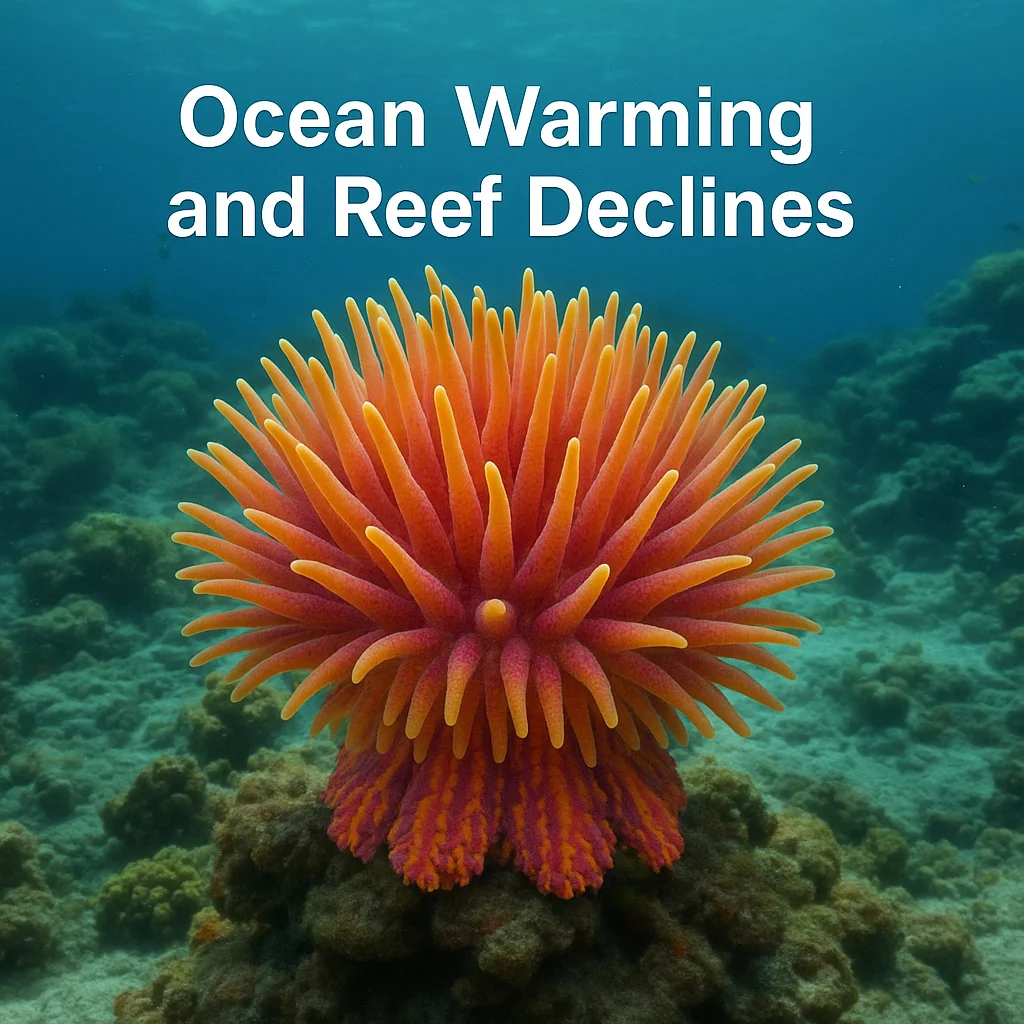
The closest relatives to coral reefs are, in fact, coral species themselves. They form calcium carbonate structures that provide habitat and shelter for numerous marine species. The symbiotic relationship with algae called zooxanthellae gives corals their vibrant colors.
This article will explore the environment coral reefs thrived in, their existence timeline, reasons for their decline, and the implications for the species that once lived among them.
🧭 Where It Lived
Coral reefs are typically found in tropical and subtropical oceans, primarily between the Tropics of Cancer and Capricorn. Notable regions include the Great Barrier Reef off the coast of Australia, the Coral Triangle in Southeast Asia, and the Mesoamerican Reef in the Caribbean.
These reefs rely on clear, warm, shallow waters that ensure sunlight can penetrate for photosynthesis, which is crucial for the symbiotic algae living within coral tissues. They are less common in deeper or more turbid waters.
Due to their reliance on specific conditions, coral reefs can be highly localized. This dependence on narrow environmental parameters increases their vulnerability to changes and threats, making them highly susceptible to climate change.
🌿 Habitat and Daily Life
Coral reefs thrive in stable, warm water conditions, usually between 23 to 29 degrees Celsius. They flourish in areas with relatively consistent annual temperatures and sufficient sunlight.
The diet of coral polyps includes plankton and small fish, captured using their tentacles. They also rely heavily on nutrients produced by zooxanthellae through photosynthesis, which provides much of their energy needs.
Reefs are bustling with life, supporting thousands of marine species, from tiny organisms to larger predators. Fish find shelter, breed, and feed in these habitats, contributing to complex food webs and ecological interactions.
🧬 What Made It Unique
Coral reefs are renowned for their vibrant colors and complex structures, which provide a diverse range of habitats. Their growth patterns and resilience in building structures over decades are among their most distinctive features.
The calcium carbonate secreted by coral polyps forms the solid framework of reefs, providing essential habitat for marine life. This ability to build and sustain an entire ecosystem highlights their crucial ecological role.
Coral reefs have not only ecological but also cultural significance. Many coastal communities regard reefs as integral to their livelihoods, providing food, protection from storms, and tourism opportunities.
⏳ When It Disappeared
Reef decline has been occurring over recent decades, with significant losses recorded starting in the late 20th century. The exact timing of this decline varies by region, with some areas experiencing more rapid deterioration than others.
While some coral reefs are classified as "functionally extinct" due to severely reduced biodiversity, others are listed as at-risk. The lack of robust monitoring systems in some regions contributes to uncertainty in tracking declines.
Defining coral reef extinction involves assessing biodiversity loss and the inability to support marine life, rather than the traditional concept of individual species extinction.
⚠️ Why It Went Extinct
Coral reef declines are attributed to several interacting factors. Habitat loss and fragmentation occur as coastal development and pollution degrade water quality, disrupting vital coral processes.
Climate shifts, particularly ocean warming, cause coral bleaching—when corals expel their algae, leading to loss of color and eventual death. Extreme weather events exacerbated by climate change further stress reef ecosystems.
Pollution from agricultural runoff introduces harmful substances into reef environments, reducing water quality and threatening coral health. Overfishing disrupts ecological balance, while introduced species alter reef dynamics.
🧩 How We Know (Evidence and Records)
The decline of coral reefs is documented through various forms of evidence, including underwater surveys, satellite imagery, and historical records. Subfossil records provide insight into past reef distributions.
Scientific confirmation of coral health and biodiversity changes comes from field studies and genetic research, assessing both brief and long-term transformations.
Continual challenges in monitoring exist because reefs are remote and cover vast areas, making comprehensive studies resource-intensive. This complicates accurate assessments and response strategies.
🛡️ Could It Have Been Saved
Realistic conservation measures for coral reefs involve protecting habitats through marine reserves, regulating fishing practices, and reducing runoff pollution.
Unfortunately, many conservation efforts faced implementation delays as awareness of coral reef declines emerged slowly, hindering timely actions.
Recent conservation practices include coral gardening and restoration projects, which aim to reestablish coral populations, though these interventions must be scaled up significantly to keep pace with ongoing damage.
🔁 Are There Any Survivors or Close Relatives Today
The closest living relatives to corals are other coral species and certain types of sea anemones within the same phylum, Cnidaria. Modern reefs still possess strong ecological linkages to their predecessors.
Today, many marine protected areas work to conserve remaining coral reef habitats. These efforts help maintain genetic diversity and ecological functions of coral systems.
Though ecological replacements for coral roles are rare, certain species like mangroves and seagrasses can offer some ecosystem services, helping mitigate coastal impacts in coral absence.
❓ Common Questions and Misconceptions
Was it hunted to extinction? No, coral reefs face ecological threats rather than direct harvesting.
Why didn’t it adapt or move? Rapid environmental changes and limited movement capacity hinder adaptation.
Could it still be alive somewhere? While remnants exist, functional reef systems are critically endangered.
What does 'declared extinct' actually mean? It refers to severe biodiversity loss and ecosystem collapse.
What is the difference between endangered and extinct? Endangered species are at risk, while extinct ones are gone from the wild.
Why are island species so vulnerable? Geographic isolation limits genetic diversity and adaptability.
📌 Summary
- Biodiverse marine ecosystems, coral reefs faced drastic declines.
- Thrived in tropical, subtropical oceans, requiring warm, clear waters.
- Reefs were vibrant habitats, hosting myriad marine species.
- Corals relied on plankton and symbiotic algae for sustenance.
- Striking biodiversity, they formed critical marine habitats.
- Declines became evident from the late 20th century onward.
- Climate change, pollution, and overfishing are major causes.
- Reef declines are tracked using various scientific records.
- Other coral species and some marine reserves survive today.
- Conservation needed but faced delays in effective implementation.
- Reef decline underscores the need for immediate environmental action.