🏞️ Extreme Weather and Population Collapse
🌍 What It Was
The Bramble Cay melomys was a small rodent with a unique distinction: it was one of the few mammal species native to the Great Barrier Reef. Renowned for its brown fur and bushy tail, this creature carved out a niche in a challenging environment.
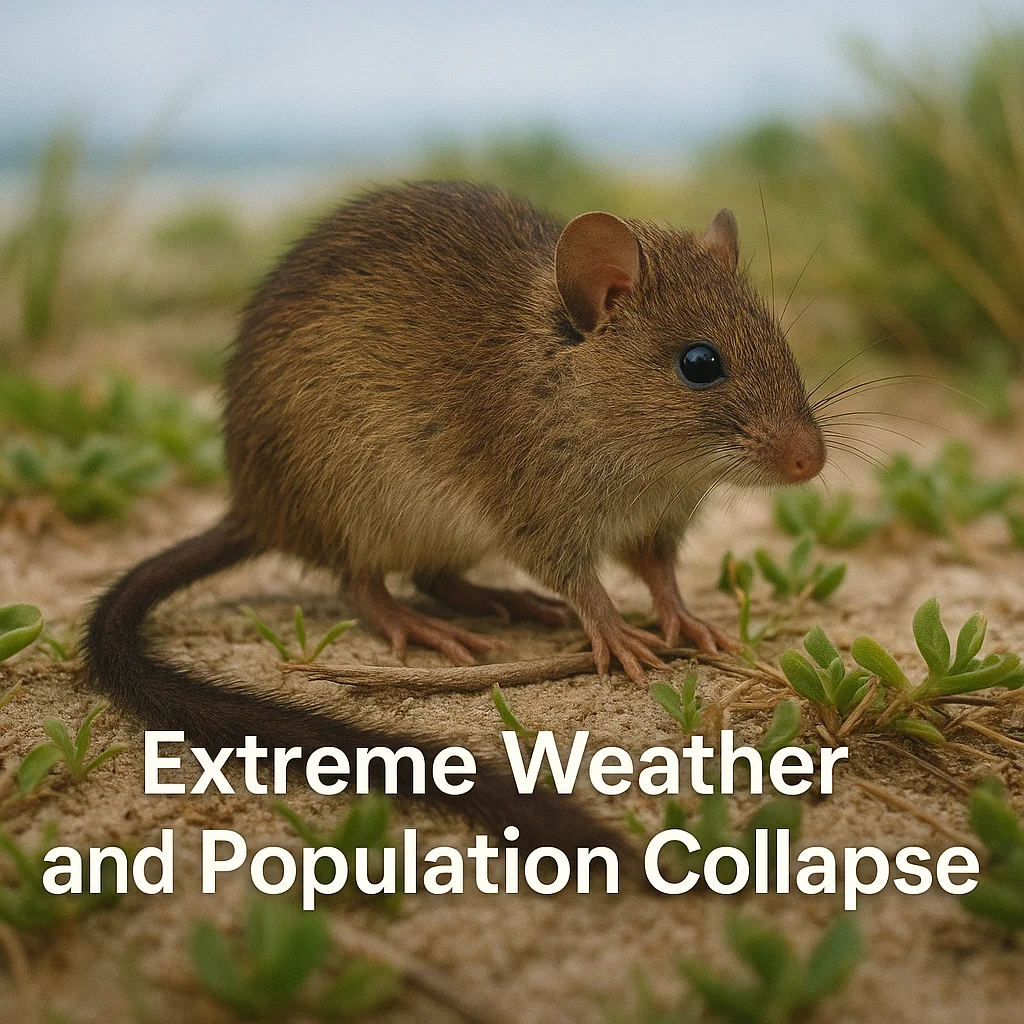
Its closest living relatives are other rodents found on nearby Australian mainland and islands, but the Bramble Cay melomys was specially adapted to its island life. It occupied an essential role in its ecosystem, helping in seed dispersal and contributing to the ecological balance.
In this article, you will learn about where the Bramble Cay melomys lived, its daily habits, what made it unique, and the factors contributing to its extinction. We’ll explore the timeline of its disappearance and the evidence scientists used to verify this tragic loss.
🧭 Where It Lived
The Bramble Cay melomys was endemic to Bramble Cay, a tiny coral cay on the edge of the Great Barrier Reef in Australia. This small island was its only known home, and it never ventured beyond these shores.
The environment of Bramble Cay was harsh, with limited resources. The melomys depended on the vegetation found there for food and nesting materials. The island itself experienced seasonal changes, but its size restricted the animal's ability to migrate to more favorable areas.
Being island-limited significantly increased the risk of extinction for the Bramble Cay melomys. When environmental changes or extreme weather events occurred, there was nowhere else for the rodent to go. This localization amplified the threats posed by climate change and human activities.
🌿 Habitat and Daily Life
The climate of Bramble Cay featured tropical conditions, with hot, humid summers and mild winters. Rainfall was crucial for the vegetation on the cay, which the melomys depended on for food.
Primarily herbivorous, the Bramble Cay melomys foraged for plants and seeds. Its agile movements and keen sense of smell helped it locate food, while its nocturnal habits allowed it to avoid daytime heat and potential predators.
Breeding for the melomys likely occurred year-round, typical of small rodents in warm climates. Little is known about their social structure, but they were likely solitary except during the breeding season, where a female would care for her young until they were independent.
🧬 What Made It Unique
The small size of the Bramble Cay melomys was an adaptation to its restrictive island environment. Its brown fur provided effective camouflage among the grasses and vegetation on the cay.
One of its notable roles in the ecosystem was seed dispersal. This activity not only supported the melomys’ food supply but also promoted plant growth on Bramble Cay, maintaining the island's delicate balance.
The Bramble Cay melomys had no significant cultural or historical importance to people, largely because it inhabited a remote and seldom-visited location. However, it symbolized the fragile nature of island ecosystems and the urgent need for conservation efforts.
⏳ When It Disappeared
The last confirmed sighting of the Bramble Cay melomys occurred in 2009 during a scientific survey. Subsequent searches over the years failed to locate any individuals, leading researchers to declare it extinct in 2016.
Extinction declaration involves thorough surveys and consideration of the species' ecology. In this case, the lack of sightings over a considerable period and changing environmental conditions contributed to the conclusion that the species was lost.
Even though it is listed as extinct, there is always room for slight uncertainty, especially with small or cryptic species. These animals may evade detection, but the evidence strongly indicates the absence of the Bramble Cay melomys from its known habitat.
⚠️ Why It Went Extinct
The primary driver of extinction for the Bramble Cay melomys was habitat loss due to rising sea levels and extreme weather events. The island habitat was severely impacted by flooding and erosion, destroying vital resources.
Secondary factors that could have played a role include changes in vegetation due to shifting climate patterns. The cay's limited resources were further strained by increasing temperatures and altered rainfall patterns.
While there may have been no direct human exploitation of the melomys, human-induced climate change played an indirect role. The melomys’ extinction highlights how small, isolated populations are incredibly vulnerable to environmental changes.
🧩 How We Know (Evidence and Records)
Evidence of the Bramble Cay melomys comes from both historic field notes and more recent scientific surveys. Researchers collected specimens and gathered observational data over time.
Museum specimens have provided a basis for understanding the melomys’ physical characteristics and enabled comparisons with other rodent species. Genetic studies, though limited, support its classification and historical range on Bramble Cay.
The leap to extinction status is often supported by the absence of sightings despite intensive search efforts. The isolated nature of Bramble Cay allows for a more definitive conclusion about the absence of this species.
🛡️ Could It Have Been Saved
Possible conservation actions for the Bramble Cay melomys could have included habitat protection through engineered barriers to mitigate the effects of sea-level rise and storm surges.
Captive breeding programs might have provided an additional buffer, enabling reintroduction if the cay’s habitat became stable again. However, such interventions are costly and require significant planning and resources.
Unfortunately, the urgency required for these actions was not realized until too late. Management efforts in the area did not address the rapid environmental changes sufficiently to prevent the species' extinction.
🔁 Are There Any Survivors or Close Relatives Today
The closest living relatives of the Bramble Cay melomys are other native rodent species found throughout Australia and nearby islands. These relatives share similar ecological roles but do not occupy the same specific niche.
Ecological replacements can sometimes fill roles left by extinct species. In this case, other rodents on the mainland may continue seed dispersal roles in different ecosystems, but no species will perfectly replicate the specific balance once present on Bramble Cay.
There are currently no captive programs or reintroductions for the Bramble Cay melomys, as the species is considered extinct with no known survivors.
❓ Common Questions and Misconceptions
Was it hunted to extinction? There is no evidence that the Bramble Cay melomys was specifically hunted or targeted by humans.
Why didn’t it adapt or move? Its isolation on a small island limited its ability to migrate or adapt quickly enough to rapid environmental changes.
Could it still be alive somewhere? Although possible, it is highly unlikely given the thorough surveys and destruction of its habitat.
What does 'declared extinct' actually mean? It means that after sufficient evidence and failed attempts to locate it, scientists conclude the species no longer exists.
What is the difference between endangered and extinct? Endangered species are at risk of extinction, whereas extinct species have no known surviving individuals.
Why are island species so vulnerable? Limited habitat and resources, coupled with isolation, make them particularly susceptible to changes.
📌 Summary
- The Bramble Cay melomys was a small rodent native to Bramble Cay.
- It lived only on this small coral cay on the Great Barrier Reef.
- The habitat was tropical, with limited resources, heavily affected by climate.
- The melomys was herbivorous, foraging for island plants and seeds.
- Unique for its island adaptation and role in seed dispersal.
- The last known sightings were in 2009, declared extinct in 2016.
- Main extinction drivers: habitat loss from climate change.
- Documents and evidence include field notes and museum specimens.
- Closest relatives are other Australian rodents, fulfilling similar roles.
- Future conservation efforts must prioritize urgent actions for small populations.
- Its extinction underscores the fragility of isolated ecosystems.