🏞️ Stephens Island Wren
🌍 What It Was
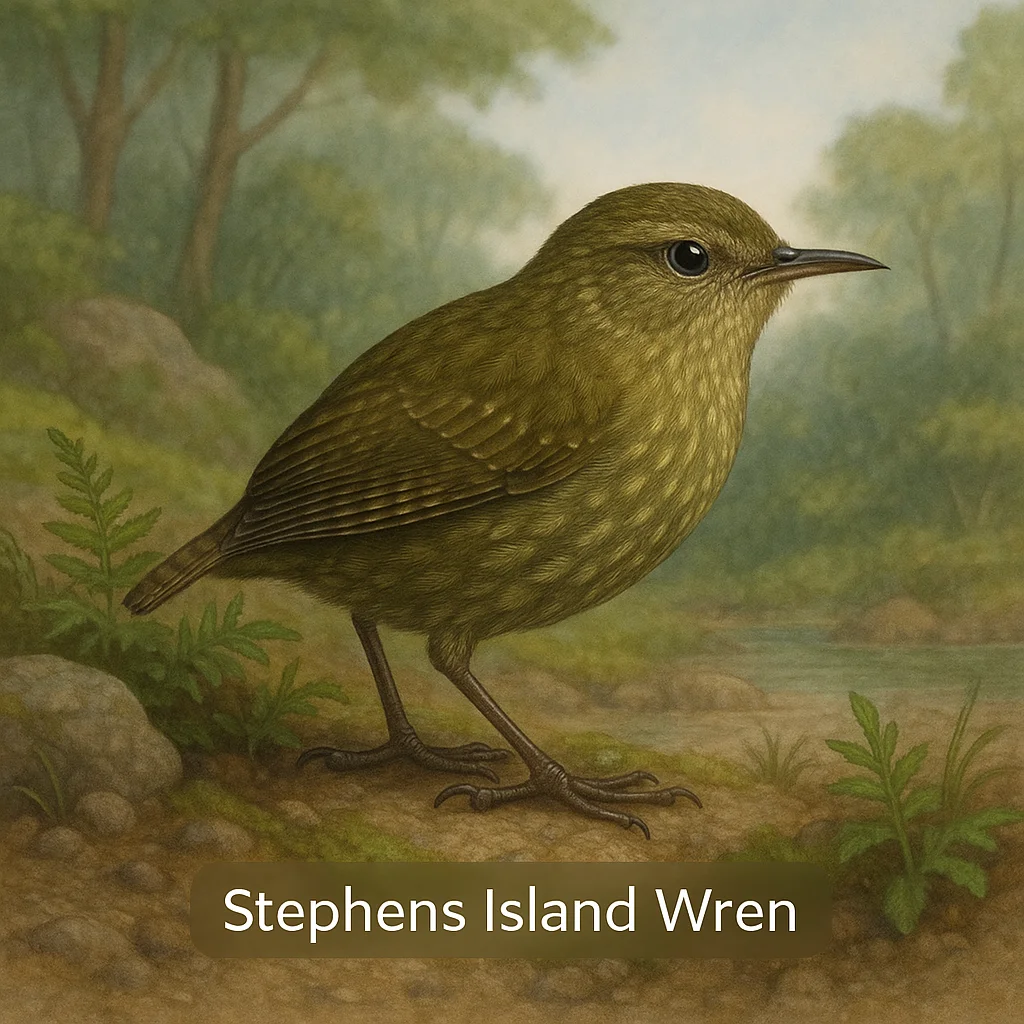
The Stephens Island Wren was a small, flightless bird native to New Zealand. Known for its distinctiveness within the avian world, it was one of the few known flightless passerine birds. Passerines, commonly known as perching birds, are typically capable of flying, making the flightless nature of this wren particularly unusual.
Closely related to other birds in the New Zealand region, the Stephens Island Wren was a part of the family Acanthisittidae, which includes several species of wrens found only in New Zealand. These relatives are renowned for their adaptability to various ecological niches within the island environments they inhabited.
This article will explore where the Stephens Island Wren lived, how it thrived in its environment, the reasons for its extinction, and what evidence remains of this unique bird.
🧭 Where It Lived
The Stephens Island Wren was confined to Stephens Island, a tiny landmass located in the Cook Strait between the North and South Islands of New Zealand. This island presented a unique set of environmental conditions and was thought to be one of the wren's last strongholds.
The wren lived in dense forested areas on the island. These forests provided an essential habitat, offering food sources and nesting sites critical for its survival. The tightly packed foliage and undergrowth of these forests were ideal for the terrestrial lifestyle of this flightless bird.
Being limited to a single island heightened the species' risk for extinction. Island species often have restricted ranges and lack the ability to escape predators or migrate when faced with habitat changes, making them particularly vulnerable to environmental shifts and introduced species.
🌿 Habitat and Daily Life
The climate on Stephens Island is characterized by mild temperatures and varying rainfall throughout the year. Such conditions supported the lush vegetation that was integral to the wren’s habitat, providing both shelter and sustenance.
The diet of the Stephens Island Wren likely consisted of insects and other invertebrates, which it foraged for amidst the forest floor and in shrubs. Its terrestrial nature meant that it relied heavily on the ground and low bushes for finding food rather than seeking it in trees.
As for its reproduction, little is known, but like many small birds, it likely had a breeding season aligned with warmer months to ensure ample food supply for raising chicks. Nesting would have taken place in secure, hidden spots on the ground or in dense underbrush.
🧬 What Made It Unique
The Stephens Island Wren sported a small size, with maintenance of a lightweight frame advantageous for its terrestrial lifestyle. Its plumage was adapted to blend with the forest floor, allowing the bird to avoid detection by predators.
Flightlessness in a passerine is a rare trait, which may have developed due to the absence of ground predators before humans and their introduced species arrived. This adaptation allowed it to become highly specialized in its niche on Stephens Island.
While there is no significant evidence of cultural importance among indigenous peoples, its emergence as a symbol of extinction highlights its historical significance.
⏳ When It Disappeared
The last confirmed sightings of the Stephens Island Wren occurred in the late 1800s, with the species being declared extinct shortly thereafter. Declaring a species extinct involves confirming through extensive surveys and research that no individuals remain alive.
With limited areas to investigate and scant historical records, the exact timing of its extinction is challenging to pinpoint precisely. However, records highlight this period as a critical time when rapid environmental and ecological changes took place on the island.
This difficulty in documenting extinction events is common, especially for island species and those inhabiting remote or unforgiving terrains where continuous monitoring is challenging.
⚠️ Why It Went Extinct
Key drivers behind the extinction of the Stephens Island Wren include habitat loss, introduced species, and the fragile nature of island ecosystems. Each played a critical role in the decline of this bird.
Habitat loss occurred as human activities altered the landscape, reducing the natural forested areas essential for the wren's survival. Deforestation, even in small amounts, severely impacted its ability to thrive and find adequate resources.
Introduced species, particularly predators such as cats that arrived with human settlements, were catastrophic. Being flightless and lacking defense mechanisms against these new threats, the wren's population rapidly declined.
Island ecosystems are often finely balanced, and any disruption can have cascading effects. Alongside these direct threats, disease and possible climate shifts made survival even more difficult, emphasizing the complex interplay of factors leading to extinction.
🧩 How We Know (Evidence and Records)
Evidential records of the Stephens Island Wren include museum specimens collected during the few years prior to its extinction. These specimens provide valuable insights into the bird's physical attributes and confirm its identity as a distinct species.
Historical field notes and accounts from the era when it was last observed offer additional insight, though they are limited. These records help corroborate the presence and eventual disappearance of the bird.
Verification of historical specimens often involves comparative studies with related species, examining morphological traits to ensure accurate identification and understanding of the wren's place within the broader avian family tree.
🛡️ Could It Have Been Saved
Realistic conservation actions that might have helped include habitat protection and control of introduced predators. Establishing reserves or protected areas could have preserved essential habitats, while active predator control would have reduced immediate threats.
The rapid timeline of decline meant conservation efforts, even if implemented, faced significant challenges due to the degree of habitat alteration and the high predation pressure already underway.
Historical records do not indicate any concerted conservation attempts specific to the wren, possibly due to incomplete understanding of its ecological role or sheer rapidity of its extinction timeline.
🔁 Are There Any Survivors or Close Relatives Today
Today, the closest living relatives of the Stephens Island Wren are other species within the Acanthisittidae family, such as the Rifleman bird, also endemic to New Zealand. These relatives share similar ecological roles and adaptations for island life.
No known ecological replacements exist for the wren itself, as its niche on Stephens Island was exceptionally specialized. The extinction left an unfilled role in the ecosystem, contributing to changes in the island's ecological dynamics.
There are currently no reintroduction or captive breeding programs aimed at the Stephens Island Wren due to its confirmed extinction and lack of sufficient genetic material to support such efforts.
❓ Common Questions and Misconceptions
Was it hunted to extinction? No, evidence suggests that the main drivers were habitat loss and introduced predators, not hunting.
Why didn’t it adapt or move? Being flightless and restricted to a single island, the wren had limited adaptive options and nowhere to migrate.
Could it still be alive somewhere? Given its restricted range and severe threats, it's highly unlikely any individuals remain.
What does 'declared extinct' actually mean? It means thorough searches found no remaining individuals, supported by scientific analysis.
What is the difference between endangered and extinct? Endangered means at serious risk of extinction; extinct means no known individuals are alive.
Why are island species so vulnerable? Island species often face unique vulnerabilities due to isolation, limited habitat, and lack of defenses against new predators.
📌 Summary
- The Stephens Island Wren was a flightless bird native to New Zealand.
- It only lived on Stephens Island in the Cook Strait.
- The habitat comprised dense forests essential for its survival.
- Its diet consisted of insects and other invertebrates.
- Notable for being one of the few flightless passerines.
- Last sighted in the late 1800s, it was declared extinct soon after.
- Main extinction drivers include habitat loss and introduced predators.
- Evidenced by museum specimens and historical records.
- Closest living relatives include other New Zealand wrens.
- Highlights the vulnerability of island ecosystems.
- Emphasizes the importance of early intervention in conservation.