🏞️ Dodo
🌍 What It Was
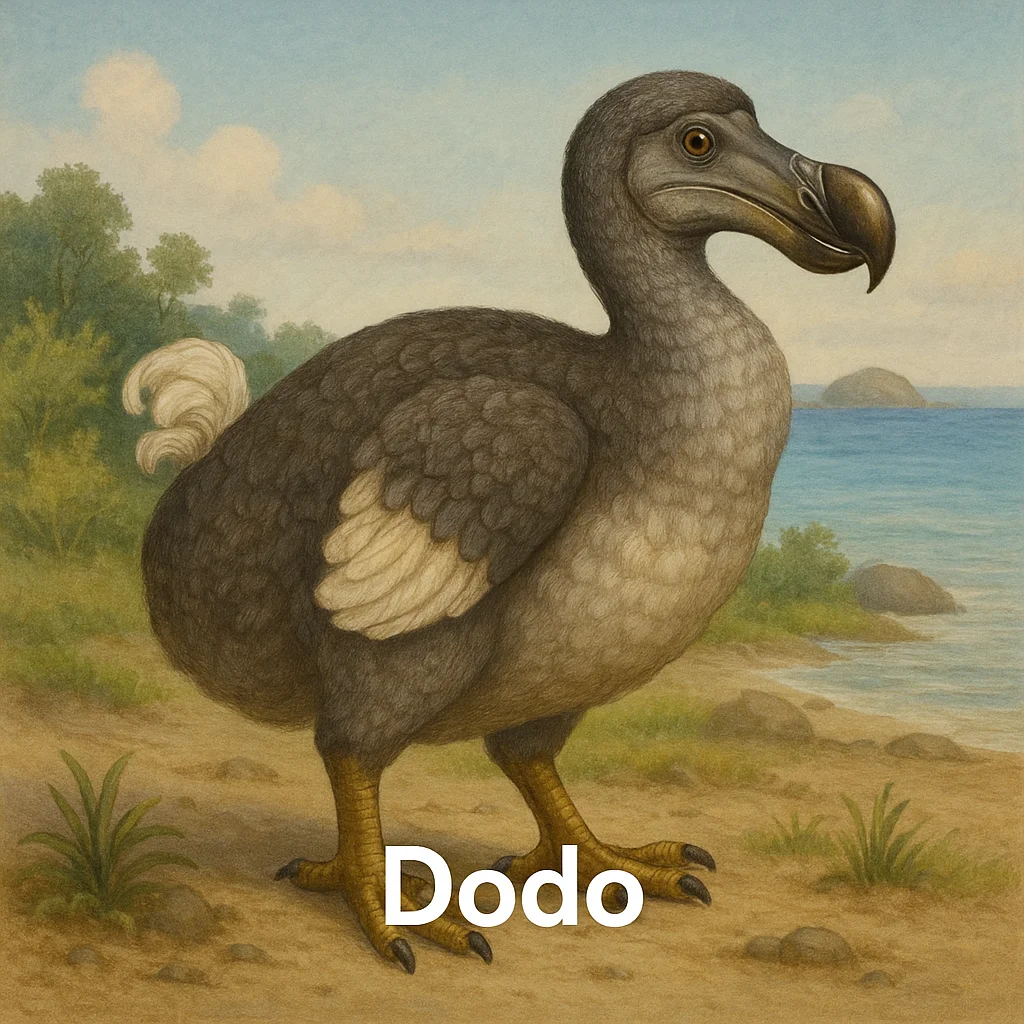
The dodo was a large, flightless bird that lived on the island of Mauritius. It was part of the pigeon family and is closely related to the Nicobar pigeon. Known for its distinctive appearance, the dodo was a symbol of the unique wildlife native to isolated islands.
The dodo played a crucial role in its ecosystem, primarily through seed dispersal. By consuming fruits and subsequently excreting the seeds, they contributed to the health and diversity of the native plant life.
This article will explore where the dodo lived, its lifestyle, the timeline of its extinction, and the reasons behind its disappearance from the planet.
🧭 Where It Lived
The dodo was endemic to Mauritius, an island located in the Indian Ocean. Being endemic means that this species was found nowhere else in the world. Mauritius, with its location far from any major landmasses, provided a unique environment where the dodo thrived.
The island of Mauritius featured dense forests and varied ecosystems that supported a wide range of species. These forests provided ample food sources and nesting areas for the dodo, as the bird did not need to compete with many predators or other large animals.
Being an island species, the dodo was particularly vulnerable to changes in its habitat. Limited geographical range meant the dodo faced significant risks from habitat changes and human activities, factors that eventually led to its extinction.
🌿 Habitat and Daily Life
The climate of Mauritius provided a warm environment with seasonal rain. The island's climate supported diverse plant life, which was crucial for the dodo's survival. The seasonal rains would likely have influenced their breeding and feeding patterns.
The dodo's diet mainly included fruits, nuts, seeds, and bulbs. As a forager, the bird would have roamed the forest floor, using its strong beak to break open tough shells and access food. The foraging behavior also facilitated seed dispersal, which was key for maintaining the health of the island’s forests.
Reproduction in dodos was relatively slow, with each pair likely producing just one chick per breeding season. The nesting sites were thought to be on the ground, which made eggs and chicks vulnerable to introduced predators.
Interactions with other species on the island were limited, as there were few native predators. However, this changed dramatically with the arrival of humans and introduced species that greatly affected the dodo's survival.
🧬 What Made It Unique
The dodo was a large bird, standing about one meter tall and weighing up to 23 kilograms. Its most distinctive features included its stout, hooked beak and plump, ungainly body. Despite being a member of the pigeon family, the dodo lost the ability to fly due to its size and the island's environment, which lacked major predators before human arrival.
The dodo had grayish plumage with a tufted tail and small, useless wings. Its feet were strong, adapted for walking on the forest floor. These adaptations suited its ecological role and behavior on the island.
Culturally, the dodo became a symbol of extinction and is widely known for its appearances in literature and expressions. Its unique look and isolated lifestyle captured human imagination long after it disappeared.
⏳ When It Disappeared
The last confirmed sighting of a dodo was in the late 17th century, with most accounts suggesting it disappeared by around 1681. The extinction was declared based on the lack of reliable sightings and accounts from sailors and settlers on the island.
Due to the scarcity of thorough records from that era, there remains some uncertainty about the exact date of extinction. Misidentifications and incomplete accounts add to this uncertainty, but most historical experts agree on the late 1600s timeframe.
The anthropogenic impact following the island's colonization was significant and rapid, leading to what we now recognize as the dodo's extinction.
⚠️ Why It Went Extinct
The extinction of the dodo was primarily due to habitat loss and fragmentation. As humans settled on Mauritius, they cleared land for agriculture, drastically reducing the available natural habitat for the dodo, impacting its ability to find food and nest safely.
Overhunting was another crucial factor. Early settlers and visiting sailors hunted the dodo for food. Without natural defenses against humans and other predators, the bird quickly became vulnerable to overexploitation.
Introduced species such as rats, pigs, and monkeys played a critical role by preying on dodo eggs and young chicks. These invasive species, having been brought by humans, constituted a direct threat to the survival of the ground-nesting dodos.
Although disease and climate shifts aren't heavily documented causes necessarily, their potential impact as stressors can’t be ruled out either. Together, these factors culminated in the rapid decline of the dodo population.
🧩 How We Know (Evidence and Records)
Scientists have relied on subfossils, museum specimens, and historical accounts to understand the dodo. Although no complete dodo skeletons exist, subfossil fragments have been instrumental in reconstructing the bird’s physiology.
Written accounts from early explorers and sailors provide additional insights, albeit with varying degrees of accuracy. In some cases, these reports have been corroborated with physical evidence.
Modern techniques like genetic analysis help confirm identity and relationships with other species, adding to our understanding despite the incomplete records.
🛡️ Could It Have Been Saved
Several conservation strategies, if implemented early, could have helped preserve the dodo population. Protective measures such as habitat preservation and restrictions on hunting could have mitigated some of the key threats.
Controlling the population of invasive species would have been another essential step. Efforts to protect nests and manage predators like rats could have improved breeding success.
Sadly, conservation awareness at that time was minimal. The techniques and knowledge required to implement effective conservation measures came too late, resulting in the irreversible loss of this unique species.
🔁 Are There Any Survivors or Close Relatives Today
The closest living relative to the dodo is the Nicobar pigeon. These birds share a common ancestor, with similarities in their physical traits and genetic makeup.
While there are no direct ecological replacements for the dodo, some pigeon and parrot species on Mauritius perform similar seed dispersal roles in its absence.
No reintroduction or captive breeding programs for dodos exist, as the species is entirely extinct with no surviving individuals to initiate such efforts.
❓ Common Questions and Misconceptions
Was it hunted to extinction? The dodo was heavily hunted by humans, contributing significantly to its extinction, though other factors were involved.
Why didn’t it adapt or move? Island species like the dodo have limited options to relocate and adapt due to restricted habitat ranges.
Could it still be alive somewhere? There is no evidence to suggest that the dodo survives today. It is considered fully extinct.
What does 'declared extinct' actually mean? It means there have been thorough searches, and enough time has passed without sightings to confidently state the species no longer exists.
What is the difference between endangered and extinct? Endangered species are at high risk of extinction but still have surviving members, unlike extinct species.
Why are island species so vulnerable? Island ecosystems are limited in size and resources, making them more susceptible to changes and external threats.
📌 Summary
- The dodo was a flightless bird native to Mauritius.
- It lived exclusively on this isolated Indian Ocean island.
- The dodo thrived in dense, diverse forests.
- Its diet consisted of fruits, nuts, seeds, and bulbs.
- Adaptations included strong legs and a large beak.
- The last confirmed sighting was in the late 1600s.
- Main extinction drivers were habitat loss, hunting, and invasive species.
- Evidence includes subfossils and historical accounts.
- Closest living relative is the Nicobar pigeon.
- Conservation highlights the importance of proactive protection.
- The dodo is a poignant symbol of the permanence of extinction.