🏞️ Rabbs’ Fringe-limbed Treefrog
🌍 What It Was
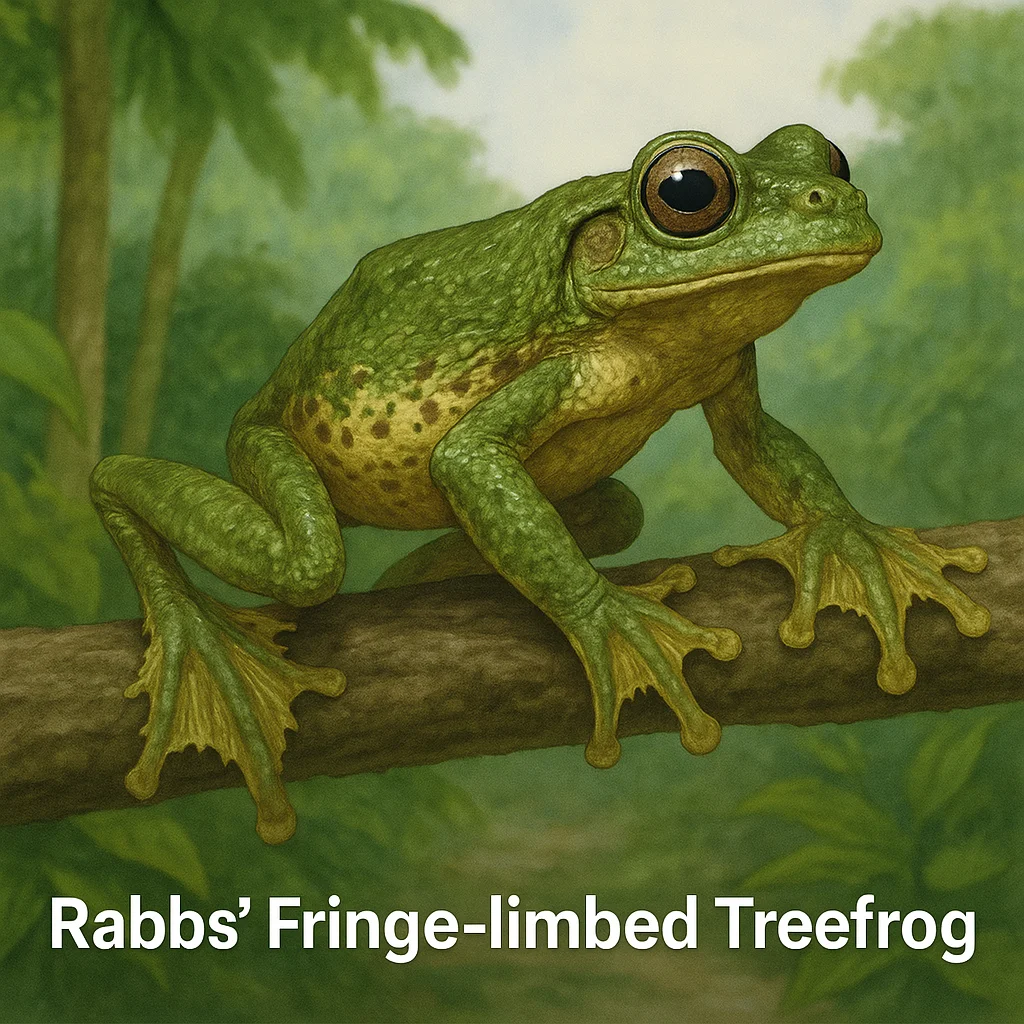
Rabbs’ Fringe-limbed Treefrog was a unique amphibian species known for its fascinating adaptation to life in trees. This frog was distinguished by its long limbs and the fringes of skin that aided in gliding from tree to tree. Its scientific name is Ecnomiohyla rabborum, and it was part of the family Hylidae, which includes a variety of treefrogs.
Closely related to other Central and South American treefrogs, Rabbs’ Fringe-limbed Treefrog played an important role in its ecosystem by being both a predator and prey. It contributed to the maintenance of the insect population, helping balance its forest habitat.
In this article, you will learn about where it lived, its daily life, when it disappeared, the causes of its extinction, and what, if anything, remains of it today. We will also explore common questions and misconceptions about this remarkable species.
🧭 Where It Lived
Rabbs’ Fringe-limbed Treefrog was native to the cloud forests of central Panama. These unique environments are characterized by high humidity and consistent cloud cover at the canopy level. The frogs depended on these lush, cool, and moist habitats to thrive.
The cloud forests where the frog lived were rich in biodiversity, hosting a complex tapestry of flora and fauna. The forests' dense vegetation provided the frogs with plenty of cover and access to abundant food sources. The trees also offered essential breeding sites, as Rabbs' Fringe-limbed Treefrog laid its eggs in water-filled tree holes.
As an endemic species, one that is found only in a certain area, its limited range made it particularly vulnerable to environmental changes. The loss of even small portions of its habitat could significantly impact its survival, increasing the risk of extinction.
🌿 Habitat and Daily Life
The climate of the cloud forests Rabbs’ Fringe-limbed Treefrog inhabited is typically warm and humid. These areas experience frequent rainfall, crucial for maintaining the small pools of water these frogs relied upon for breeding and development.
Rabbs’ Fringe-limbed Treefrog's diet primarily consisted of insects, which it hunted using its adept climbing abilities and long limbs. By controlling the insect population, it helped maintain ecological balance. The frog was mostly nocturnal, being active at night when it was more humid and cooler.
Reproduction for this species was unique and notable. Researchers observed that male frogs guarded the nests and were thought to care for the offspring by providing nutrients, a rare behavior known as "trophic egg feeding." This involved the male frog laying unfertilized eggs for the tadpoles to consume.
In its ecosystem, Rabbs’ Fringe-limbed Treefrog interacted with a range of species, serving as prey for birds and small mammals while also competing with other amphibians for resources. Its presence contributed to the rich biodiversity of its habitat.
🧬 What Made It Unique
Rabbs’ Fringe-limbed Treefrog was notable for its physical adaptations that allowed it to be an efficient climber and glider. The fringes of skin on its limbs helped it glide between trees, an adaptation that likely evolved to evade predators and facilitate movement within the dense canopy.
This species had large eyes suited to its nocturnal lifestyle, providing enhanced vision in low light conditions. Such adaptations were crucial for night-time navigation through the forest canopy.
The frog held cultural significance in the regions it inhabited, symbolizing the extraordinary diversity of Panama's wildlife. However, this connection is based on ecological context rather than direct human interaction, as the frog was not widely known outside scientific circles.
⏳ When It Disappeared
The last known Rabbs’ Fringe-limbed Treefrog was observed in the early 2000s. In 2005, researchers collected some of the last individuals for a breeding program, as disease and habitat destruction were rampant. By 2009, the species was no longer observed in the wild.
Despite captive efforts, the last known individual died in 2016, marking the extinction of the species. It became a symbol of rapid biodiversity loss and the challenges of conserving isolated populations.
The declaration of its extinction followed rigorous guidelines that ensure thorough surveys and evaluations are conducted before species are declared extinct. However, due to the mysteries that shroud tropical environments, there remains a small but unlikely hope of rediscovery.
⚠️ Why It Went Extinct
Several key factors contributed to the extinction of Rabbs’ Fringe-limbed Treefrog. Habitat loss due to deforestation significantly reduced their living space, fragmenting the population and leaving it vulnerable to further decline.
Moreover, the introduction of the chytrid fungus, a deadly disease affecting amphibians, decimated many frog populations globally. This pathogen was a significant factor in the species' decline, as it affected their skin, which is vital for respiration and hydration.
Climate change also played a role, as shifts in temperature and rainfall patterns disrupted the delicate balance of their habitat. The loss of stable conditions essential for the frog's breeding and survival contributed to its rapid decline.
Finally, the combination of these factors created a perilous situation, demonstrating how multiple drivers can interact to accelerate extinction processes.
🧩 How We Know (Evidence and Records)
The knowledge we have of Rabbs’ Fringe-limbed Treefrog is derived from a mix of field observations, scientific research, and conservation records. The few individuals collected provided valuable genetic material, allowing scientists to study the species more thoroughly than others only known from museum specimens.
Field notes and photographs serve as ongoing reminders of the species' former existence. These records help scientists understand the ecological role the frog played and offer insights into the challenges it faced in its declining years.
The meticulous work involved in documenting and verifying species identity and extinction highlights the collaborative efforts required in conservation science. These efforts emphasize the importance of preserving comprehensive records.
🛡️ Could It Have Been Saved
Efforts to save Rabbs’ Fringe-limbed Treefrog centered on captive breeding and habitat conservation. Protecting its cloud forest habitat from deforestation could have been a key factor in aiding its survival, as maintaining environmental stability is crucial for such localized species.
The introduction of chytrid fungus highlighted the need for better biosecurity measures to prevent the spread of diseases to vulnerable wild populations. Containment and treatment of infected areas could have mitigated its impacts.
Despite attempts at captive breeding, the small number of surviving individuals and the late stage of intervention made successful recovery difficult. Resource constraints and logistical challenges often delay meaningful conservation actions until it's too late.
🔁 Are There Any Survivors or Close Relatives Today
While Rabbs’ Fringe-limbed Treefrog is lost, its closest relatives still inhabit Central and South America. These relatives share similar environmental dependencies and adaptations but face their own conservation challenges.
Other treefrog species may serve similar ecological roles, such as insect control within their habitats, forming critical parts of the ecosystem where previous species have declined.
Although there are no ongoing reintroduction programs for Rabbs’ Fringe-limbed Treefrog specifically, the lessons learned from its extinction continue to inform amphibian conservation strategies globally.
❓ Common Questions and Misconceptions
Was it hunted to extinction? No, hunting was not a factor; disease and habitat loss were the primary causes.
Why didn’t it adapt or move? Its specialized habitat needs and rapid environmental changes limited its ability to adapt or relocate.
Could it still be alive somewhere? It's unlikely, as extensive surveys have found no evidence of survival in the wild.
What does 'declared extinct' actually mean? It means no individuals are confirmed to exist after thorough scientific investigation.
What is the difference between endangered and extinct? Endangered species are at risk of extinction, whereas extinct species no longer exist.
Why are island species so vulnerable? They rely on limited habitats, making them more susceptible to changes and threats like invasive species.
📌 Summary
- Rabbs’ Fringe-limbed Treefrog was a unique treefrog species.
- It lived in the cloud forests of central Panama.
- Its habitat was rainy, humid, and densely forested.
- Insect-eating and nocturnal, it played a key ecological role.
- Adaptations included limb fringes for gliding.
- Last known alive in the early 2000s; extinct by 2016.
- Extinction drivers: habitat loss, disease, climate change.
- Evidence includes specimens, photographs, and field observations.
- Closest relatives are other Central and South American treefrogs.
- Conservation lesson: protect habitats early and manage diseases.
- A takeaway: the fragility of specialized, localized species.