🏞️ Northern Gastric-brooding Frog
🌍 What It Was
The Northern Gastric-brooding Frog was a unique species of frog that lived in Australia. Unlike most frogs, its young developed in the stomach of the female. This fascinating reproductive feature made it stand out among amphibians. Unfortunately, the Northern Gastric-brooding Frog is now extinct, but it remains an intriguing subject for those interested in biodiversity and extinction.
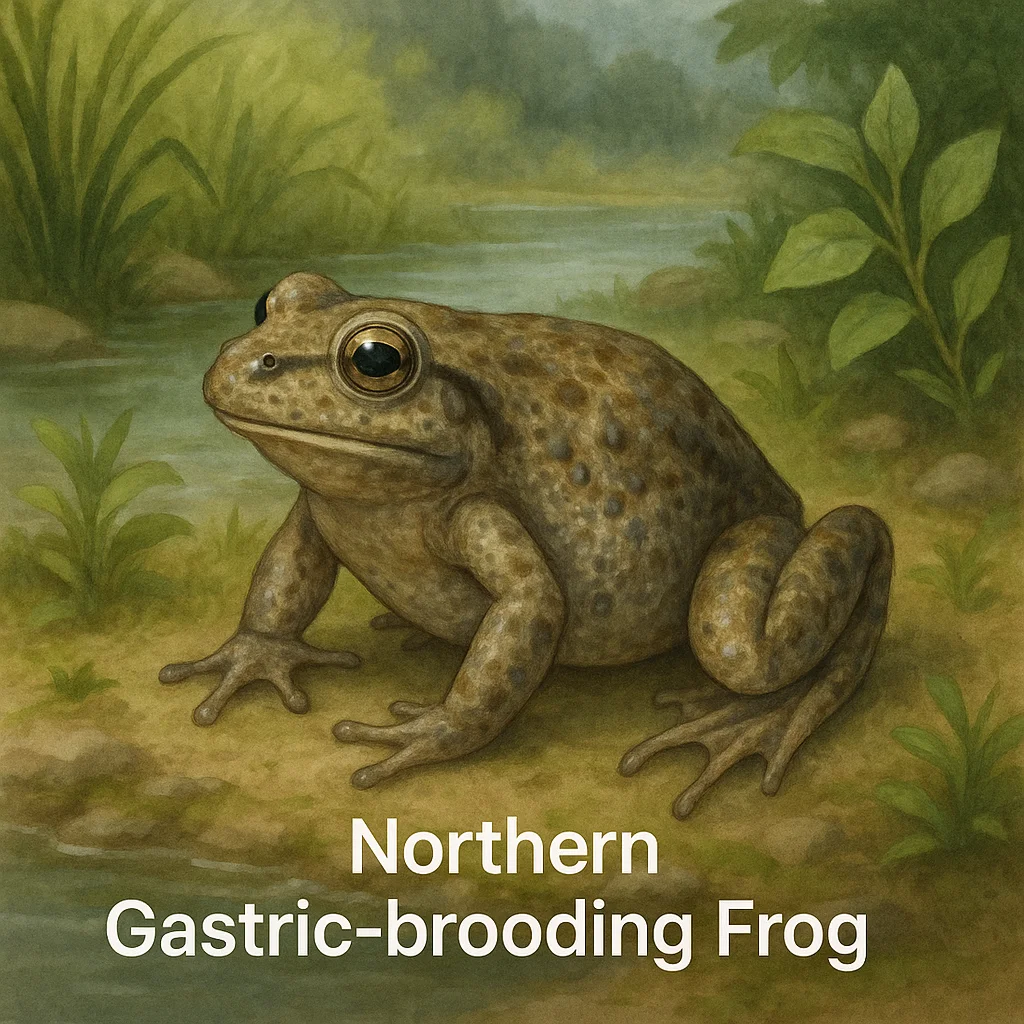
This frog belonged to the family Hylidae, which includes tree frogs. Its closest living relatives are other species of Australian frogs, specifically those adapted to similar environmental conditions. The Northern Gastric-brooding Frog played an important role in its ecosystem, primarily through its diet and as prey for larger predators.
In this article, readers will explore where the Northern Gastric-brooding Frog lived, how it thrived in its environment, when it disappeared, and what led to its extinction. By understanding its story, we can gain insights into the broader challenges facing biodiversity today.
🧭 Where It Lived
The Northern Gastric-brooding Frog was endemic to the rainforests of Queensland, Australia. "Endemic" means it was found only in this particular region and nowhere else in the world. Its limited range made it particularly susceptible to changes in its environment and increased its risk of extinction.
This species inhabited cool, wet habitats in the tropical rainforests. These environments provided the perfect conditions for the frogs to thrive, including ample vegetation for cover and plentiful insects for food. Streams and pools in these rainforests served as essential breeding grounds.
Due to its highly localized range, the Northern Gastric-brooding Frog was vulnerable to any adverse changes in its habitat. When species are confined to small areas, they have fewer options for relocating in response to environmental changes, which can contribute significantly to their decline.
🌿 Habitat and Daily Life
The tropical rainforest climate where the Northern Gastric-brooding Frog lived was characterized by high humidity, consistent rainfall, and relatively stable temperatures throughout the year. These conditions supported a rich biodiversity, offering plenty of food resources and breeding sites.
The frogs primarily fed on small invertebrates. Their hunting involved sitting and waiting for prey to come within reach, a behavior known as "sit-and-wait" predation. They likely played a role in controlling insect populations within their ecosystem.
Reproduction in the Northern Gastric-brooding Frog was particularly unique. During the breeding season, females ingested fertilized eggs, which then developed inside their stomachs. Remarkably, the offspring emerged as fully formed froglets, bypassing the tadpole stage entirely.
Interactions with other species likely included serving as prey for animals higher up in the food chain and competing with other frogs for territory and resources. Such interactions were integral to maintaining the balance of their ecosystem.
🧬 What Made It Unique
Physically, the Northern Gastric-brooding Frog was of moderate size, with a rounded body and greenish-brown coloration that helped it blend into the rainforest foliage. Its most remarkable feature was its reproductive strategy, where females carried and nurtured their young within their stomachs.
The adaptation of gastric brooding allowed the females to protect their offspring from external threats during early development. Additionally, this unique reproductive method likely provided a controlled environment for the young, giving them a higher survival rate in the wild.
While the frog had no known cultural or historical significance, its unique reproduction attracted scientific interest. Researchers studied the species for insights into possible medical applications, such as understanding gastric acid regulation, but its extinction halted such studies prematurely.
⏳ When It Disappeared
The last confirmed sightings of the Northern Gastric-brooding Frog occurred in the early 1980s. Since then, despite extensive searches, no additional individuals have been found. In 2002, it was officially declared extinct by the International Union for Conservation of Nature (IUCN).
The timeline of its decline remains ambiguous, with speculation about isolated surviving populations in unexplored parts of its range. However, lack of evidence has solidified its classification as extinct.
The process of declaring a species extinct involves extensive surveys and research to ensure no individuals exist in the wild or in captivity. For many species, remote habitats and irregular appearances can complicate this assessment, requiring careful consideration and evidence.
⚠️ Why It Went Extinct
Several factors likely contributed to the extinction of the Northern Gastric-brooding Frog. Habitat loss and fragmentation due to deforestation in Queensland significantly reduced its living space and breeding grounds. As rainforests were cleared or altered, the frogs lost essential resources.
Introduced species, such as predators or competitors, may have played a role in their decline, although specific instances are not well documented. Invasive species can disturb ecological balances, posing serious threats to native creatures like the Northern Gastric-brooding Frog.
Another significant factor was disease, particularly chytridiomycosis, caused by the chytrid fungus. This disease has devastated amphibian populations worldwide by affecting their skin, which is crucial for respiration and hydration.
Climate shifts, including temperature and precipitation changes, might have also impacted the frog's sensitive rainforest habitat. While each of these drivers had its effects, it is often a combination of such pressures that leads to extinction.
🧩 How We Know (Evidence and Records)
Evidence of the Northern Gastric-brooding Frog primarily comes from field studies and specimen collections conducted before its extinction. Researchers have relied on photographs, field notes, and preserved specimens housed in museums to confirm its identity and characteristics.
Identifying and dating species involves comparing physical characteristics with existing descriptions, observing documented behaviors, and conducting genetic studies when possible. Such records are crucial for understanding the timeline and circumstances of extinction events.
The challenges of confirming sightings are compounded with species like the Northern Gastric-brooding Frog, which were already rare and occupied dense rainforest habitats that complicate thorough searches and studies.
🛡️ Could It Have Been Saved
There were potentially viable conservation actions that might have delayed or prevented the extinction of the Northern Gastric-brooding Frog. Protection of its natural habitat through stricter regulation of land use could have helped preserve critical resources and breeding sites.
Efforts to manage and control invasive species would have required extensive monitoring and coordinated actions, yet such measures were either absent or insufficient during the critical period of decline.
Unfortunately, conservation attention came too late, with many possible strategies not explored thoroughly until after the population dropped significantly. Establishing captive breeding programs might have offered a last resort, but by then, the frog was already too rare.
🔁 Are There Any Survivors or Close Relatives Today
The closest living relatives of the Northern Gastric-brooding Frog are other tree frog species within Australia. These relatives share similar habitats and ecological roles but lack the unique reproductive strategy of gastric brooding.
Currently, there are no programs aimed at reintroducing the Northern Gastric-brooding Frog or its functional equivalent into the wild. Instead, conservation efforts focus on protecting remaining biodiversity, preventing other extinctions, and learning from past failures.
Given ongoing habitat and climate challenges, ensuring the survival of relative species and broader amphibian biodiversity remains a priority for conservationists working towards sustainable ecological futures.
❓ Common Questions and Misconceptions
Was it hunted to extinction? No evidence suggests that hunting or direct human collection played a major role in its extinction.
Why didn’t it adapt or move? The Northern Gastric-brooding Frog had a very specialized habitat, making it difficult to adapt to changes or relocate.
Could it still be alive somewhere? While remote regions remain unexplored, ongoing surveys have not found evidence to suggest surviving populations.
What does 'declared extinct' actually mean? It means comprehensive searches have shown that no individuals are believed to exist in the wild or captivity.
What is the difference between endangered and extinct? "Endangered" refers to species at significant risk of extinction, while "extinct" means no known individuals remain.
Why are island species so vulnerable? Limited geographic range and specialized adaptations make island species highly susceptible to changes and threats.
📌 Summary
- The Northern Gastric-brooding Frog was a unique amphibian known for its distinct reproductive method.
- It lived exclusively in the rainforests of Queensland, Australia, indicative of an endemic species.
- Tropical rainforest habitats were crucial to its survival, offering necessary resources and microenvironments.
- Diets consisted primarily of small invertebrates, supporting insect population control.
- Its distinctive characteristic was its gastric brooding reproduction strategy.
- Last known sightings occurred in the early 1980s, and it was declared extinct in 2002.
- Major extinction drivers included habitat loss, disease, and missed conservation opportunities.
- Evidence of its existence comes from museum specimens, photographs, and scientific records.
- Closest living relatives are other Australian tree frog species without gastric brooding.
- Lessons for conservation include acting early and protecting critical habitats to prevent future losses.
- The Northern Gastric-brooding Frog demonstrates the complexity and fragility of endangered ecosystems.