🏞️ Golden Toad
🌍 What It Was
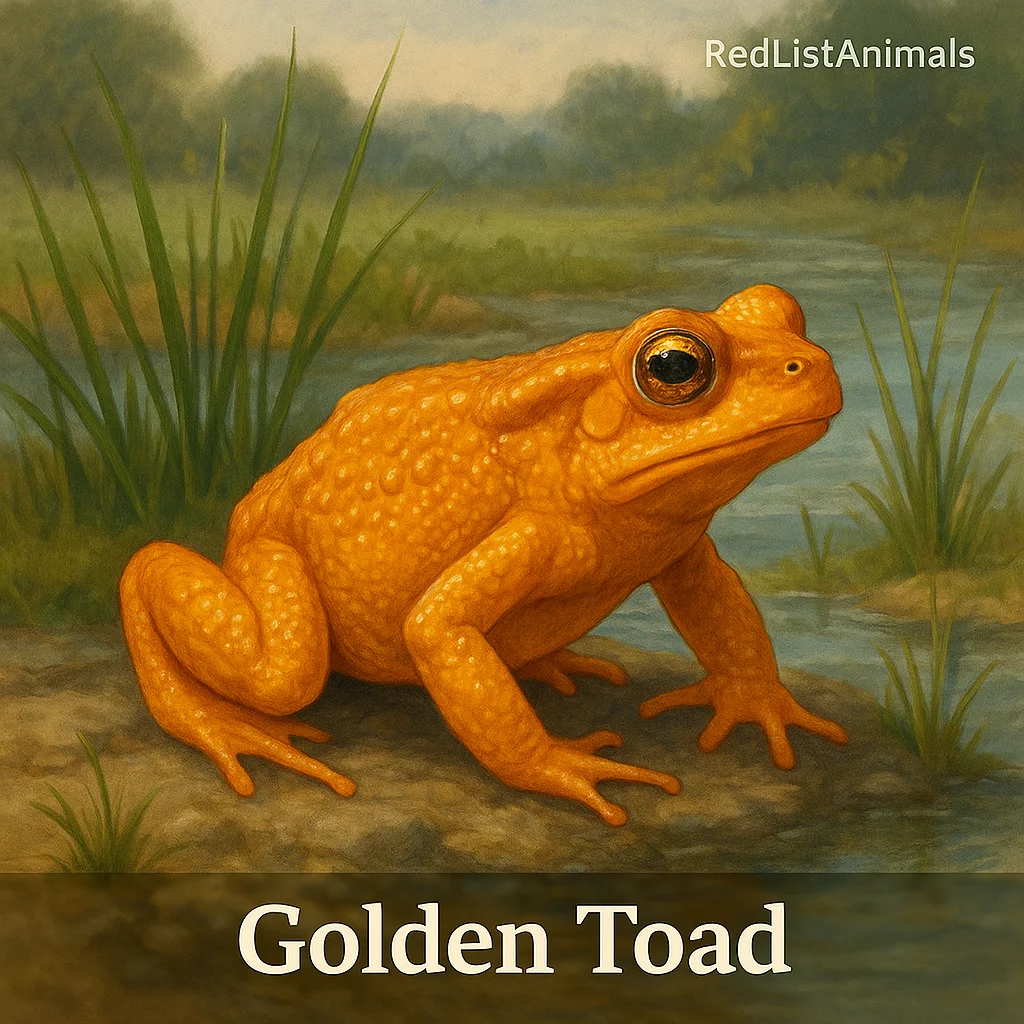
The Golden Toad was a small, brightly colored amphibian species that was native to Costa Rica. It is notable for its vibrant orange skin, which set it apart from other toads. This striking appearance made it easily recognizable and a subject of interest for scientists and conservationists alike.
The closest living relatives to the Golden Toad are other species within the Bufonidae family, commonly known as true toads. It played a specific role in its ecosystem as both predator and prey, indicated by its diet of insects and its role in controlling pest populations. Throughout this article, we will explore where the Golden Toad lived, its unique traits, and the circumstances that led to its extinction.
We will also examine the scientific evidence surrounding its disappearance and consider what lessons can be learned to prevent future extinctions. Understanding the factors that led to its extinction involves a look at its range, habitat, and interaction with other species.
🧭 Where It Lived
The Golden Toad was endemic to a small region in the Monteverde Cloud Forest of Costa Rica. This localization meant that the toad was found only in this particular habitat, increasing its vulnerability to extinction due to any environmental changes in this narrow range.
The Monteverde Cloud Forest is characterized by its dense fog, tropical evergreen vegetation, and high humidity levels year-round. This unique climate provides the moisture and temperature conditions required by the Golden Toad for survival and breeding.
Due to its limited habitat, the species was heavily reliant on the conservation of this specific forest region. Any disturbances to this delicate ecosystem, whether caused by natural or human factors, could have significant impacts on the entire population of Golden Toads.
🌿 Habitat and Daily Life
The climate of the Monteverde Cloud Forest is consistent, with heavy rainfall and stable temperatures, producing an environment that supports diverse biological life. The Golden Toad thrived in such an environment, primarily feeding on small invertebrates such as insects and termites.
The Golden Toad engaged in a unique behavior known as explosive breeding, where a large number of toads gathered for a short mating season during the start of the rainy period. Females deposited eggs in pools of water, which were necessary for the development of their aquatic larvae.
In terms of social behavior, Golden Toads were generally solitary except during the breeding season. Their life cycle depended heavily on the availability of suitable breeding sites, which were small and dispersed throughout their habitat.
🧬 What Made It Unique
The most striking feature of the Golden Toad was its vivid orange coloration, particularly noted in males during the breeding season. Females, on the other hand, exhibited more muted browns and greens, aiding in camouflage.
Its adaptation to the moist, cool conditions of the cloud forest involved a permeable skin that absorbed water directly from the environment, and the carotenoids in their skin could have helped protect against the harmful effects of UV light.
Culturally, the Golden Toad became symbolic of the Monteverde region and was featured in numerous conservation campaigns due to its striking appearance and the mystery surrounding its sudden disappearance.
⏳ When It Disappeared
The last confirmed sighting of the Golden Toad occurred in 1989. Subsequent surveys in the early 1990s failed to locate any individuals, leading scientists to declare the species extinct in 2004. The absence of further sightings and the specific search efforts contributed to this conclusion.
The disappearance is shrouded in some uncertainty due to the remote nature of its habitat. Scientists glean insights from both contemporary observations and the lack of any emerging evidence of its existence since the late 20th century.
While there was hope for re-discovery, the natural and human-altered changes to its habitat have confirmed its status as extinct. Its extinction was one of the most high-profile from the Monteverde region, sparking broader conservation efforts.
⚠️ Why It Went Extinct
The extinction of the Golden Toad is considered a result of multiple interrelated factors. One significant driver was habitat loss and fragmentation, primarily due to land use changes in the surrounding areas, which reduced the already limited range of suitable living conditions.
Climate shifts and extreme weather events have been identified as influential, particularly the changing rainfall patterns, which affected the availability of breeding sites and increased the incidence of dry spells.
Disease is also thought to have played a crucial role. The spread of chytridiomycosis, a fungal disease affecting amphibian skin, is suspected to have severely impacted population survival rates, though this remains a topic requiring further research.
🧩 How We Know (Evidence and Records)
Evidence of the Golden Toad's existence largely comes from field observations, photographs, and extensive records from researchers studying the Monteverde region. Museum specimens also provide physical verification for researchers examining the species post-extinction.
Confirming identity and dates hinges on reliable record-keeping and thorough documentation processes, ensuring that what is observed matches the biological characteristics of the species. Despite challenges posed by the toad's remote and dense habitat, studies conducted in both the field and lab have been able to construct a narrative of its life and eventual extinction.
These ongoing analyses highlight the complexities associated with small, localized populations, providing insights into both contemporary declines and historical contexts of biodiversity loss.
🛡️ Could It Have Been Saved
Realistic conservation actions that might have helped save the Golden Toad include habitat protection by designating more of the Monteverde Cloud Forest as a protected area. Preventive measures against disease spread could also have been beneficial, had the risks been understood earlier.
Unfortunately, awareness and action often came after declines occurred, underscoring the difficulty in enacting timely measures. Although conservationists conducted some attempts at creating captive breeding programs, they were ultimately too little, too late to reverse the species' trajectory toward extinction.
This highlights the importance of preemptive ecological assessment and the rapid implementation of conservation strategies to prevent similar outcomes for other at-risk species.
🔁 Are There Any Survivors or Close Relatives Today
Close relatives of the Golden Toad include other toads within the Bufonidae family. These toads share similar biological and ecological traits but thrive in slightly varied environmental conditions.
While no direct ecological replacements exist for the Golden Toad, understanding the roles and adaptations of surviving relatives can guide conservation efforts, ensuring echoes of the extinct species persist in the ecosystems they once inhabited.
No current reintroduction programs exist for the Golden Toad, as its extinction status is regarded as definitive, but ongoing conservation practices focus on protecting similar critical habitats and preventing further losses.
❓ Common Questions and Misconceptions
Was it hunted to extinction?
No, hunting was not a significant factor in the Golden Toad's extinction; it was mainly environmental changes and disease that impacted its survival.
Why didn’t it adapt or move?
The Golden Toad's limited range and specific habitat requirements made adaptation or relocation difficult, particularly given the rapid environmental shifts.
Could it still be alive somewhere?
While surprising rediscoveries do occur, extensive searches have yet to find any surviving individuals, making its extinction status widely accepted.
What does 'declared extinct' actually mean?
A species is declared extinct when there is no reasonable doubt that the last individual has died, usually after exhaustive surveys fail to identify any remaining individuals.
What is the difference between endangered and extinct?
Endangered species are those at high risk of extinction in the wild, whereas extinct species have no surviving individuals left.
Why are island species so vulnerable?
Island species often have small, isolated populations with specialized habitat needs, making them particularly susceptible to disturbance from invasive species and environmental changes.
📌 Summary
- The Golden Toad was a small, brightly colored amphibian native to Costa Rica.
- It lived exclusively in the Monteverde Cloud Forest, a unique ecosystem.
- The habitat depended on high humidity and stable temperatures.
- Feeding primarily on small insects, it engaged in explosive breeding.
- Its vivid coloration and permeable skin were notable adaptations.
- The last sightings were in 1989; declared extinct in 2004.
- Main extinction causes included habitat loss, disease, and climate change.
- Records and field notes serve as primary evidence of its existence.
- Close relatives are other toads within the Bufonidae family.
- Its extinction offers critical lessons for proactive conservation efforts.
- The Golden Toad highlights the fragility of highly specialized species.