🏞️ Success Stories: Species Pulled Back
🌍 What It Was
In the vast tapestry of life on Earth, certain species stand out not just for their uniqueness but for their tale of survival and resurgence. These are the success stories of species that were once on the brink of extinction but have made remarkable comebacks due to focused conservation efforts. From tiny insects to majestic mammals, these animals remind us of nature's resilience.
This article will explore different species that were pulled back from the edge of extinction. You'll learn about their habitats, daily lives, and what made them unique. Additionally, we will discuss when they began to disappear and the efforts that helped bring them back, offering hope for other endangered species worldwide.
Our focus will be on understanding their place in the ecosystem before their populations dwindled and how humans have played both a detrimental and positive role in their stories. The lessons from these recovery efforts are not only inspiring but also crucial for ongoing conservation work.
🧭 Where It Lived
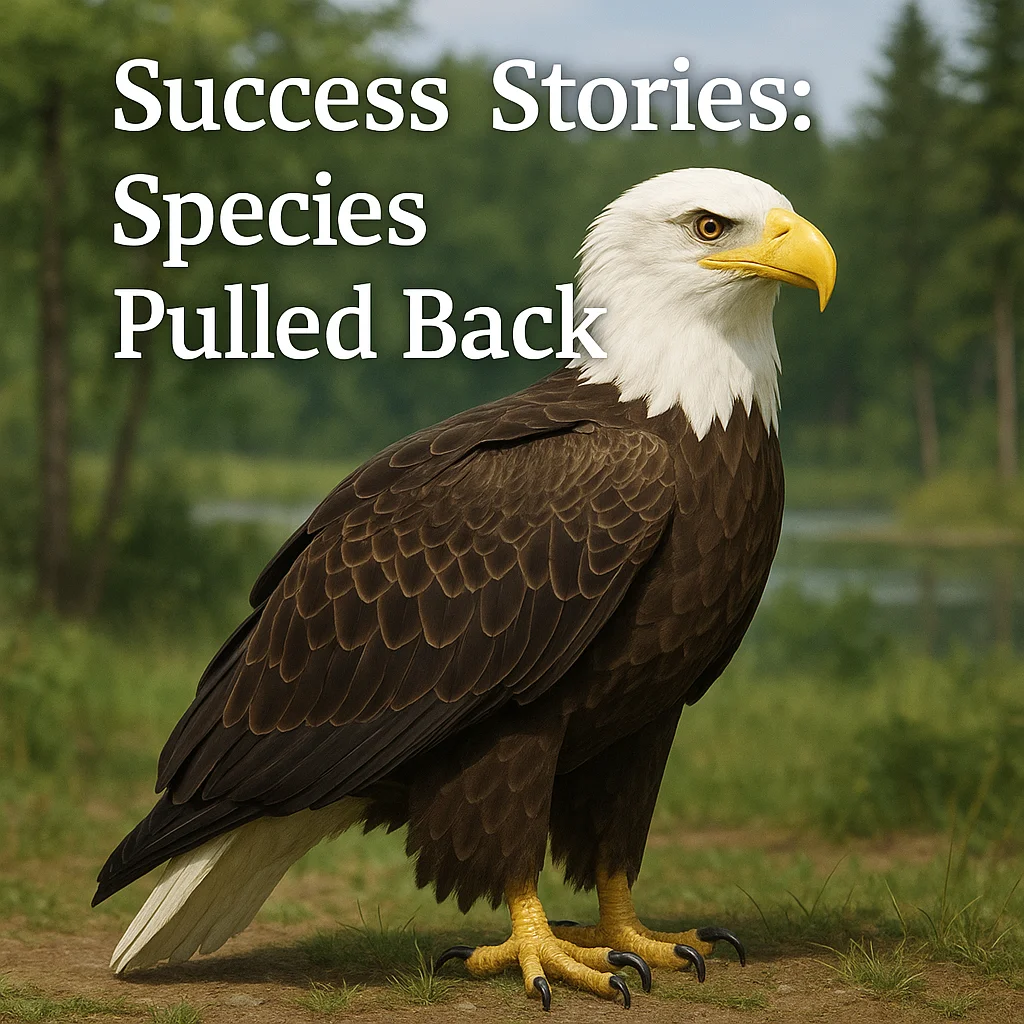
Most species that have teetered on the edge of extinction once inhabited very specific geographic ranges. Often, these ranges were limited to certain continents, islands, or even regions within a country. For example, the iconic Bald Eagle, now thriving, was once predominantly found across North America, with habitats stretching from Alaska and Canada down to northern Mexico.
Many of these species depended on distinct habitats such as dense forests, sprawling grasslands, or secluded wetlands. These environments provided the necessary resources for feeding, breeding, and nesting. The Hawaiian Monk Seal, for instance, relied heavily on the remote, undisturbed beaches of the Northwestern Hawaiian Islands for survival.
Island species, such as the Galapagos Tortoise, have been historically vulnerable due to their restricted range and specialized habitat needs. Being island-bound often meant these species had limited genetic diversity and were highly susceptible to changes in their environment, whether from natural disasters or human activities.
🌿 Habitat and Daily Life
The climate and environment were critical factors in shaping the daily life of each species. Depending on regional temperatures, rainfall patterns, and seasonal changes, these animals developed specific behaviors to survive in their habitats. The California Condor, for instance, thrived in the arid climates of the Grand Canyon and southern California chaparral ecosystems, soaring over vast landscapes in search of carrion.
Diet and foraging strategies varied widely among these species. The giant pandas of China are well-known for their bamboo diet, which requires them to consume large quantities daily. Conversely, the more adaptive Snow Leopard roams the icy mountain ranges of Central Asia hunting for mountain goats and sheep.
Reproduction and life cycle processes also played a crucial role in their survival. Species like the Loggerhead Sea Turtle lay hundreds of eggs with the hope that just a few will survive to adulthood. Many of these animals also formed complex social structures or participated in mutualistic relationships with other species, enhancing their chances of survival.
🧬 What Made It Unique
Each of these species possessed unique physical traits that aided its survival. The colorful plumage of the Resplendent Quetzal, native to Central America's cloud forests, not only marked it as one of the most beautiful birds but also played a role in attracting mates. Meanwhile, the armored plates of the Pangolin offered protection against predators, making it one of the most remarkable creatures found in Asia and Africa.
Unique behaviors and ecological roles were also significant. The Beavers in North America are known as ecosystem engineers, profoundly influencing their environment by building dams that create wetlands, benefiting multiple other species in the process.
The presence of these species often held cultural and historical significance. The Japanese Crane, revered in Japanese folklore, is considered a symbol of longevity and good fortune. Such cultural ties sometimes drove conservation efforts, highlighting the importance of these animals not just ecologically, but also culturally.
⏳ When It Disappeared
The gradual disappearance of these species often happened over decades or even centuries, with their populations slowly declining before reaching critical levels. The American Bison faced significant declines during the 1800s due to overhunting and habitat loss, with numbers dropping from millions to just a few hundred by the late 19th century.
In some cases, last confirmed records and sightings vary, depending on the difficulty of accessing their habitats or the challenging nature of locating these elusive creatures. For example, the Javan Rhino is notoriously difficult to track in the dense jungles of Indonesia, leaving uncertainty around exact population numbers.
Some species became classified as "Extinct in the Wild," indicating that they no longer survive in their natural habitats but continue to exist in captivity. The Scimitar Oryx, a once common sight in North Africa, is now only found in zoos and reserves, with efforts underway to reintroduce them to their original range.
⚠️ Why It Went Extinct
Several key factors contributed to the decline of these species, often in combination. Habitat loss and fragmentation, for example, meant that the destruction of forests and conversion of land for agriculture reduced the living space and resources available to species like the Orangutan.
Overexploitation was another critical driver, with species like the Atlantic Cod suffering from overfishing that decimated stocks faster than they could replenish. Hunting pressures also doomed species like the Passenger Pigeon, which was once the most numerous bird in North America.
Invasive species introduced to new environments can profoundly impact native wildlife. Predators like the Brown Tree Snake on Guam contributed to the decline of several bird species by preying on eggs and young birds.
🧩 How We Know (Evidence and Records)
The evidence of a species' decline often comes from a variety of sources. Fossils and subfossils provide a historical context for past populations, while museum specimens offer insight into what these animals looked like and their physical adaptations. The Hoatzin, for instance, has been studied extensively through fossils and specimens to understand its unique evolution.
Field notes and photographs taken by naturalists and scientists have helped document sightings and behavior, creating a timeline of changes over time. Technologies like genetics have further allowed for more precise verification of identity and historical ranges, offering a deeper understanding of species that are difficult to observe directly.
Some species remain hard to confirm due to their rare, nocturnal, or secretive nature. The Ivory-billed Woodpecker, once found in the southeastern United States, serves as an example of a bird that is challenging to definitively declare extinct due to occasional unverified sightings in remote habitats.
🛡️ Could It Have Been Saved
The saving of these species often required concerted conservation actions at critical moments. Creating protected areas, as was done for the Black Rhinoceros in African reserves, helped stabilize and grow their populations. Establishing hunting limits and anti-poaching initiatives also aided in preserving species like the African Elephant.
Captive breeding programs have played a crucial role in the recovery of species like the California Condor. By breeding them in captivity and gradually reintroducing them to the wild, population numbers have slowly increased over time.
Unfortunately, many of these efforts came too late for some species. The trade-offs between human development needs and conservation efforts often delayed immediate action until populations reached critical lows, underscoring the need for preventive measures rather than reactive ones.
🔁 Are There Any Survivors or Close Relatives Today
Close living relatives often share traits with their now-extinct counterparts, providing insight into what might have been lost. For instance, the closely related American Crocodile offers clues about the ecology of the endangered Cuban Crocodile.
In some cases, "ecological replacements" have partly filled the role of extinct species in their ecosystems. An example includes how feral goats have taken over certain grazing roles in environments where native herbivores have vanished.
Reintroduction and captive programs continue to work towards bringing species back into their natural environments. Efforts with the Przewalski's Horse, once extinct in the wild, have seen small populations reestablished in Mongolia, proving that with care and planning, nature can rebound.
❓ Common Questions and Misconceptions
Was it hunted to extinction? Some species faced unsustainable hunting pressures, while others were affected by multiple factors.
Why didn’t it adapt or move? Many couldn't adapt fast enough to rapid environmental changes or had nowhere else to go.
Could it still be alive somewhere? It's possible, but unverified sightings are not enough to confirm an extant population.
What does 'declared extinct' actually mean? It indicates the species is no longer found in the wild after exhaustive searches.
What is the difference between endangered and extinct? Endangered species are at serious risk of extinction but still have some surviving populations.
Why are island species so vulnerable? Limited ranges and isolated genetics make them less resilient to new threats.
📌 Summary
- Many species have made remarkable comebacks from the brink of extinction.
- These species lived in diverse geographic ranges, from islands to continents.
- They depended on habitats such as forests, grasslands, and wetlands.
- Adaptations and behaviors were key to their survival in these environments.
- Some, like the California Condor, rebounded through captive breeding.
- The last known presence and extinction cause were documented through various evidence forms.
- Island species were particularly vulnerable to extinction.
- Main drivers of extinction include habitat loss, overexploitation, and invasive species.
- Close relatives help us understand what might have been lost.
- Conservation teaches us the importance of early intervention and protective measures.
- Successful recoveries highlight the power of targeted conservation practices.