🏞️ The 1800s: Industrial Age Extinctions
🌍 What It Was
The 1800s, known as the Industrial Age, marked a significant period of transformation that had profound effects on wildlife. During this era, several unique animals became extinct. These were species that played distinct roles in their ecosystems, and their loss marked a change in biodiversity.
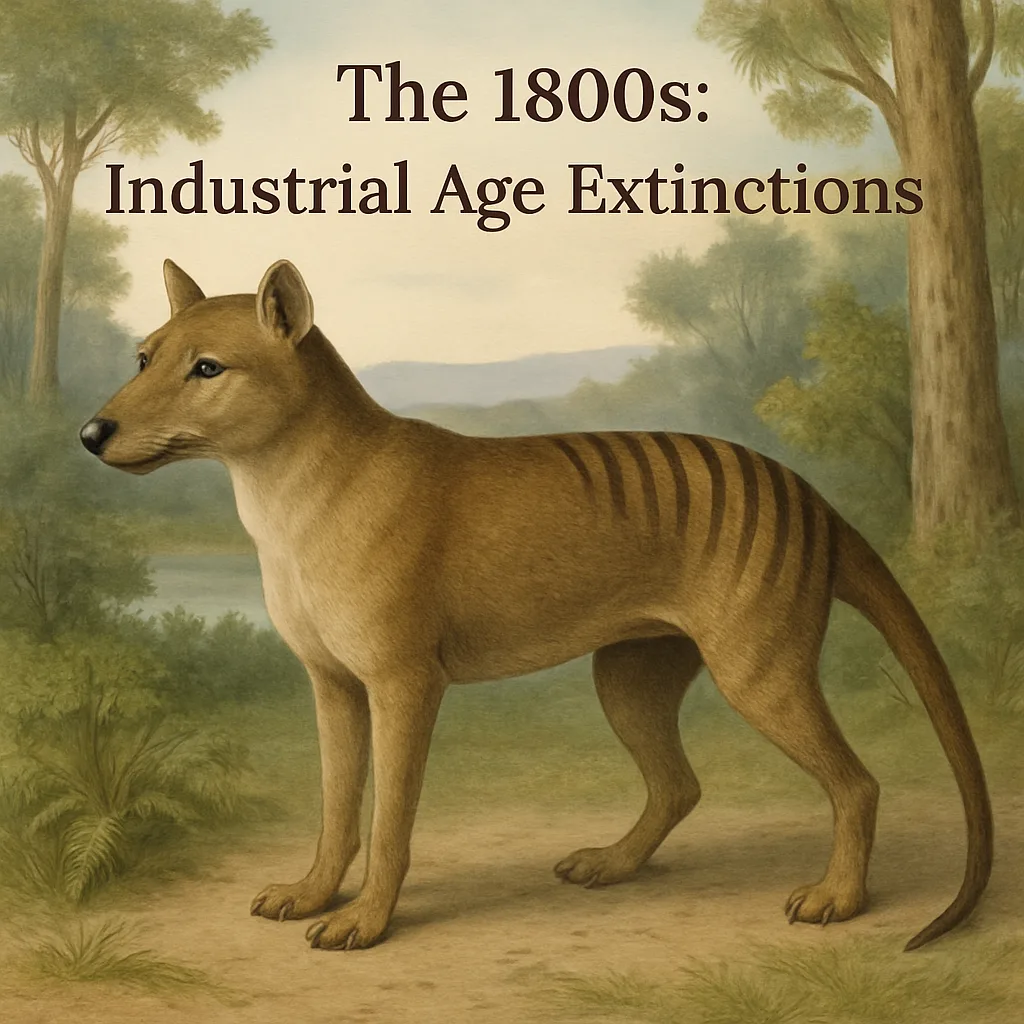
Many of these extinct species have close living relatives that still exist today, such as certain birds or mammals that shared similar habitats and ecological niches. This article will guide readers through the historical period and explore how these animals lived, where they thrived, when and why they vanished, and what we have learned from their extinction.
Readers will also discover some of the broader implications of these extinctions, helping to paint a picture of how human activities during the Industrial Age impacted the natural world.
🧭 Where It Lived
Many of the animals that went extinct during the 1800s were spread across various regions of the world, from the isolated islands of the Pacific Ocean to the expansive forests and grasslands of North America and beyond. These geographical areas were home to rich biodiversity and supported a variety of life forms.
For example, some species thrived in lush forests where they found abundant food sources and shelter. Other species were native to grasslands that provided them ample space for foraging and raising their young. Additionally, islands often housed species that were endemic—meaning they did not naturally occur anywhere else in the world.
The island-limited and highly localized nature of certain species increased their vulnerability. Isolated populations with limited genetic diversity were less able to adapt to rapid environmental changes, making them particularly susceptible to extinction.
🌿 Habitat and Daily Life
The climate during the 1800s varied widely depending on the region, from tropical warmth and abundant rainfall in some areas to more temperate environments with defined seasons elsewhere. These conditions influenced the dietary habits and behaviors of the species.
Many of these animals were herbivores, feeding on a variety of plants, while some were carnivores or omnivores, relying on hunting or scavenging for food. Their behaviors ranged from solitary hunting techniques to sophisticated social structures involving packs or flocks.
Reproduction and life cycles varied greatly among these creatures, some giving birth to live young or laying eggs in nests and caring diligently for their offspring. Their interactions with other species were complex, involving predator-prey dynamics and sometimes symbiotic relationships that contributed to their local ecosystems.
🧬 What Made It Unique
The extinct species of the 1800s exhibited a range of physical traits that made them unique. Many had specialized adaptations that allowed them to thrive in their specific environments, such as unique colorings and sizes that provided camouflage or aided in attracting mates.
Some species developed specialized senses or abilities that played key ecological roles. For instance, certain birds were crucial for seed dispersal, thereby supporting plant diversity. Additionally, animals that were cultural or historically significant to local human communities added another layer of importance to their existence.
The loss of these unique species often meant a profound ecological impact, as their roles in the ecosystem had to be filled by other organisms or went unoccupied, potentially leading to further environmental shifts.
⏳ When It Disappeared
The timeline of extinction for many species during the Industrial Age is often marked by the last confirmed sightings, followed by a period of unreliable reports, before scientists declared them extinct. Decisions to declare a species extinct are typically based on thorough surveys and lack of sighting evidence over time.
Due to the remote and sometimes inaccessible habitats of these animals, such as deep forests or isolated islands, some records are incomplete or uncertain, leading to debates about the exact timing of their extinction.
In some cases, species were declared "Extinct in the Wild," meaning they no longer lived naturally but might still exist in captivity. This status highlights the importance of conservation efforts aimed at maintaining genetic diversity and eventual reintroductions.
⚠️ Why It Went Extinct
The extinction of numerous species during the Industrial Age resulted from various interlinked factors. A major driver was habitat loss and fragmentation, often caused by deforestation and expansion of human settlements, which reduced available living space and resources for wild species.
Overhunting and overfishing also played significant roles, as many species were exploited for their meat, fur, or other valuable resources. This overexploitation led to population declines that were often irreversible. In addition, the introduction of invasive species disrupted local ecosystems, outcompeting or preying on native species that lacked defenses.
Other factors included disease, which sometimes spread rapidly in animal populations, and climate shifts, which altered the availability of food and suitable habitats. Pollution from industrial activities further contributed to the degradation of ecosystems.
🧩 How We Know (Evidence and Records)
Evidence of these extinctions comes from various sources, including subfossil remains, which provide tangible proof of once-living organisms, and museum specimens that capture invaluable biological data.
Field notes and oral histories offer insights into these species' existence and the changes observed over time. In modern times, photographic evidence and genetic analysis allow scientists to verify species identity and explore evolutionary connections.
Some species are particularly challenging to confirm as extinct due to their elusive nature or remote habitats, underscoring the complexities of documenting extinction in the natural world.
🛡️ Could It Have Been Saved
Realistic conservation measures, such as establishing protected habitats and enforcing hunting limits, might have prevented some of these extinctions. Controlling invasive species could have also reduced competition and predation pressures on native populations.
In several cases, conservation actions came too late, often hindered by insufficient knowledge or resources. However, these events have informed contemporary approaches to conservation, prioritizing proactive measures rather than reactive solutions.
In a few instances, late-stage attempts to protect or reintroduce species were made, but success was limited by significant logistical and ecological challenges.
🔁 Are There Any Survivors or Close Relatives Today
Close living relatives of extinct species often share certain ecological traits or occupy similar niches in the environment. For instance, a related bird species may continue seed dispersal roles in the same habitat.
In some cases, "ecological replacements" can fulfill similar ecological roles, assisting in maintaining some aspects of the ecosystem balance. It illustrates both the resilience and the delicate interdependence within natural systems.
Reintroduction and captive breeding programs, when relevant, aim to restore lost species but require careful management and understanding of ecological dynamics for success.
❓ Common Questions and Misconceptions
Was it hunted to extinction? In many cases, overhunting was a significant factor, but usually not the sole reason for extinction.
Why didn’t it adapt or move? Rapid environmental changes and limited adaptability often hindered relocation or adaptation.
Could it still be alive somewhere? While occasional sightings fuel speculation, thorough scientific surveys are needed to confirm any survival.
What does "declared extinct" actually mean? This status is given after extensive searches fail to find evidence of continued existence.
What is the difference between endangered and extinct? "Endangered" specifies a high risk of extinction, while "extinct" means no known living individuals.
Why are island species so vulnerable? Isolation and unique evolution make island species more susceptible to changes and human impacts.
📌 Summary
- Many unique species went extinct during the 1800s Industrial Age.
- These species were spread across various global regions, including forests and islands.
- They depended on diverse habitats like grasslands and wetlands.
- Diet and behavior varied, adapted to available resources and ecological roles.
- Unique adaptations included specialized diets and social structures.
- Most extinctions occurred between the late 1800s and early 1900s.
- Main drivers included habitat loss, overexploitation, and invasive species.
- Evidence of extinction comes from fossils, specimens, and historical records.
- Closest living relatives often fill similar ecological roles.
- Conservation lessons include the importance of early intervention.
- A memorable takeaway is the interconnectedness of human actions and biodiversity loss.