🏞️ Why Extinction Accelerated in the 1600s
🌍 What It Was
Extinction refers to the permanent disappearance of a species from our planet. It is a natural phenomenon that has occurred throughout Earth's history, but the rate at which species went extinct accelerated dramatically in the 1600s.
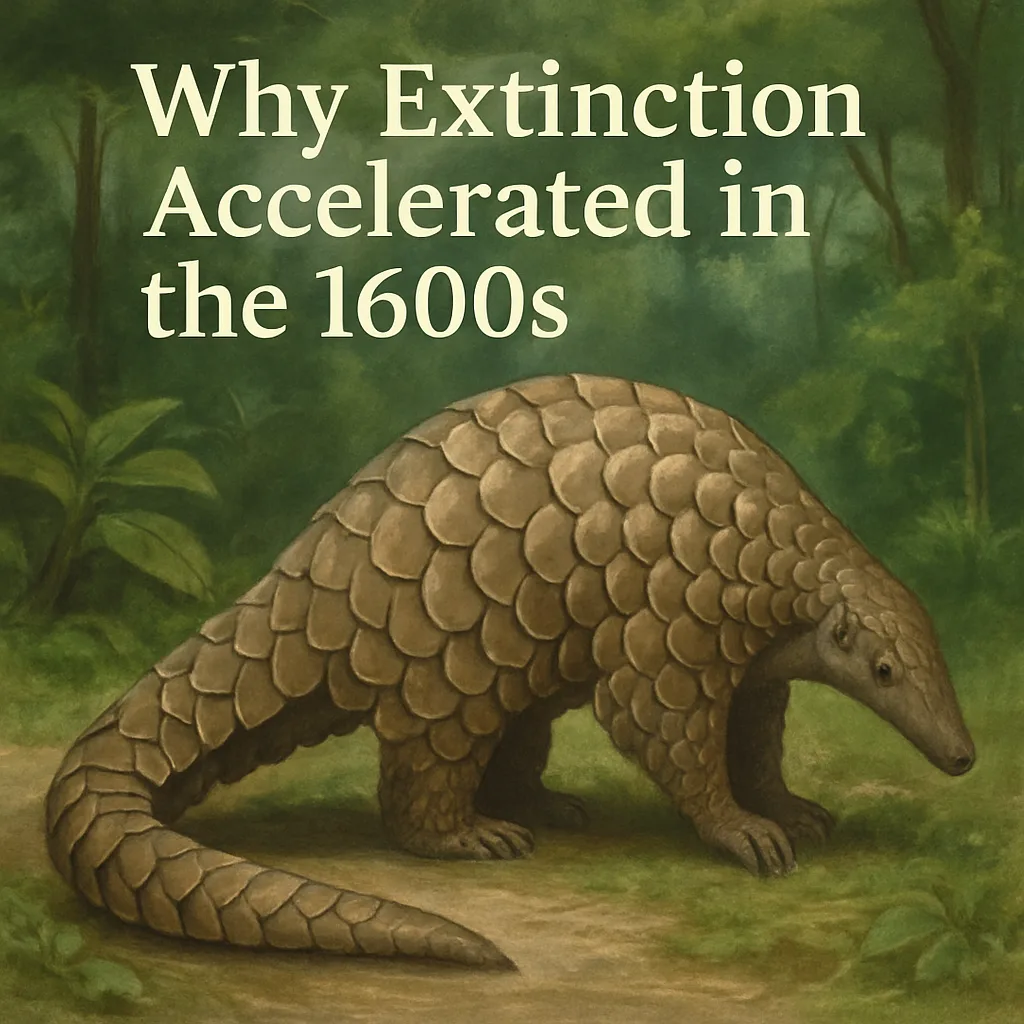
During this period, numerous unique species vanished, including some that were endemic, meaning they were found exclusively in a specific region. These extinctions impacted not only biodiversity but also the ecological balance of their habitats.
This article explores where these species lived, their unique characteristics, what led to their disappearance, and the lessons learned for conservation today.
🧭 Where It Lived
Many of the species that went extinct in the 1600s were island dwellers. The geographic isolation of islands made them unique habitats with diverse species that evolved separately from their mainland counterparts.
One notable extinct species from this era is the Dodo, which lived on the island of Mauritius in the Indian Ocean. The Dodo's habitat was primarily characterized by dense forests and the subtropical climate of the island, which provided an abundance of food resources.
Another example is the Steller's sea cow, which inhabited the coastal waters of the Commander Islands in the Bering Sea. These areas offered rich kelp forests, which were essential for their survival. The limited range and specialized habitat requirements of these island species made them particularly vulnerable to extinction.
🌿 Habitat and Daily Life
The climatic conditions of these habitats varied widely. Mauritius experienced a tropical climate with a rainy season, while the Commander Islands had a colder, maritime climate with harsh winters.
The Dodo's diet consisted mainly of fruits, seeds, and bulbs found in the forests. It was a ground-nesting bird, laying its eggs in simple nests on the forest floor. The absence of natural predators on the island influenced its behavior, making it flightless and somewhat trusting of new arrivals.
Steller's sea cow, on the other hand, was a massive marine herbivore that spent its life grazing on kelp in shallow coastal waters. The sea cow reproduced slowly, with females giving birth to single calves and providing extended parental care. This slow reproduction rate contributed to their vulnerability.
🧬 What Made It Unique
The Dodo was distinctive for its large size, awkward gait, and flightless nature. Its physical traits were well-adapted to its predator-free environment, although this became a drawback when humans arrived.
Steller's sea cow was remarkable for its enormous size, reaching lengths up to 30 feet. Its blubber provided insulation in cold waters, and its slow, deliberate movements made it an integral part of the marine ecosystem by controlling kelp growth.
Both species held cultural significance; the Dodo became emblematic of extinction due to human activities, and the sea cow was noted in European explorers' records for its gentle, placid nature.
⏳ When It Disappeared
The Dodo was last reliably recorded in the mid-1600s, with its extinction declared in the late 17th century after European settlers and their introduced animals devastated its environment.
Steller's sea cow was observed by European explorers in the mid-1700s and was declared extinct by the end of that century. Its extinction was primarily due to overhunting by humans.
Determining the exact time of extinction is often challenging due to missing records and the potential for misidentification. Nevertheless, accounts from contemporaneous explorers and scientists provide valuable evidence.
⚠️ Why It Went Extinct
Several factors contributed to the extinction of species in the 1600s. Habitat loss played a critical role, as deforestation and land conversion for agriculture destroyed the natural environments of many island species.
Overhunting was another significant factor. The arrival of humans and their subsequent hunting practices caused rapid population declines for species like Steller's sea cow, which were hunted extensively for their meat and blubber.
Introduced species, such as rats and pigs, wreaked havoc on island ecosystems by preying on native species or outcompeting them for food.
Diseases brought by settlers and climate shifts also played roles, although their impacts are harder to quantify. Pollution was less of a direct driver in this era but set a precedent for future environmental changes.
These forces often worked in combination, amplifying their detrimental effects on vulnerable populations.
🧩 How We Know (Evidence and Records)
Evidence of past extinctions comes from a variety of sources. Fossils and subfossils provide physical remains, while historical accounts and museum specimens offer detailed descriptions of extinct species.
Field notes and oral histories recorded by explorers and indigenous peoples provide insights into the interactions and significance of these species. Genetic studies, when possible, help confirm the identities and relationships of extinct species.
Verification of extinction events is a meticulous process that relies on cross-referencing all available evidence, acknowledging that rare or nocturnal species might be underrepresented.
🛡️ Could It Have Been Saved
Conservation actions that could have helped these species include creating protected areas, enforcing hunting limits, and controlling invasive species.
Captive breeding initiatives might have played a role, although they were not widely practiced in the 1600s. Today, such programs are standard conservation tools.
Unfortunately, awareness of the need for conservation often emerged too late to save many species, as the necessary knowledge and infrastructure were lacking at the time.
🔁 Are There Any Survivors or Close Relatives Today
The closest living relatives of the Dodo are pigeons and doves, sharing similar genetic ancestry but not filling the same ecological niche.
In marine environments, the role of large herbivores is partially filled by other marine mammals such as dugongs and manatees, though they are not direct descendants of Steller's sea cow.
Conservationists sometimes consider ecological replacements to restore balance, but the unique evolutionary paths of these extinct species make true replacements impossible.
❓ Common Questions and Misconceptions
Was it hunted to extinction? Overhunting contributed significantly to the extinction of certain species, such as Steller's sea cow.
Why didn’t it adapt or move? Many species were island-specific and had evolved unique traits that made adaptation or relocation difficult.
Could it still be alive somewhere? While unlikely, unconfirmed sightings sometimes spark debate among scientists and the public.
What does 'declared extinct' actually mean? It means that no individuals have been observed or found despite exhaustive searches.
What is the difference between endangered and extinct? Endangered species are at high risk of extinction, while extinct species have no living members.
Why are island species so vulnerable? Island species often have limited ranges and specialized adaptations, making them more susceptible to changes.
📌 Summary
- Extinction accelerated in the 1600s due to human impact.
- Many extinct species were island dwellers like the Dodo and Steller's sea cow.
- Their habitats included forests and kelp-rich coastal waters.
- They faced threats from habitat destruction, hunting, and introduced species.
- The Dodo had distinctive traits due to the lack of predators.
- Steller's sea cow was a large marine herbivore crucial for kelp ecosystem balance.
- The last reliable sightings were in the 1600s and 1700s, respectively.
- Evidence includes fossils, historical accounts, and scientific studies.
- Closest living relatives include pigeons/doves and cetaceans.
- Understanding impacts underscores the importance of timely conservation.
- Historical extinction events remind us of irreversible biodiversity losses.