🏞️ Island Birds Disappear in Decades
🌍 What It Was
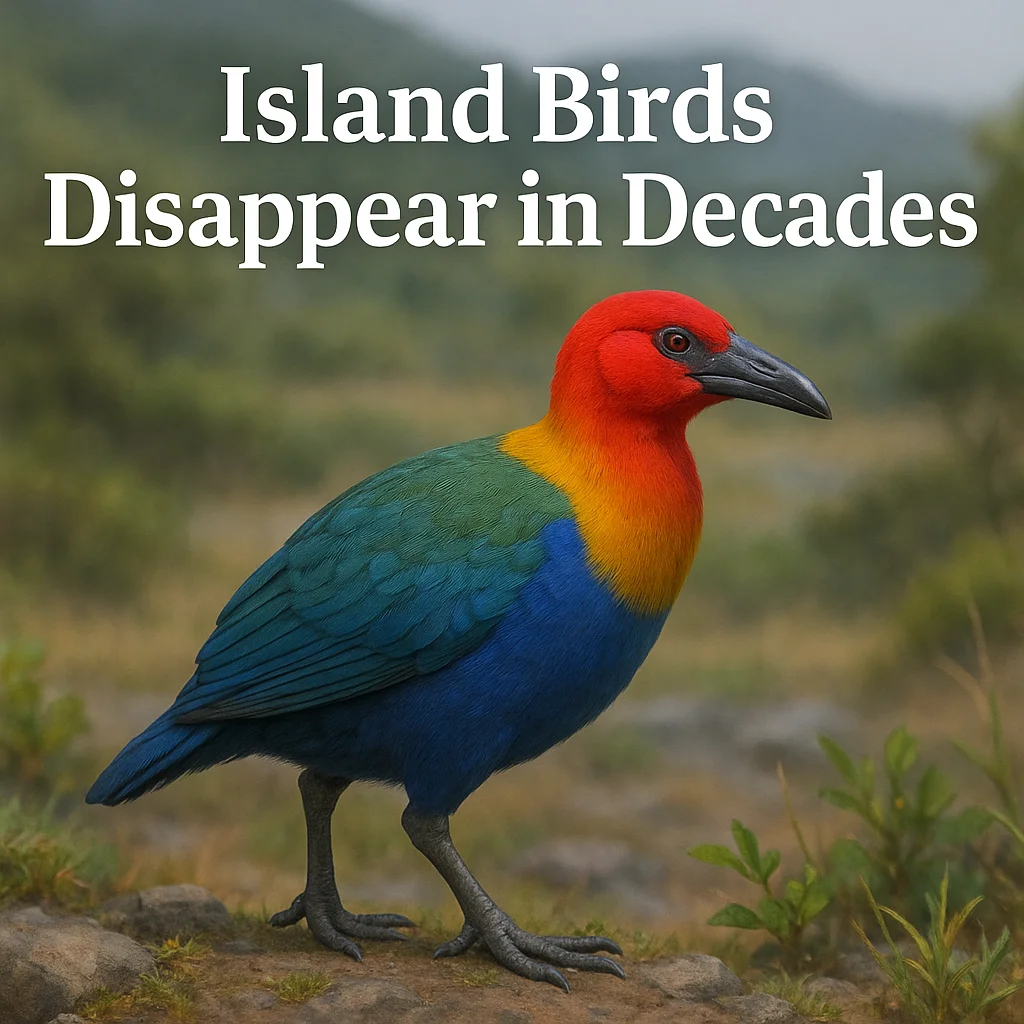
Birds that lived on islands were often unique species found nowhere else in the world. These island birds were fascinating not only for their distinctive traits but also for the roles they played in their ecosystems. From flightless wonders to brilliantly colored fliers, island birds showcased the marvels of nature's adaptability.
The closest living relatives of many extinct island birds are often just as remarkable. They might not live on the same islands, but they share genetic ties that tell the story of a shared past. The island birds' niche in ecosystems was often pivotal, involving tasks like pollination or seed dispersal that sustained other life forms.
In this exploration, you'll learn about the specific island birds that have disappeared, where they lived, how they lived, when they were last seen, and the primary reasons behind their extinction.
🧭 Where It Lived
Island birds were often found on isolated sections of land across the world's oceans, from the Hawaiian archipelago to the Galápagos Islands. Their geographic range was typically confined to single islands or small island groups. Such localization made them especially vulnerable to environmental changes.
The habitats of these birds varied, but many depended on the lush, diverse environments that islands provided. These could include dense tropical forests, open grasslands, or coastal wetlands. The habitat types were essential for fulfilling their needs, from food to nesting sites.
Living on islands presented a unique risk to these birds. Being localized meant there was little chance for populations to migrate in response to threats. This geographic limitation often contributed to their downfall when faced with new challenges.
🌿 Habitat and Daily Life
Island climates where these birds thrived varied widely but were generally characterized by mild temperatures and moderate to high rainfall. These conditions supported a rich tapestry of plant and animal life, allowing birds to flourish in distinct ecological roles.
Many island birds had specialized diets, often feeding on particular plants or insects abundant in their environment. Some, like certain parrots, helped with pollination, while others might have engaged in unique hunting or foraging behaviors.
Reproductive strategies of island birds varied. Some birds laid multiple eggs to ensure survival, while others, like albatrosses, devoted extensive care to a single chick. Nesting sites were built with available materials, often ingeniously utilizing the natural landscape.
🧬 What Made It Unique
Island birds often exhibited unique physical traits. Some were flightless, an adaptation possible due to a lack of predators. Others had vivid plumage colors not seen in mainland species, either for mating displays or camouflage in the diverse island flora.
They played significant ecological roles. Flightless birds might have been important ground-level seed dispersers, while flying species could pollinate distant plants, bridging ecological divides. Their roles were integral to the island's ecological balance.
Culturally, island birds sometimes held significant value. They appeared in local folklore or were prized components in traditional rituals. This human connection could have both celebrated their existence and increased the pressures they faced.
⏳ When It Disappeared
The extinction timeline for many island birds follows a pattern of last sightings and final confirmed records. The exact dates can often be murky, with remote islands delaying detection of population declines. Typically, when there had been no confirmed sightings for several decades, the species was declared extinct.
Uncertainty is often an inherent part of studying island bird extinctions. Some birds may not have been observed for significant durations due to their elusive nature or habitats. Thus, confirming extinction requires careful consideration of multiple factors.
For some species, "Extinct in the Wild" status was granted when they survived only in captivity, although even these instances might have involved a barren future without reintroduction prospects.
⚠️ Why It Went Extinct
Habitat loss and fragmentation were major drivers of extinction. As humans expanded their presence on islands, forests were cleared for agriculture, and development destroyed natural habitats. This fragmented environment critically limited available resources for island birds.
Overhunting and collection also posed significant threats. Birds were often hunted for food or their feathers, exploited to the point where populations could not sustain themselves.
Introduced species, such as rats and cats, disrupted the natural balance. As predators, they preyed on birds and their eggs, leading to rapid population declines. Island birds, having evolved without significant predators, were especially vulnerable.
Disease brought by humans or introduced animals also critically impacted bird habitats, further stressing populations already struggling to cope with other threats.
Climate shifts or extreme events could also play a role, altering food availability and habitat conditions. Hurricanes or prolonged droughts might have intensified the challenges to survival, leading to an inability to adapt swiftly enough to changes.
🧩 How We Know (Evidence and Records)
Scientific understanding of island bird extinctions comes from various sources. Museum specimens collected before extinction provide critical physical evidence to study past biodiversity. Fossils and subfossils unearthed on islands help reconstruct ecological histories.
Field notes and historical records from explorers offer insights into once-abundant populations and help chart demographic changes over time. Photographs taken in the last moments of a species often form part of the story but are unusual as evidence in their own right.
Oral histories, passed through generations of local communities, sometimes capture unrecorded observations. Genetic studies of extant relatives help confirm identities and relationships, offering a fuller picture of a species' legacy.
🛡️ Could It Have Been Saved
There were various conservation actions that might have helped save island birds. Habitat protection would have preserved crucial ecological niches, and controlling invasive species could have reduced predation pressures. Limiting hunting and collection, while challenging, would have helped stabilize populations.
Captive breeding programs, though difficult to implement for some island bird species, could have offered a lifeline, ensuring survival until habitats could be restored. Unfortunately, many of these actions came too late or were not deployed due to lack of awareness or resources.
In some cases, late conservation attempts, such as establishing national parks or wildlife refuges, did occur but often lacked the urgency needed to prevent extinctions that were already set into motion.
🔁 Are There Any Survivors or Close Relatives Today
The closest living relatives of extinct island birds often provide a window into what was lost. They might share behaviors or physical traits, living in similar ecological roles but possibly on different islands or mainland areas.
In some cases, ecological replacements have filled, at least partially, the void left by extinct birds. These species might adapt to occupy similar niches, helping maintain some ecological functions.
Reintroduction and captive programs, where applicable, serve as efforts to restore lost ecological balance by reestablishing populations in controlled environments, though such initiatives face challenges of their own.
❓ Common Questions and Misconceptions
Was it hunted to extinction? While hunting contributed to some extent, many island birds faced multiple extinction pressures.
Why didn’t it adapt or move? Island birds often lacked suitable escape habitats, and evolutionary adaptations take time that wasn't available due to rapid changes.
Could it still be alive somewhere? Given their specific habitat needs, undiscovered populations on islands are unlikely but not impossible in some remote regions.
What does 'declared extinct' actually mean? It refers to a species having no living members confirmed, usually after exhaustive searches and evaluations.
What is the difference between endangered and extinct? Endangered species still exist in the wild, albeit in small numbers, while extinct species no longer have any known living members.
Why are island species so vulnerable? Their geographic isolation limits genetic diversity and adaptive responses, making them sensitive to environmental changes and human impacts.
📌 Summary
- Island birds were unique species confined to specific island environments.
- They lived across global islands, from the Pacific to the Galápagos.
- Habitats included diverse environments like forests and grasslands.
- Their diets often involved specialized plant or insect consumption.
- Adaptations included flightlessness or colorful plumage for various ecological roles.
- Last known sightings and records often date back to the 19th and 20th centuries.
- Main extinction drivers included habitat loss, hunting, and invasive species.
- Evidence includes fossils, museum specimens, and historical records.
- Closest living relatives sometimes offer insights into extinct species.
- Conservation teaches the importance of timely intervention and habitat preservation.
- Understanding past extinctions helps shape future conservation strategies.