🏞️ How Firearms Changed Hunting Pressure
🌍 What It Was
Firearms revolutionized hunting practices, profoundly impacting wildlife populations. Initially developed for military use, firearms quickly gained traction among hunters, offering unprecedented efficiency in capturing animals. The introduction of firearms marked a significant shift from traditional hunting methods, such as bows and spears, to more effective means, altering the dynamics of human and wildlife interactions.
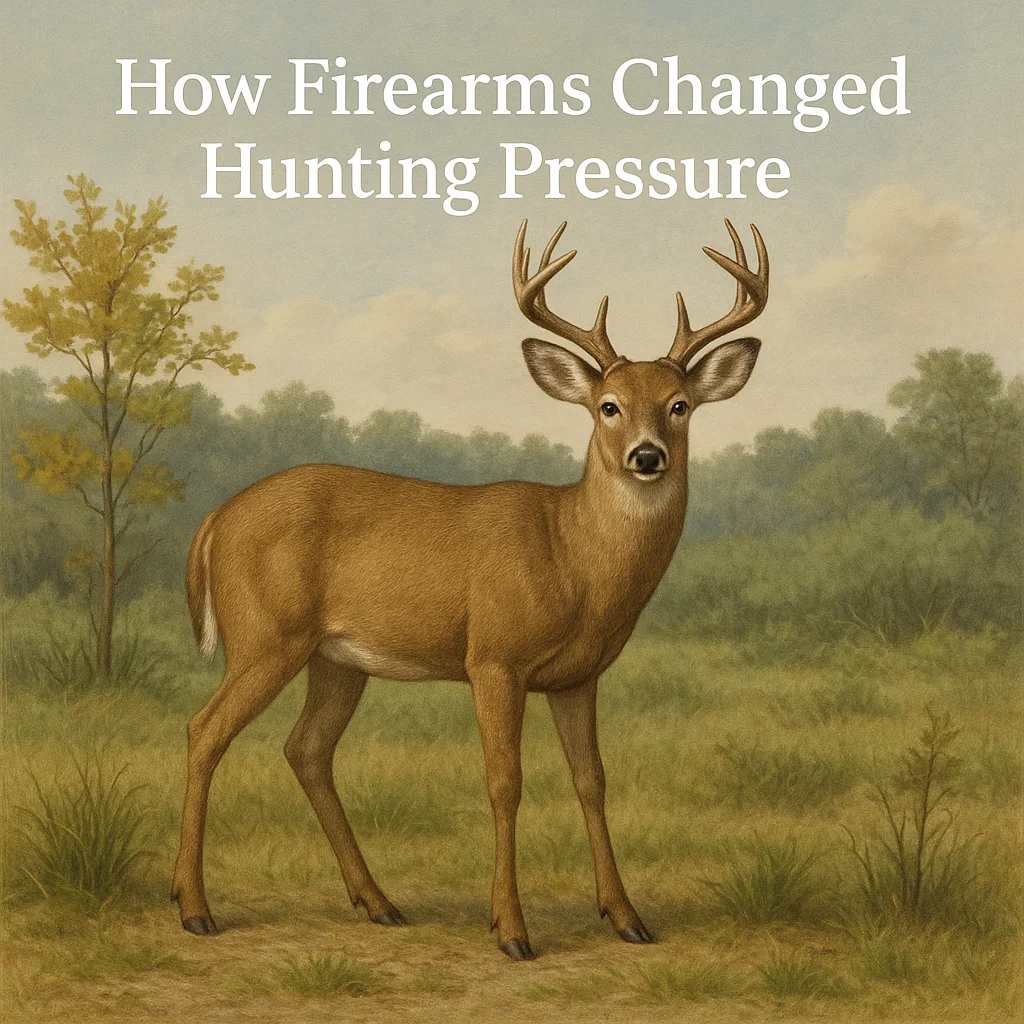
This article explores the history of firearms in hunting, their influence on wildlife populations, and the implications of this technological transition. Readers will learn about how firearms changed geographic distributions and survival strategies, leading to increased hunting pressure on various species. The discussion also delves into the factors that contribute to species extinction.
Characteristics of firearm-driven hunting, including increased range and lethality, distinguish it from earlier methods. These advancements contributed to the overhunting of some species and significantly amplified the risks of extinction, especially for species that were already vulnerable.
🧭 Where It Lived
Before the widespread adoption of firearms, hunting occurred across diverse landscapes such as forests, grasslands, and wetlands. As firearms became prevalent, hunters expanded their reach into previously less accessible areas, including remote regions and dense forests, drastically changing the geographic range of many species.
Firearm advancements facilitated hunting in previously challenging environments, affecting species residing on islands and secluded habitats. The enhanced ability to hunt in these areas often led to rapid declines in native populations, as isolated species with limited ranges were particularly susceptible to new pressures brought by firearms.
In regions where traditional hunting relied heavily on skill and knowledge of specific areas, firearms equalized these demands, allowing for a broader, less selective targeting of wildlife. This shift altered the natural equilibrium of ecosystems, as various species that once thrived under specific geographic restraints suddenly faced intensified hunting pressure.
🌿 Habitat and Daily Life
Most hunted animals thrived in specific climatic conditions, where they had adapted behaviors and lifestyles optimized for those environments. For example, certain species preferred temperate forests with seasonal changes providing varied resources year-round or grasslands that supported large herbivore herds.
Firearms disrupted these complex ecosystems by allowing hunters to exploit wildlife during vulnerable periods. Such access translated into disturbances in migration patterns, feeding behaviors, and reproductive cycles, significantly impacting population stability.
Predators and prey experienced altered interactions; predators that humans hunted for fur or sport faced reduced numbers, which disrupted the food chain. Such imbalances led to consequences not only for the targeted species but also for those indirectly affected by these ecological changes.
🧬 What Made It Unique
The principle physical adaptation that differentiated firearm hunting involved technological innovations originating from gunpowder development. These advances allowed hunting at greater distances, requiring less physical prowess and increasing efficiency compared to traditional hunting.
Culturally, firearms represented advancements in human capability, reshaping traditional practices around the globe. The shift from communal and ritualistic hunting to more impersonal and solitary methods redefined the role of hunting in societies.
Firearms also shifted economic implications, with market hunting incentivized by the ability to supply meat and wildlife products more reliably and in larger quantities. This commercial aspect exacerbated hunting pressures, accelerating the path to extinction for many species.
⏳ When It Disappeared
Most extinctions correlated with firearm-induced hunting pressure unfolded over several decades. The late 19th and early 20th centuries witnessed the peak impact of firearms on wildlife, with many last recorded sightings occurring in this period. However, the exact timeline varies by species and region.
Lack of reliable records often creates uncertainty in pinpointing the precise moment of extinction. Remote habitats and the potential for unnoticed populations persist, yet consistent absence from recognized habitats and surveys often leads scientists to declare a species extinct.
"Extinct in the Wild" refers to species that survive solely in captivity, whereas "Extinct" implies no known living specimens. Discerning between these designations requires extensive research and consensus within the scientific community, reflecting a combination of field studies and historical data analysis.
⚠️ Why It Went Extinct
The multi-causal nature of extinction encompasses habitat loss, overhunting, invasive species, disease, climatic shifts, and pollution. Firearms directly increased overhunting, notably impacting species with long reproductive cycles that couldn't replenish populations quickly.
Land development for agriculture and urban expansion reduced habitats, fragmented ecosystems, and forced wildlife into smaller, isolated patches, exacerbating hunting impacts. Firearms allowed improved accessibility to these fragmented habitats, intensifying human influence on wildlife populations.
Introduced and invasive species, often unintentionally brought by humans, added further pressures on local species already stressed by hunting. Disease transmission and environmental degradation from pollution compounded these factors, leading to complex extinction dynamics without singular blame.
🧩 How We Know (Evidence and Records)
Understanding the impact of firearms on extinction relies on various evidence types, including fossils, museum specimens, and field notes. Photography and oral histories also contribute, providing records of species' former distributions and abundance.
Scientists verify identity and extinction status through genetic analyses and careful examination of records. Remote and elusive species pose greater verification challenges, requiring extensive surveys and collaboration among researchers to ensure accuracy.
🛡️ Could It Have Been Saved
Conservation efforts following recognized species declines frequently came too late to prevent extinction, but might have succeeded with earlier interventions. Establishing protected areas and imposing hunting limits are common strategies that might have alleviated pressure.
Controlling invasive species and exploring captive breeding programs represent additional measures. Each approach involves logistical challenges, financial costs, and necessitates societal understanding and commitment. Balancing economic and conservation agendas remains a complex, often contentious process.
🔁 Are There Any Survivors or Close Relatives Today
Many species impacted by firearm-driven extinctions have close relatives that remain. Shared genetic and ecological legacies provide essential insights into past ecosystems. Relatives often fill similar ecological niches, leading some to function as "ecological replacements."
Conservation programs today leverage such relationships to inform reintroduction efforts, providing templates for potential species recovery. Successful reintroduction or captive programs showcase human potential to reverse some impact, fostering hope for ongoing and future conservation efforts.
❓ Common Questions and Misconceptions
Was it hunted to extinction? Yes, but extinction involved multiple factors beyond hunting, including habitat changes.
Why didn’t it adapt or move? Rapid environmental changes often outpace natural adaptation abilities, particularly for endemic species.
Could it still be alive somewhere? Unlikely, but undiscovered populations may exist in remote areas.
What does 'declared extinct' actually mean? It means consistent, thorough searches found no living individuals, and it is accepted by scientific consensus.
What is the difference between endangered and extinct? Endangered species are at risk of extinction but still exist, whereas extinct species have no living members.
Why are island species so vulnerable? Isolation on islands often results in limited genetic diversity and higher susceptibility to new threats.
📌 Summary
- Firearms revolutionized hunting practices and increased range and lethality.
- Hunting expanded to remote and previously hard-to-access environments.
- Isolated species faced heightened risks due to increased hunting.
- Ecosystem interactions were disrupted by firearms.
- Commercial hunting driven by firearms exacerbated pressures.
- Extinction peaks occurred in the late 19th and early 20th centuries.
- Multiple extinction drivers include overhunting and habitat loss.
- Evidence includes fossils, specimens, and oral histories.
- Close relatives today help inform conservation methods.
- Preemptive conservation could have mitigated firearms' effects.
- Understanding firearm impacts highlights the complexity of conservation.
- Effective planning and timely action are critical for future preservation.