🏞️ Colonial Expansion and Habitat Clearing
🌍 What It Was
The subject of this exploration is not a single animal but a significant period in history when numerous species were impacted by human activities. This period of colonial expansion led to the clearing of vast swaths of habitat, resulting in the loss of countless creatures across various ecosystems.
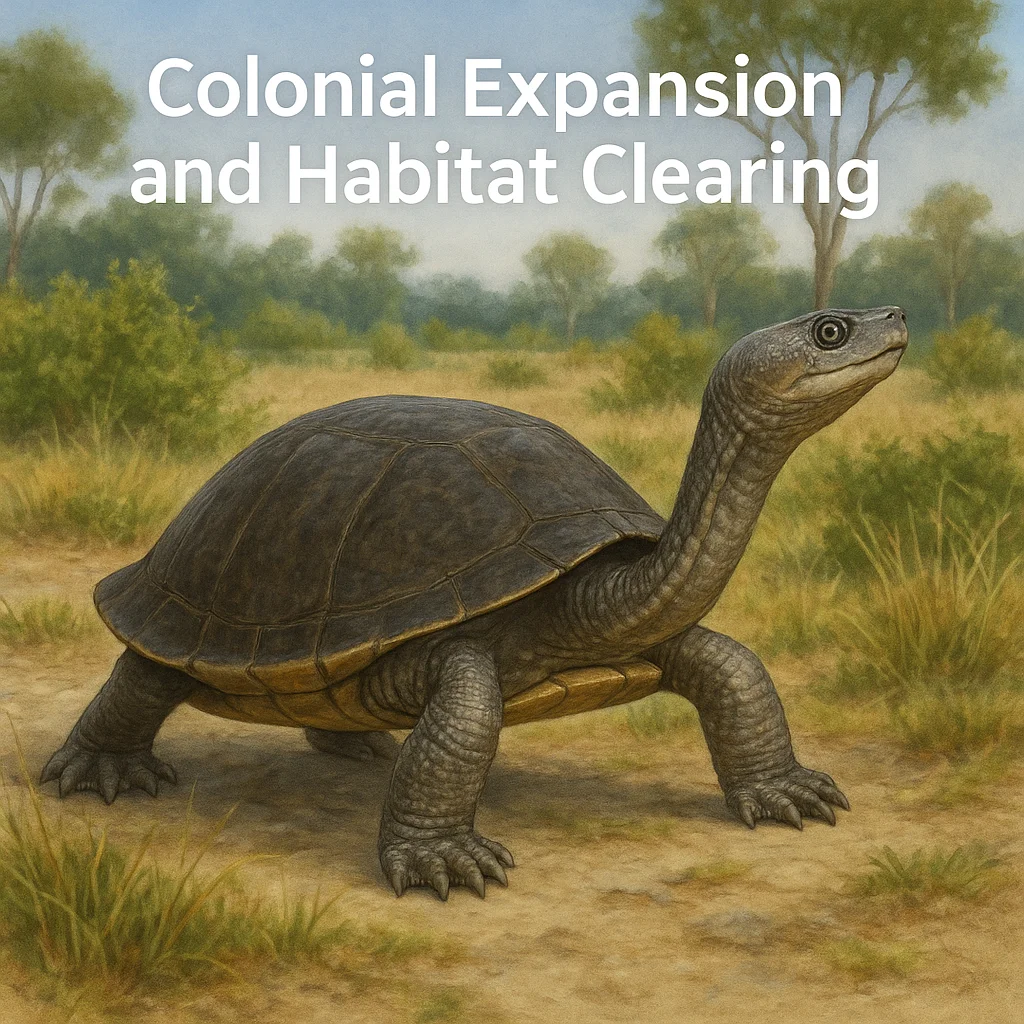
Colonial expansion refers to the era when European powers expanded their territories across the globe, affecting many native species. Often, these species were distinctive to their local environments, with some having close living relatives today that provide a glimpse into what was lost.
This article aims to inform readers about the environments these species lived in, their interactions with the ecosystem, when they disappeared, and the contributing factors to their extinction.
🧭 Where It Lived
The habitats impacted by colonial expansion were diverse, ranging from lush tropical forests to vast plains and intricate coral reefs. Regions heavily affected included Africa, the Americas, parts of Asia, and remote islands in the Pacific and Indian Oceans.
Many of these species lived in areas rich in biodiversity, such as Madagascar's forests, the Amazon Basin, and Australian ecosystems. These areas were home to a range of habitat types, from dense forests and wetlands to savannas and grasslands.
Islands were particularly vulnerable due to their isolated ecosystems. Unique species on these islands often had no natural predators and were not equipped to deal with new threats brought about by humans.
🌿 Habitat and Daily Life
The climates of these regions varied greatly. Tropical areas experienced warm temperatures and high rainfall, fostering lush vegetation and diverse animal life. Temperate zones featured distinct seasons with cooler winters and warmer summers.
The species lost during this time had varied diets depending on their environment. Some were herbivores that grazed on local vegetation, while others were predators or scavengers. Their behaviors included migration, nesting in protected areas, and forming social groups for protection or cooperative hunting.
Reproduction varied as well; some species laid eggs, while others gave live birth. Offspring care was often intricate, with parents providing food and protection until young could fend for themselves.
🧬 What Made It Unique
The species affected by habitat clearing often possessed unique physical traits adapted to their environments. Some had evolved special camouflage, while others had physical adaptations like long limbs for tree climbing or wings for long-distance flight.
Many of these species played critical ecological roles. For example, seed dispersers helped maintain forest diversity, while predators kept prey populations balanced. Such interactions ensured ecosystem health and resilience.
Some species held cultural significance for indigenous peoples, symbolizing spiritual beliefs or playing roles in local traditions and legends.
⏳ When It Disappeared
The disappearance of these species was often gradual. As new territories were colonized, habitat destruction accelerated. In many cases, last sightings were recorded in the 19th and early 20th centuries, a period marked by rapid environmental changes.
Extinction declarations come after exhaustive searches and consistent lack of sightings. Some species were declared "extinct in the wild," meaning they survive only in captivity, underscoring the loss of their natural habitats.
Given the remote and sometimes inhospitable nature of these habitats, uncertainty remains regarding the exact timing of many extinctions. Some species may have lingered unnoticed for some years in isolated locations.
⚠️ Why It Went Extinct
The main drivers of extinction during colonial expansion were intricate and interconnected. Habitat loss and fragmentation top the list, as forests were cleared for agriculture and settlements, rendering large areas uninhabitable for local species.
Overhunting and overcollection compounded the issue, with some species hunted to near extinction for fur, food, or sport. As colonial influences spread, introduced species, such as rats, cats, and pigs, disrupted native ecosystems by preying on or competing with endemic wildlife.
Additionally, diseases carried by new settlers and their livestock sometimes decimated native populations that had no immunity. Climate shifts and extreme weather events further exacerbated these problems, affecting food availability and directly impacting survival.
🧩 How We Know (Evidence and Records)
The evidence for these extinctions comes from multiple sources. Fossils and subfossils provide physical records of once-thriving populations. Museum specimens offer tangible connections to extinct species, allowing for comparisons with existing relatives.
Field notes from naturalists of the time, along with photographs and oral histories from indigenous peoples, contribute valuable insights into these lost species and their environments.
In modern times, genetic analysis has also been used to study relationships between extinct species and their living relatives, verifying historical records and refining timelines.
🛡️ Could It Have Been Saved
Potential conservation actions that might have mitigated these extinctions include establishing protected areas to preserve critical habitats, setting hunting limits to prevent overexploitation, and controlling invasive species.
However, conservation efforts often came too late or were not sufficiently enforced. Colonial priorities did not typically include environmental preservation, and by the time the impacts were fully understood, many species were already irreversibly endangered.
In certain cases, late attempts at captive breeding were undertaken, but without a natural habitat to return to, these efforts had limited success.
🔁 Are There Any Survivors or Close Relatives Today
Many extinct species have close relatives that share some physical traits and behavioral characteristics. For example, certain bird species and small mammals have surviving relatives that continue to fulfill similar ecological roles.
In some ecosystems, other species have emerged as "ecological replacements," taking over the niche once occupied by the extinct species, though often not to the same extent.
Reintroduction efforts are rare but have occurred in instances where suitable habitat restoration was possible, although these projects face significant challenges.
❓ Common Questions and Misconceptions
Was it hunted to extinction? In many cases, yes, hunting played a role, but it was usually a combination of factors including habitat destruction.
Why didn’t it adapt or move? Rapid environmental changes and specialized adaptations made it hard for many species to adapt quickly.
Could it still be alive somewhere? While hopeful, it's unlikely; extensive searches have failed to find surviving populations.
What does 'declared extinct' actually mean? It means that despite exhaustive efforts to find it, the species no longer exists in the wild.
What is the difference between endangered and extinct? Endangered species still exist but face a very high risk of extinction in the near future, while extinct species no longer exist.
Why are island species so vulnerable? Island species evolved in isolation and often lack resilience to new predators and diseases introduced by humans.
📌 Summary
- Colonial expansion led to the loss of many species through habitat clearing and exploitation.
- Affected regions included Africa, the Americas, parts of Asia, and remote islands.
- Habitats ranged from forests and grasslands to wetlands and reefs.
- Species had diverse diets and complex social behaviors.
- Adaptations included camouflage, climbing abilities, and unique ecological roles.
- Many species were last seen in the late 19th or early 20th centuries.
- Main extinction drivers were habitat loss, overhunting, and introduced species.
- Evidence includes fossils, museum specimens, and genetic studies.
- Close relatives often share traits and ecological roles.
- Conservation lessons highlight the importance of early intervention and habitat protection.
- One takeaway is the interconnected nature of ecosystems and the impact of human activities.